

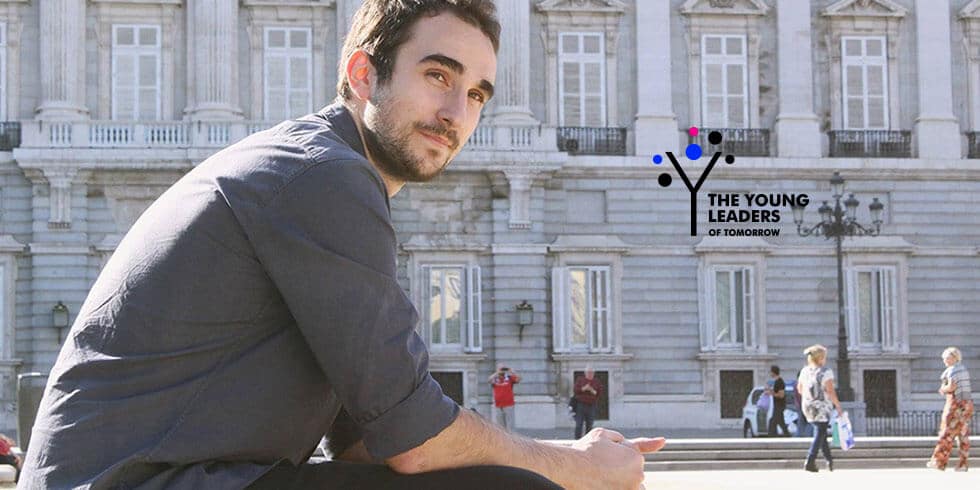
By: Asja Dupanović
Ivan Tušek graduated from the Faculty of Economics in Zagreb and immediately replaced the university benches with the hot chairs in the account team of Degordian agency. After years of working with clients, he rebranded himself as a creative and became the head of content and creative strategy department.
He leads a team of about a dozen creatives, which, he admits, isn’t an easy job, but as he got used to bruising his knees on the basketball court as a kid, he also got used to investing himself entirely for the team. When he isn’t working on designing digital strategies and cool campaigns for clients, he likes to watch movies. An excellent screenplay and people who know how to turn a good idea into an even better movie, are an eternal inspiration to him.
MM: Are you in the communications industry because you love this job or because you just have to do something?
Ivan Tušek: I love my job, but just as a good friend – I wouldn’t marry it.
MM: What attracted you the most to this industry?
Ivan Tušek: The thought that I can create something that will reach at least one person, and the hope that it will make their day better at least for a moment. And shirts with floral print, of course.
MM: Why Degordian? Are you there by choice or by accident?
Ivan Tušek: During my studies, I started developing interest in digital communication channels, especially social media, which at that time began to change the way we communicate. The then iSTUDIO seemed to me as the perfect blend of all that I was interested in – marketing, or communication, and digital channels. I applied for an internship and that’s where the story began. Over time, my interest in marketing and communication changed, as well as Degordian’s focus and development strategy, so I’m still here for a reason.
MM: You lead the department for content and creative strategy. What exactly is your job in the agency and what does your average work day look like?
Ivan Tušek: The Department for Content and Creative Strategy is actually Degordian’s creative department. It is made up of four teams: copywriting, marketing design, video content and creative strategy. In addition to management responsibilities that include work on company and departmental development and care for people’s development and satisfaction, I spend most of my day on projects for clients – whether it is about designing creative concepts or meetings. It goes without saying that no two days are the same, but I’ll say that anyway just to fill in the lines.
MM: Where did you acquire the knowledge in digital?
Ivan Tušek: Online. And by nagging smarter colleagues for advice. Nagging always works.
MM: Development of digital media feels too fast and elusive for many agency people. But it hasn’t been faster than you. How do you cope with the fast changes?
Ivan Tušek: I think it’s important to remain open to changes. It’s not some big wisdom, but few in our industry actually act that way. As a region, we have always been a step behind the Western countries, but thanks to technology and digital media, there’s no reason for this to be the case any longer. Everyone has access to technology and digital media, so we just need to experiment and learn. At Degordian, we are constantly looking for ways to use some digital novelty as early as possible, and even more importantly, to use it in a smarter way the second time around.
MM: With the emergence of smartphones, the attention span of an average person has dropped to just seconds. What’s the best way to use such a short time?
Ivan Tušek: Shorter attention span requires more creativity, and I think that in such waters creatives swim best. Whatever I say will sound like me playing wise, but the answer to that question is as old as marketing itself. You should be short and clear, you should try to surprise and thrill, not sell. There, I said it all, and yet I said nothing.
MM: Can you single out some campaign that is especially dear to you?
Ivan Tušek: Campaign What Would You Give which we did for Ožujsko beer before and after the FIFA World Cup in Russia last year. This one is especially dear to me because it started online, in the form of a website, and ended offline, in the form of a book which even reached our national team. The book contained a long list of things people were willing to give up if Croatia won the championship. When you see how creative and emotional people are prepared to be thanks to your campaign, you are simply left speechless. In a way, we like to think that with this campaign, we pushed our boys towards the finals at least a bit.
MM: When we talk about crazy, brave ideas, there is a general opinion that the communication industry is gripped with fear. Agencies are afraid of losing a client, a client is afraid of losing his/her job. How can we conquer that fear, and how much can you, the young leaders, contribute to getting the industry out of this situation?
Ivan Tušek: If there’s anyone joining this industry without prejudice, it’s the young people. They should be allowed to play, given time and space, and then heard to see what they have to say. I think some of the best ideas in recent years in the region and the world came from young creatives. Just look at the presentations of the Young Lions ideas at Days of Communications, or those from Cannes for that matter. They are wonderful.
These people have something to show and I think it’s a sin not to allow them to do so. Agencies need to get out of their own way, and clients need to be more open to suggestions. It’s no big wisdom, and yet it’s so difficult to achieve sometimes. However, I believe there is some trend that things are changing for the better, and that this industry is also rejuvenating – maybe exactly thanks to the technologies which young people have a better grasp on and follow more closely.
MM: What would you advise your peers – to join you in this industry or try to find a better job?
Ivan Tušek: I think the phrase “better job” is open to interpretation. I would invite anyone who feels as if they have something to say to join us in this amusement park. There are plenty of fun rides, and there are no height restrictions. And whatever they decide afterwards, they will be richer for an experience which will certainly be of great help to them in the future.
MM: How do you see the future of digital advertising?
Ivan Tušek: I really don’t know. I can only assume that the budgets will move more and more from classical channels to digital, and then technology will do its thing and create new formats – some of which we’ve already seen. Just look at The Academic – Bear Claws Facebook Live spot or Love Has No Labels. The future of digital advertising is here, and we should join and be part of it.
MM: Do you have free time, and how do you like to spend it?
Ivan Tušek: Always. I fill my free time with bits of everything – no pressure – movies, TV shows, reading, writing, concerts, cooking, sports, travel, poetry, painting, theatre. Not necessarily all of this, and not necessarily in this order.

