
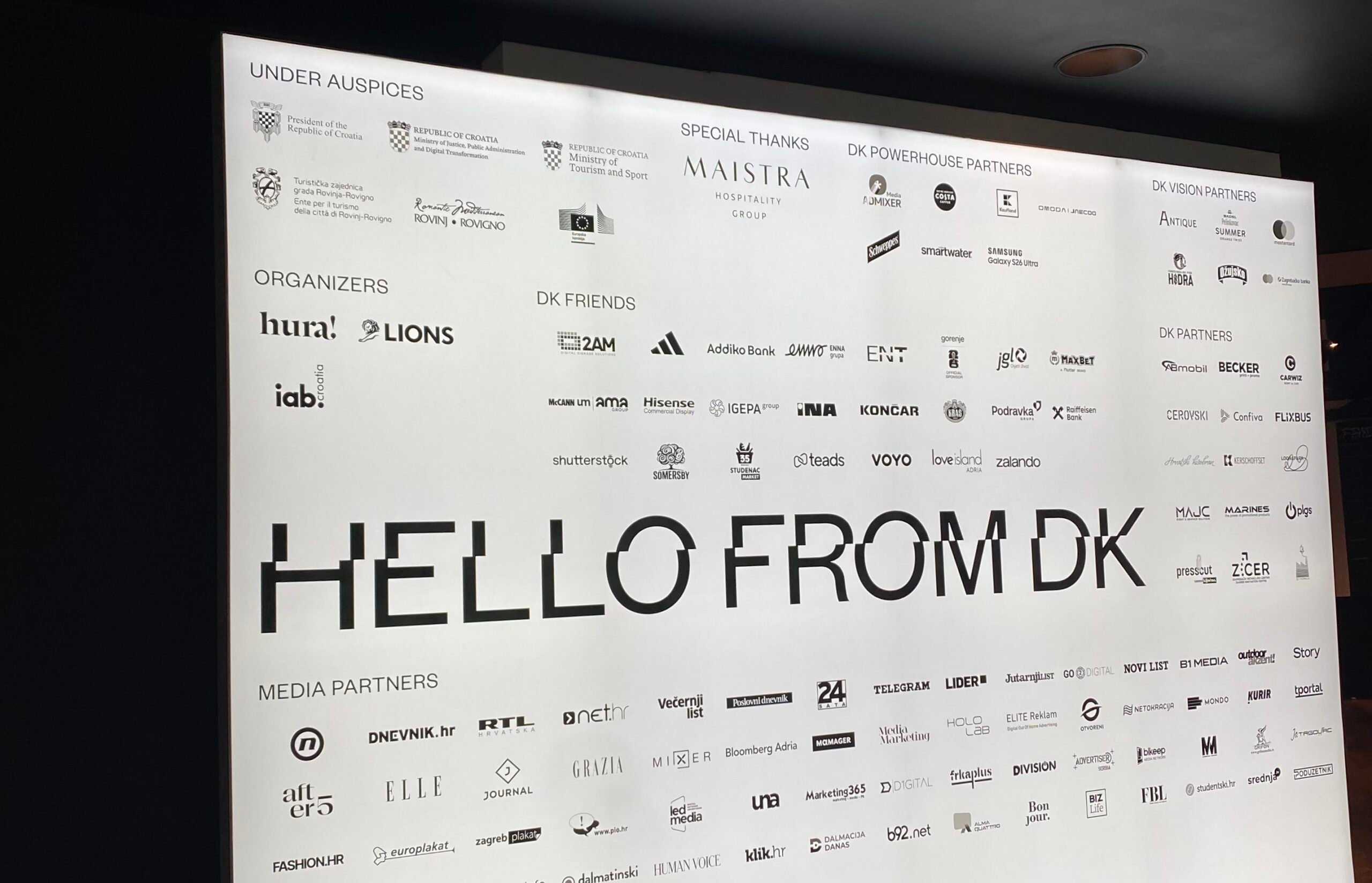
Dani komunikacija 2026 officially opened in Rovinj, bringing together communication professionals from across the region through a program featuring more than 200 speakers, 100 sessions, and five venues. Impressive, as every year.
Already on the first day, a number of compelling stories emerged, with the talks by Daniel Knapp and Dora Pekeč standing out in particular. From two very different perspectives, they addressed the same core issue: how audience attention works today, the power of messaging, and the battle for narrative control.
Daniel Knapp spoke about how AI is reshaping the entire advertising and media industry – from creative processes and media buying to agency business models. He placed particular emphasis on the fact that technology companies are investing billions into AI, while advertising revenue still cannot keep pace with the growth of those costs, leaving the entire industry caught between enormous hype and real economic challenges.
He believes AI will not completely replace human creativity, because authenticity and emotional connection will become even more valuable in the era of automated content.
“Advertising revenue growth cannot finance the CAPEX” – with that sentence, Knapp summarized the central dilemma of the AI era: investments are growing faster than the actual revenue the industry is currently capable of generating.
On the other hand, Dora Pekeč demonstrated how, in that kind of chaos, those with a clear, simple, and disciplined message are the ones who actually win.
Speaking about Zohran Mamdani’s mayoral campaign in New York, which she led, Dora explained how they operated in an environment where almost all traditional media outlets were against them – from The New York Times to The New York Post. Instead of trying to win over the media, they decided to control their own narrative through social media, video content, and rapid-response communication.
The entire campaign was reduced to one simple message: “New York is too expensive, and people need relief.”
Everything returned to that idea – from rent, public transport, and childcare to debates and even attacks from opponents.
One of the most important lessons from her talk was that attacks do not necessarily have to be defended with traditional rebuttals, but can instead be turned to your own advantage. When opponents attacked Mamdani over his rent-controlled apartment, the campaign did not explain his financial situation. Instead, they responded:
“If you think the problem is that my rent is too low, vote for them. If you know the problem is that your rents are too high, vote for me.”
Particularly interesting was the part about bypassing traditional media. Since they could not secure media space for stories about Andrew Cuomo’s scandals, they created their own video, which reached more than 10 million views within 24 hours.
Again, the message was clear: it is no longer crucial whether you have media support, but whether you know how to tell a story people actually want to share.
Dora’s talk demonstrated that modern communication is won through clear and simple messaging, authentic digital content, and disciplined communication, while the most successful marketing is the kind that does not sell a product or a candidate, but identifies a problem the audience immediately recognizes as their own.
Combined with Knapp’s warning that AI is producing enormous amounts of generic content, the conclusion of the first day of Dani komunikacija feels fairly clear:
In a time overwhelmed by content, the winners will not be those who produce the most, but those who know how to articulate it most clearly.