

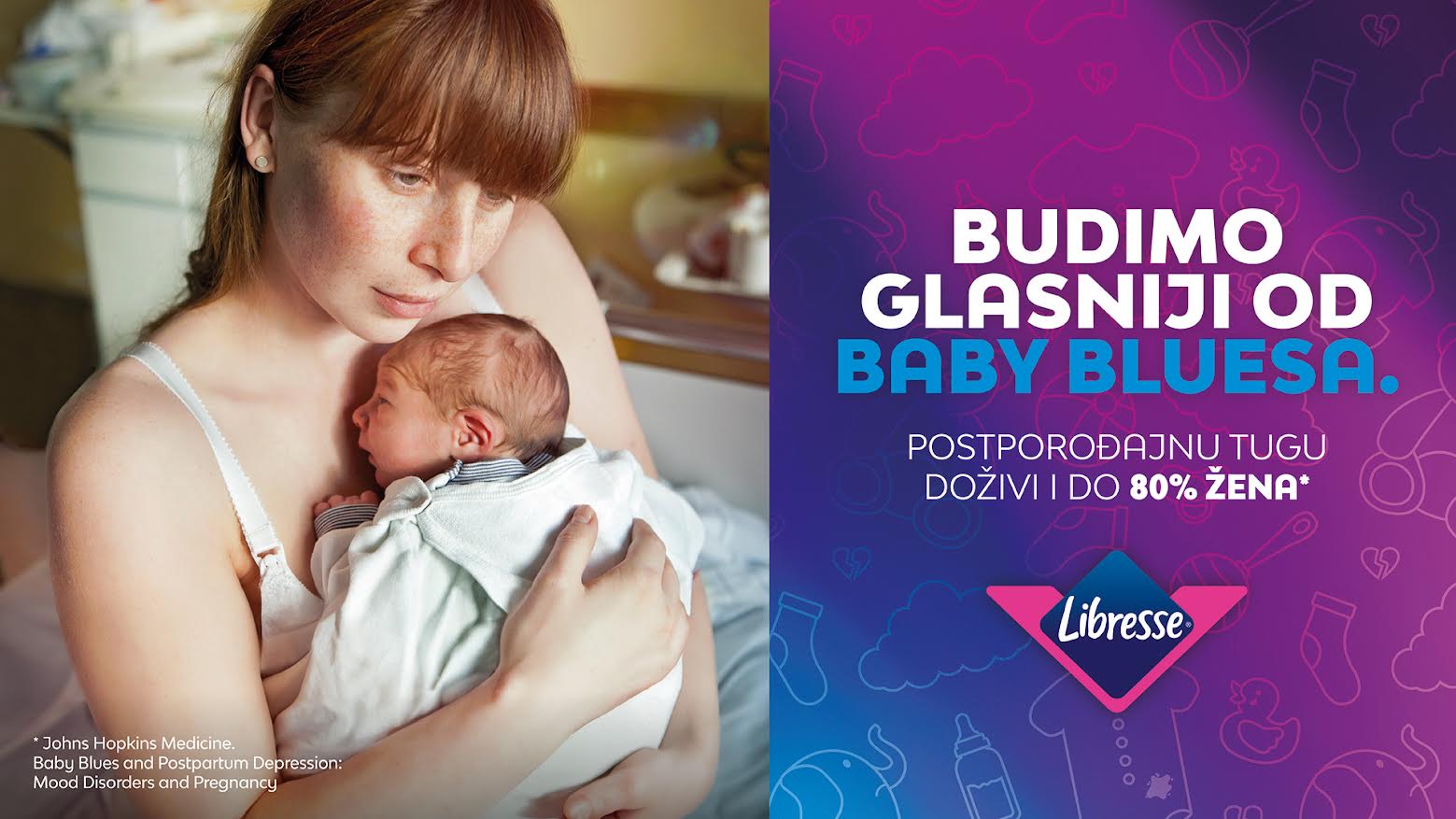
“If listening to it doesn’t make you want to call a friend who has recently given birth, we haven’t achieved anything.” That sentence from Zrinka Horvat Goodman captures what the creative team wanted to achieve with the Baby Blues campaign: help those around new mothers understand their experience and encourage them to reach out, listen and offer support. The campaign’s song was intended to convey feelings that are difficult to talk about when those around you expect motherhood to be lived with a smile and enjoyment of every minute.
BBDO Zagreb and Libresse found their creative starting point in the very name of the postpartum blues. Blues offered a musical form for the exhaustion and confusion of the first weeks of motherhood, with simple words, a classic melody and a voice that feels what it sings. The Croatian Doula Association also joined the campaign, contributing knowledge and contacts that helped shape the communication, alongside counselling and direct support for mothers.
Baby Blues won gold at BalCannes in the Best Audio & Radio category. In the next instalment of the Behind the Winning Idea series, Zrinka Horvat Goodman talks about choosing sound as the main creative medium, working on the song’s emotion and the role of doulas, as well as why conversations about mental health and motherhood belong among the topics Libresse addresses.
A topic marked by silence took the form of a song and a call to be louder than the baby blues. What led you to choose sound as the campaign’s main creative medium?
Postpartum blues, or “baby blues”, affects more than 80% of women. Due to physical and psychological changes, most women face feelings of sadness and exhaustion in the first weeks of motherhood, while society tells us we should smile and enjoy every minute. With the campaign, we wanted to break the silence surrounding the more challenging aspects of motherhood, and the name of the condition itself led us to the perfect form: a blues song.
The song was intended to convey mothers’ experiences, but also to encourage those around them to pay attention and offer support. Which part of that story was the hardest to translate into lyrics, music and performance?
We left the direct call to action for the on-screen text, while the song itself focused on emotion, on the feeling of exhaustion and confusion that new mothers experience. If listening to it doesn’t make you want to call a friend who has recently given birth, we haven’t achieved anything. For us, the best creative work gently encourages you to do something good, rather than shouting at the top of its voice.
In collaboration with the Croatian Doula Association, the campaign included counselling and direct support for mothers. How was that support built into the idea itself, rather than simply added as a socially responsible follow-up?
Doulas provide emotional and physical support during pregnancy, childbirth and the postpartum period, which made them an ideal partner for this campaign. They are there for women in the first weeks of motherhood, and their knowledge and contacts inspired the online, social and ATL segments of our campaign.
Libresse has long addressed topics concerning the female body that people are reluctant to discuss, but Baby Blues also enters the territory of mental health and motherhood. What gave the brand the credibility to take that step?
Everything you mentioned is part of the female experience, and Libresse is a brand that speaks honestly about all topics concerning women, including physical and mental health and women’s position in society.
Baby Blues won gold at BalCannes in the Best Audio & Radio category. What did the song have to achieve as a standalone creative format for the campaign to be recognised in that particular category?
Blues lives and dies on emotion. Simple words, a well-played classic blues melody and a voice that truly feels what it sings are the combination we were looking for. We’re glad the jury liked the song.

