

First encounters with certain places, people, and even events tend to stay with us for a long time. That was certainly the case for me with last year’s SoMo Borac. It was one of those events you return from convinced that the next edition will struggle to surpass the previous one. A year later, it turned out I had reached that conclusion too soon.
At the end of October, we travelled to Zagreb once again as conference partners, in a way beginning to bring another season of regional competitions to a close. It has been an exceptionally exciting year, with a large number of campaigns demonstrating that regional creativity has plenty to offer on the global stage as well. Having followed them almost daily, I am increasingly convinced that the quality of ideas emerging from our part of the world should not be viewed solely within regional boundaries.
The regional creative scene won me over a long time ago. How much of that is due to the work I do and how much to my own curiosity is difficult to separate. Every day, I encounter campaigns, analyse the ideas behind them, and try to understand why some leave a lasting impression while others, despite the effort involved and often larger production budgets, are quickly forgotten. This year’s edition of SoMo Borac explored these very questions in its own way, placing the cost of attention at the centre of the conference programme.
Is there something that campaigns capable of capturing our attention have in common? Why do we want to share certain content with others? And how can we earn that attention tomorrow from consumers who already have more content than time to consume it today?
Finding answers to these questions is not simple, but this year’s SoMo offered me several interesting perspectives.
For several hours, Zagreb’s Tvornica kulture brought together people who shape the digital industry from different perspectives, from regional creatives and agency professionals to representatives of international platforms and technology companies. This diversity of approaches was precisely one of the conference’s greatest strengths. The same programme featured discussions about the consumer journey towards a purchasing decision, online communities, algorithms, new content formats, and technological experiments.
One presentation I will particularly remember was given by Tihana Dakić-Barichievich, the woman behind the GoLošinj project. If you have spent any time on social media in recent months, there is a good chance you have come across one of her videos. If not, a friend may already have sent you one. I, for one, have lost count of how many I have received. Thanks to her content, Lošinj has become a topic of conversation even among people who may never previously have considered visiting, while the famous jump from the pier, performed the way locals do it, has become an almost essential part of an imagined visit for many.
Yet what interested me most was neither the number of views nor the popularity of the profile, but the story of the people appearing in those videos. Tihana spoke about her early days of filming sketches, improvisation, mistakes she does not try to hide, and encounters that inspire ideas for new content. Her protagonists are real residents of Lošinj, people whose personalities, habits, and stories become part of what audiences follow. Behind a video that lasts only a few seconds on screen are relationships that cannot be planned through a creative brief.
At a time when AI-generated content is becoming increasingly prevalent, Tihana’s presentation was, for me, a reminder of the value of what is real. Of spontaneity, imperfection, and human relationships from which stories worth sharing emerge. Her videos present Lošinj not merely as a destination worth visiting, but as a community made up of people. Perhaps that is precisely what we are increasingly missing in the content surrounding us: the feeling that there is someone real behind what we are watching.
And perhaps this is where part of the answer lies to the question that brought us together in Zagreb. We can attract attention in countless ways, but what makes us genuinely willing to give it to someone?
Ignazio Morello from Verne also addressed this distinction in his presentation Hegel’s Hair: Choosing Which Attention Is Worth the Cost, comparing our relationship with attention to riding a crowded subway. We immediately notice the first touch of a stranger, but as the crowding continues, we grow accustomed to being touched and stop reacting. The same applies to the messages we encounter every day. The more there are, the easier they become to ignore, meaning that simply attracting attention is no longer enough. Morello therefore emphasised the importance of understanding an audience before asking for its time. Getting someone to turn around is one thing; giving them a reason to stay is quite another.
Andre Joel from Reddit spoke about the role of online communities and conversations between users in purchasing decisions, while Katarina Exle from Cvoke explored the space for surprise in a world where algorithms are becoming increasingly good at predicting our interests through her presentation Daj mi nešto što ni ne znam da želim (Give Me Something I Don’t Even Know I Want). In an industry that relies increasingly on data, that room for the unexpected seems particularly valuable to me.
Just how differently technology can serve creativity was also demonstrated by presentations from Katarina Bogdanović Kukla, who introduced the creation of the Vibe Coding Show, and Filip Filković Philatz, who brought everyday life from the 1980s, 1990s, and early 2000s back to life through his Spomenar project. In his work, nostalgia found its place in the contemporary digital space, alongside the algorithms and artificial intelligence that now shape how content is created and reaches audiences.
However, the attention that social media can direct towards a particular topic does not always have to serve promotion or entertainment. We were reminded of this by Nataša Vajagić in her presentation about the Seksizam naš svagdašnji project, which raised the question of how digital content can help us recognise sexist patterns so deeply embedded in everyday life that we often no longer notice them. In a programme dedicated to audience attention, it was particularly important to hear about its potential to encourage social change.
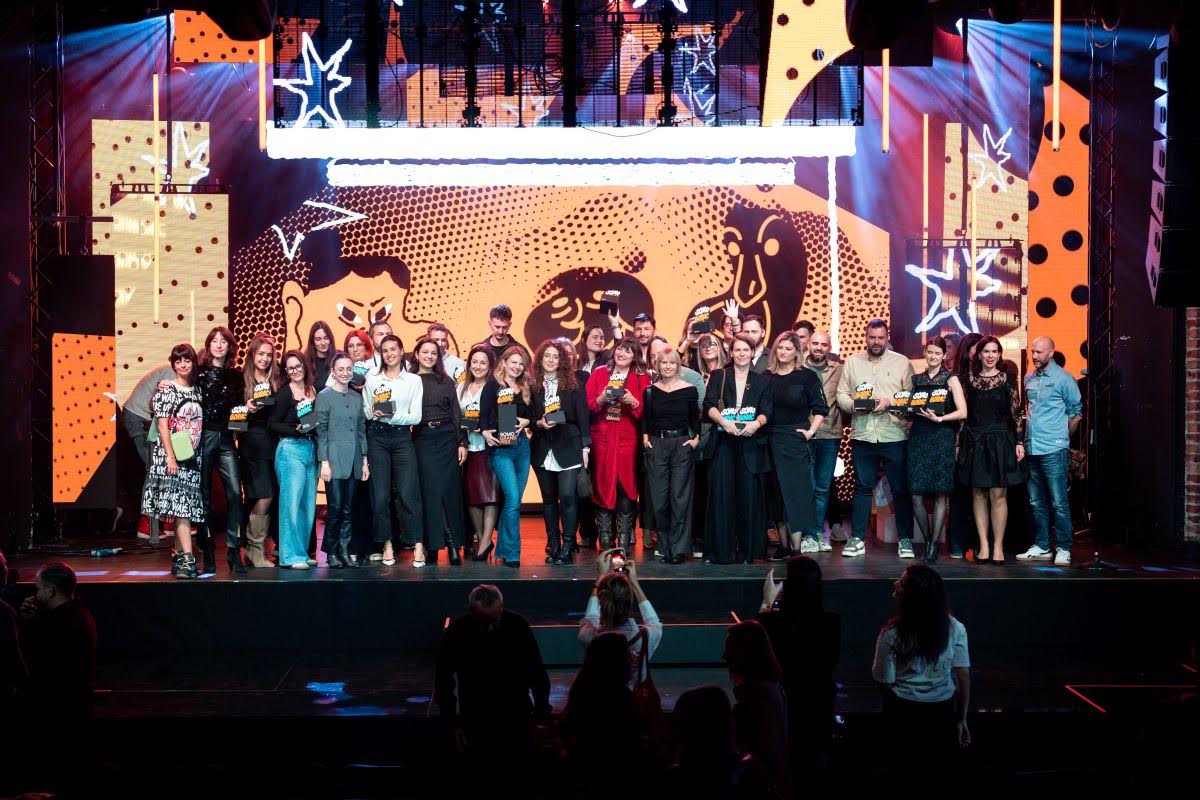
The diversity of topics discussed at Tvornica kulture demonstrated just how rapidly the digital industry is changing today, and SoMo Borac follows this development through its competition programme as well. The evening awards ceremony offered an opportunity, after a full day of conversations about the future of the digital industry, to reflect on what the regional scene has already achieved. Behind the award-winning campaigns lies a year of work, creative decisions, and ideas that found their way to audiences, while SoMo Borac gives them visibility beyond the markets in which they originated.
This year saw the introduction of the SoMo AI and SoMo Content Engagement categories, as well as the first SoMo Grand Prix, awarded to Ovation BBDO and Libresse for the campaign Vreme je za odgovore. The new categories reflect the growing role of artificial intelligence and content that succeeds in engaging audiences, as well as the need to recognise and reward their contribution to digital communication.
After a day filled with presentations and the awards ceremony, it seemed that our batteries had only been recharged further. There was still plenty of energy left for the famous SoMo Party, where we finally had the opportunity to meet colleagues with whom we had been exchanging emails for months but rarely saw in person. It was a completely natural continuation of a day that had brought together so many different parts of the regional creative scene.
Year after year, the SoMo Borac team sets itself an increasingly demanding task. Alongside recognising the best regional work, it also needs to deliver a programme that raises questions important to the future of the industry. When I think about what SoMo Borac means to the regional digital scene, this year’s selection of topics and new competition categories best demonstrate how closely the organisers follow its changes and how willing they are to develop their own concept in response.
Since last year, SoMo Borac has also held a special place in my calendar of industry events. After this year’s edition, expectations are even higher. And judging by what we have had the opportunity to see so far, the milestone 15th edition of SoMo Borac is unlikely to disappoint.

