
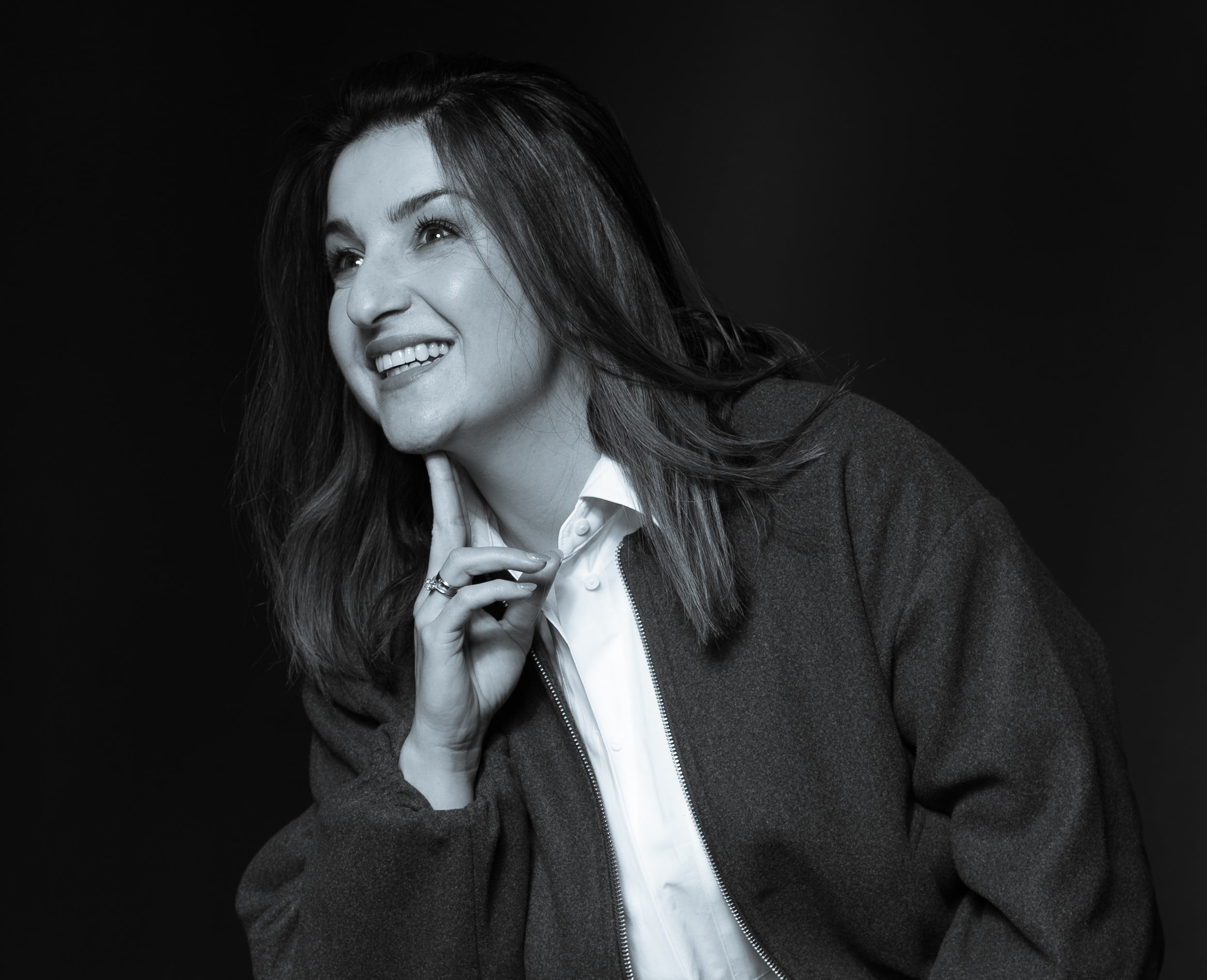
The fifth conference. The fiiiiifth! When I say it out loud, it sounds a little unbelievable to me.
I fondly remember the first Snaga komunikacije conference and the enthusiasm my team and I put into bringing it to life. I also remember the many question marks hanging over our heads and the questions that kept us from falling peacefully asleep. We were all worried, and my worry was squared: would people come, would they recognise the uniqueness of the idea, could we organise a conference in Sarajevo that would attract the attention of everyone who is part of the communications industry in the region? Today, as we prepare the fifth, the questions are different. We no longer ask whether we can, but what else we can move forward.
Perhaps that is why SHIFT HAPPENS was a perfectly logical name for this year’s edition. Change happened, and not just to the industry. It happened to us too, literally. It was no coincidence that a sentence from Giuseppe Tomasi di Lampedusa’s novel The Leopard came to mind: “For everything to stay the same, everything must change.”
When change arrives uninvited
Like a bolt from the blue, two days before we were due to conclude the final negotiations, we had to change the venue. Anyone who has ever organised even the smallest event knows that nobody wants that kind of surprise. And we are preparing a conference for several hundred people, with numerous partners and speakers, only a few of whom are from Sarajevo, a conference that requires comprehensive, top-quality production, technical equipment, set design, accommodation and countless details that must run like a Swiss watch.
Naturally, first came a wave of stress, then fear and the question: “How are we going to make all of this happen now?” But there was no time to lose. At that moment, I was grateful for all the crises I had been through while leading the marketing department of a large retail chain. Those crises made me stronger and taught me how to act in circumstances like these and how to emerge from them a winner. Although the venue changed because of unexpected and unwanted circumstances, the goal we had set together as a team remained the same. Our valued audience must get what they come for, our speakers a space where they will feel at home, and our partners the respect they have earned. For my team and me, the direction was clear: a swift change of plan and adaptation to the new circumstances.
As the saying goes, every cloud has a silver lining. The forced change of venue has allowed us to hold the conference on 14 and 15 October at the magnificent City Hall, a building that, like a phoenix, rose from the ashes and once again became one of the city’s symbols. In a place like that, a conversation about change carries a different weight and takes on its true meaning. To me, it is the most beautiful confirmation of what we are trying to say with this year’s slogan: we cannot stop change, but we can decide how we respond to it.
Knowing what to change, rather than changing everything
The idea that change is the only constant is attributed to Heraclitus. Twenty-five centuries later, it sounds to no one like philosophy, but like a perfect description of a working day for marketing and communications professionals. Every day, we witness how AI changes the way we work, how audiences change the way they choose whom to trust, and how new generations bring a new dynamic to expectations. It is becoming increasingly difficult to reach ever more diverse target groups with the same key messages. Clients demand more, agencies are expected to respond faster, and brands to be more relevant. We try to keep up with all of this while remaining ourselves, because being yourself is priceless. Such authenticity is always recognised among all of us who do the same or similar work.
Of course, it is not easy to adapt to the demands of a market shaped by inevitable changes while remaining true to yourself, but it is the only way for us to survive. To me, that is a real shift: not change for the sake of change, but change that moves us forward. Change in which we retain the best of ourselves, consciously let go of what is outdated and openly accept the need to learn something new.
Day one: voice
When I was brainstorming the programme with my team, it was important to me that we did not create yet another series of talks about trends. Trends come and go; people remain. That is why the first day, Woman Shift – The Power of Voice, begins with women’s voices, with the intention of raising awareness of the space that belongs to them.
Dragana Vujović Đermanović will open the conference with the story The Woman Who Changed the Rules. The title itself carries a message that matters to me: you do not need to wait for someone to change the rules for you; sometimes you have to change them yourself. That is the message I want the audience to take home that day and spread further.
Then Marijana Rajić and Suzana Sikimić will discuss leadership in Leader to Leader, while Jo-Anne Bishop from UN Women will speak about creating a space in which women can lead changes, processes, everything. They will be followed by Anila Gajević, Belma Sekavić Bandić, Ajla Ličina and Nadja Gydat, women who have made their own shift through their work, stepped out of their comfort zones, dared to go a step further and become an inspiration to others.
Still, we do not want to spend the whole day talking only about success, but also about the price of visibility. That is why we are opening the discussion The Woman Behind the Screen on cyberbullying, hate speech and the human cost of online abuse, featuring Nataša Vasić, Nevena Rendeli Vejzović, Džejla Glavović and psychologist Enisa Mešić, with Brankica Raković leading the conversation. Back in the 1970s, German communications scholar Elisabeth Noelle-Neumann described the spiral of silence: people who feel they will be judged gradually stop speaking. Online abuse does exactly that today. It does not silence just one woman; it sends a message to everyone watching. That is why we cannot talk about communication only through campaigns, reach and results. We must also talk about what our words do to others and the responsibility we take on every time we press “publish”.
The afternoon brings a panel on women in different professions and breaking stereotypes, while Aleksandra Radujko will speak about personal branding in a time of change. Today, each of us has our own small media outlet, but there is a big difference between visibility and relevance: the former is measured in followers, the latter in trust.
We will conclude the day with the roundtable Woman.Comm Manifesto – What Do We Change From Here? With our Woman.comm of the year winners Nataša Pavlović Bujas, Manuela Šola, Ivona Jurilj, Alena Kulenović – Delić. To me, the most valuable moment of a conference has always been when we stop talking about what happened and start agreeing on what exactly we will do in the next period: what we will improve and what we will contribute to make our industry better. Because when the industry progresses, we also contribute to society’s progress.
Day two: what we will do with that voice
If we devoted the first day to the question of who has a voice, on the second day we ask what we will do with it. Communication Shift – The Power of Change goes to the very heart of our industry: what has changed in the market, how attention has changed, what clients expect from agencies today and what happens to the value of our work when almost everything can be done faster and more cheaply than just a few years ago.
We discuss this through Market Shift: What Changed? and the conversation AI – It Is Time to Change the Rules, in which Nikola Žinić, Ivanka Mabić Gagić and a corporate representative, alongside moderator Dunja Ivana Ballon, will answer questions that have become unavoidable and concern us all. With his talk AI – Shift Happens, Ejub Kučuk moves the conversation towards a new creative economy.
Equally important to me is a topic that is easily overlooked: how to last. In a world that constantly tells us we must be new, fast and different, the panel Longevity in Business, featuring Erol Mujanović, Aldina Hadžić and Dr Selma Jusufović, moderated by Dženita Mustafić, asks how to remain yourself and survive. In her talk 54 Years Shifting. Still Leading. Still Yourself., Nataša Šarčević offers a first-hand answer: we do not have to become someone else every time. In branding, we call this identity consistency – the core remains the same, while its expression adapts to the times.
Perhaps we do not need more content, but more meaning
As far back as 1971, Nobel laureate Herbert Simon warned that an abundance of information creates a poverty of attention. There was neither the internet nor social media then, and yet it is hard to imagine a more precise description of today’s feed. That is why I was particularly intrigued by the discussion Nobody Needs More Content, featuring Vesna Vlašić, Manuela Šola and Maris Altsoo, moderated by Mary Kirillova. We all produce and publish, but hardly anyone has time to see it all. Amid the sea of content, value is no longer measured by how much we have produced, but by what someone felt, remembered and whom they shared it with.
This is where communication returns to its original meaning. The Latin verb communicare means to make something common, to share with someone, to converse. That is why we close the second day with a story about sport, tourism, music and a shared story. There are stories that are not just campaigns, but connect cities, generations and entire countries, and Sarajevo has many of them.
At the end, we will also laugh, but also become aware of some conclusions we will draw from everyday life. Lela and Šmezla will close the conference with the question And Who Says Absolutely Everything Has to Change? I think we need that. Sometimes we take change so seriously that we forget some things should be preserved, some let go, and some simply no longer taken so seriously.
Five years of one journey
When I look at the fifth Snaga komunikacije, I do not see just two days of programming. I see the people who believed in us when everything was just beginning. I see the women who stepped onto our stage for the first time and those who met after the conference and started working together. I see the partners who stayed with us and the team that says “never again” every year, only to sit down a few months later and plan a new conference. And I see myself, still believing, despite everything, that we need places like this: places where we can pause for two days, hear something new, meet someone and finally ask what we have wanted to ask for a long time.
What we want to preserve – trust, community, a space in which women are heard – cannot be preserved by standing still. We must earn it anew, every year, with new questions, and sometimes at a new venue. That is why I do not want us to leave Snaga komunikacije with only beautiful photographs, new acquaintances and the sentence “That was really good”. I want us to leave with at least one decision about what we will truly change, in ourselves, in our work and in our industry. Because if we do not decide for ourselves what to do with change, it will decide for us.
Change is not announced. Change is lived.
See you on 14 and 15 October at City Hall.
www.snagakomunikacije.com

