

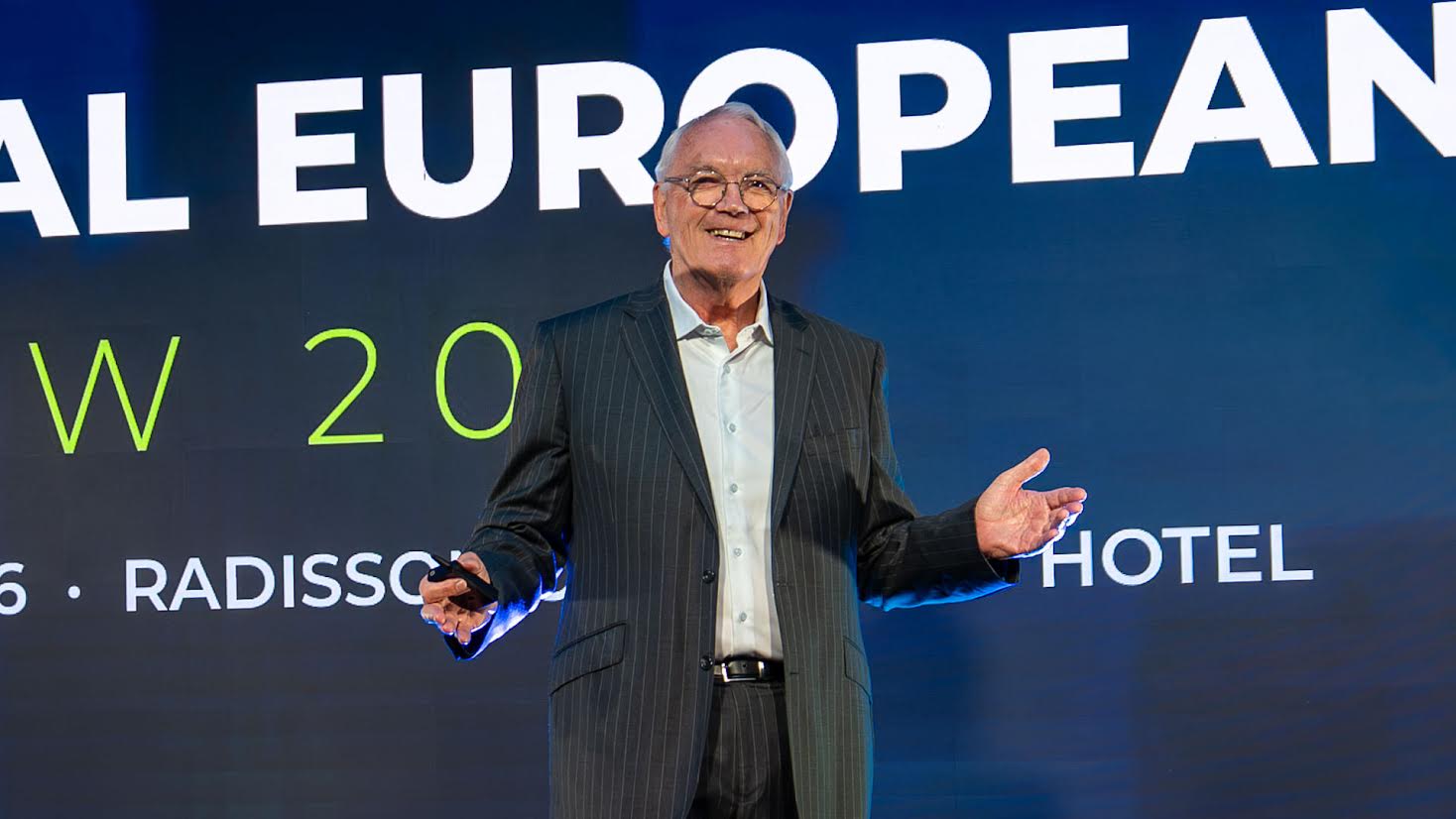
Fake news, digital advertising fraud, and the growing volume of AI-generated content are undermining trust in online media. In this environment, out-of-home advertising (OOH) has an advantage that the industry has yet to fully capitalize on, said Tom Goddard, President of the World Out of Home Organization (WOO), at the Central Europe Forum in Warsaw.
Driven by the development of digital out-of-home (DOOH), OOH is recording double-digit growth rates, but it continues to grow more slowly than online advertising. Goddard expects this could change over the next five years, particularly as marketers increasingly reassess the role of social media in their strategies.
Trust as a Competitive Advantage
Social media platforms are facing growing regulatory pressure, particularly regarding the protection of minors. Numerous countries are considering restrictions similar to Australia’s ban on social media use for children under 16, while issues such as cyberbullying, deteriorating mental health, and exposure to online predators are raising further questions about the responsibility of digital platforms. Goddard also pointed to the substantial fines imposed on Meta, in the context of what has been described as social media’s “tobacco moment.”
For advertisers, fraud involving fake impressions, clicks, and conversions is particularly problematic, costing brands billions each year, while low-quality AI-generated content further undermines the credibility of the digital environment.
This is precisely where Goddard sees an opportunity for OOH. Citing research, including a recent study by the US company Outfront, he emphasized that out-of-home advertising ranks first in consumer trust, thanks to brands’ presence in real-world, physical environments. He also recalled the words of Stephan Loerke, head of the World Federation of Advertisers (WFA), that trust remains the guiding North Star of the marketing industry.
Four Priorities for the OOH Industry’s Continued Growth
Although trust represents a significant competitive advantage, Goddard believes it is not enough on its own to increase market share. He identified four areas in which the OOH industry must work collectively to capitalize on the opportunities created by changes in the media market.
The first priority is proving advertising effectiveness. The industry must demonstrate more convincingly the results it delivers for advertisers, and Goddard announced that a major joint initiative is being developed to address this challenge.
The second is improving audience measurement and the use of data. Although this is a fundamental requirement for competitiveness, many markets still lack adequate measurement systems, while existing systems are often incomplete or poorly coordinated.
The third area concerns better connectivity between advertising technologies. Programmatic buying of OOH inventory is progressing, but most transactions still involve complex, labor-intensive, and insufficiently connected processes. Goddard therefore believes that stronger integration and consolidation of technology platforms and AdTech providers are needed.
The fourth priority is stronger promotion of out-of-home advertising’s competitive advantages. In this context, he highlighted the work of WOO, which now represents 300 OOH media owners worldwide, as well as the need for more active national trade associations that could further advocate for the industry’s interests.
Collaboration to Secure a Larger Share of the Media Market
For Goddard, collective action across the industry is essential if current growth is to translate into a long-term shift in the balance of power within the advertising market. Effectiveness, reliable data, connected technology, and stronger representation of the OOH sector’s interests are interconnected challenges that individual companies cannot resolve alone.
He summarized his message from Warsaw with the words “Collaboration is Magnification,” emphasizing that cooperation can further strengthen the results of the entire industry.
As digital platforms face growing questions about safety, credibility, and advertising value, out-of-home advertising has an opportunity to turn its presence in the real world into a stronger competitive argument. However, for consumer trust to translate into a larger share of advertising budgets, the industry must demonstrate that it can deliver measurable effectiveness alongside credibility.

