

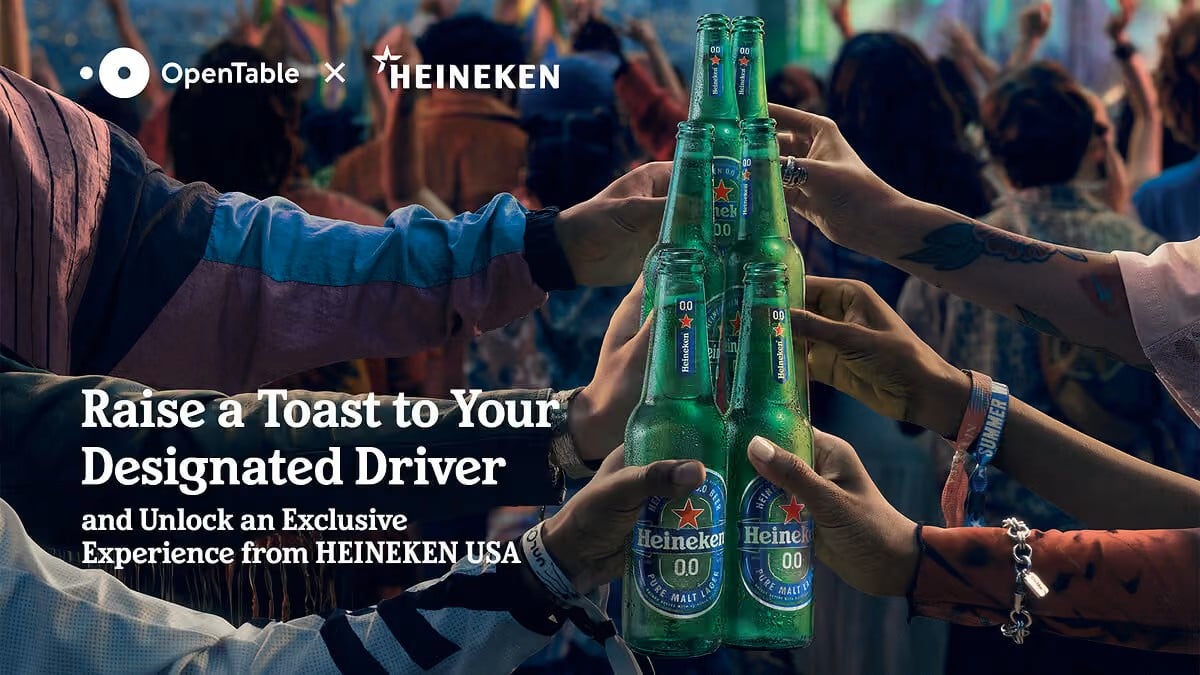
A table reservation usually ends with selecting the time, number of guests and an optional note for the restaurant. A new program by HEINEKEN USA and OpenTable introduces another step: who in the group will not drink that evening and who will drive everyone else home safely.
The partnership is part of Heineken’s There’s No Such Thing As Fine to Drive platform, dedicated to responsible alcohol consumption. The first edition of the program is currently taking place in Houston, where guests at ten restaurants can appoint a designated driver during the reservation process through a dedicated page on OpenTable. The pilot began on July 31 and runs every weekend through October 4.
Before making a reservation, users complete a short survey, after which they can select the person who will drive. Selected participants receive a $25 gift card for the purchase of non-alcoholic Heineken 0.0. Certain drivers who also complete a follow-up survey after the night out may receive a $100 voucher from SafeRides.org, intended for transportation during a future night out.
The reward is therefore not tied exclusively to the evening on which the person took on the role of designated driver. The voucher for a future night out creates another opportunity to plan a safe journey home and extends the relationship with the participant after the restaurant visit.
The point at which the question is asked is more important than the wording itself. The decision about the driver is no longer left until the end of the evening, when the bills have already been paid and the group is considering how to get home. Heineken and OpenTable have moved it into the planning stage, before arriving at the restaurant and placing the first order.
In selecting that moment, the company relied on its own research. As many as 71 percent of surveyed Americans said they would be more likely to arrange a safe journey home in advance if they were prompted to do so while making a reservation. At the same time, 57 percent do not think about a designated driver or transportation home at all during that stage.
The data also influenced the form of the reward. According to the research, 64 percent of Americans would volunteer to drive more often if the restaurant or venue paid for their non-alcoholic drinks. Heineken 0.0 is therefore positioned in the program not only as an alternative to alcoholic beer, but also as a concrete benefit for the person taking responsibility for the group.
Houston was selected following additional local research. Among surveyed city residents, 34 percent admitted that they had previously underestimated how intoxicated they were until they were already behind the wheel. Another 36 percent had driven after consuming alcohol because they considered themselves the “most sober” person in the group.
The partnership was implemented through OpenTable Media, which enables advertisers to incorporate their messages and offers into the restaurant discovery and reservation process. The reservation platform is not merely a promotional channel in this case. It becomes a place where the brand attempts to influence the guest’s decision before alcohol consumption begins.
The program also creates a more measurable space for communication about responsible drinking. The number of appointed drivers, completed surveys, distributed rewards and redeemed vouchers can show whether the message remained at the level of awareness or actually changed the plans for the evening. For Heineken, it is an opportunity to connect a social issue with its growing portfolio of non-alcoholic products, while for OpenTable, it is a test of the reservation interface’s new role in shaping guest behavior.

