

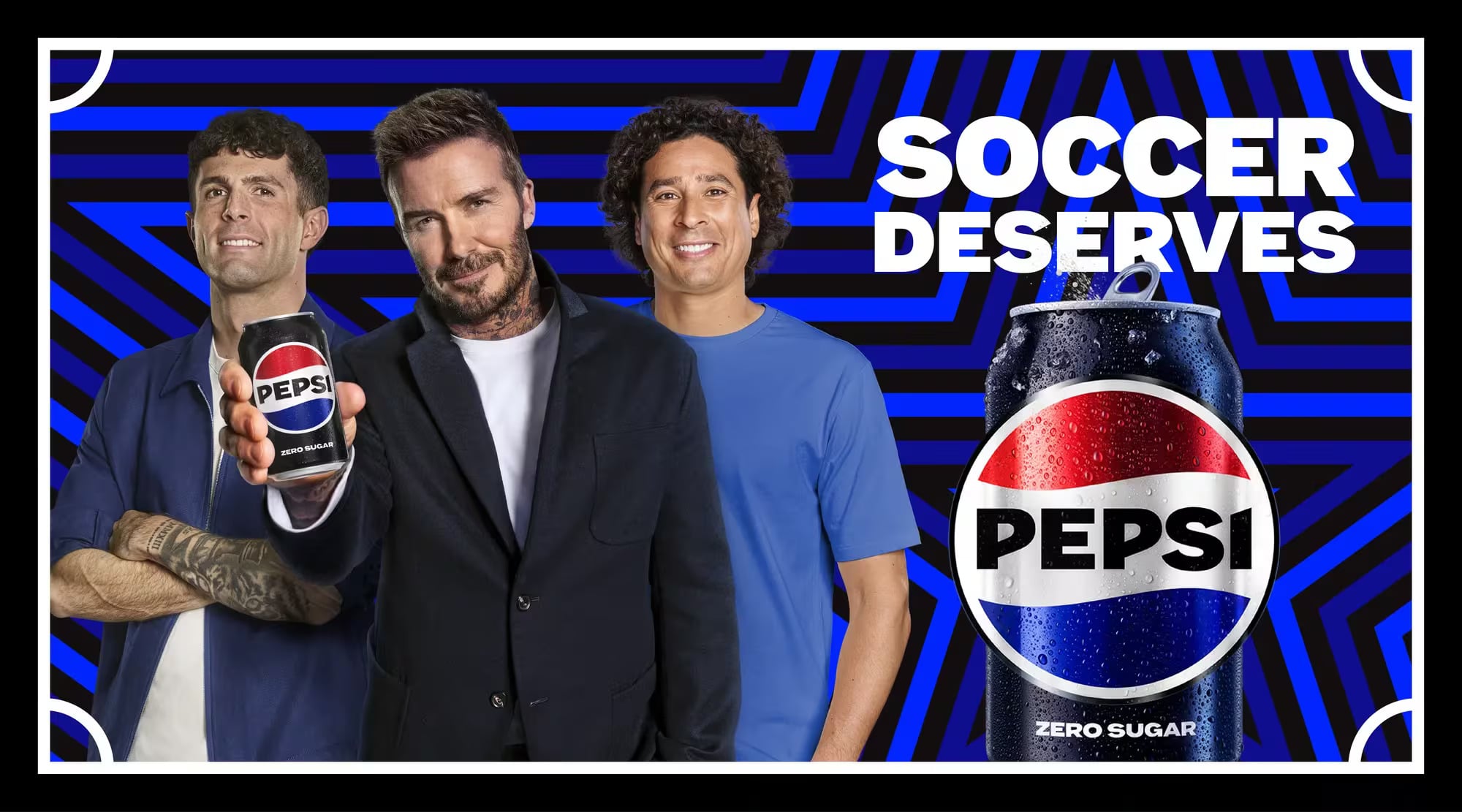
Photo source: Pepsico
Ahead of the UEFA Champions League final, Pepsi has unveiled its new global “Soccer Deserves Pepsi” campaign, continuing a trend in which major sports and FMCG brands are shifting their focus away from the match itself and toward the broader experience surrounding it.
Unlike traditional sports campaigns centred on the pitch and athletic heroes, the new communication is built on the idea that watching football is a social ritual in which food, socialising and shared support for a team play just as important a role as the game itself.
The campaign features David Beckham, Guillermo “Memo” Ochoa, Christian Pulisic and Vinícius Júnior, while the creative concept was developed in collaboration with BBDO and partners Copa90 and The PepsiCo Studio. National spots were first launched across digital channels, with television broadcasts tied to this year’s Champions League final.
The campaign also highlights a broader shift in the way brands approach sports marketing. Rather than relying on messaging built around results and competition, the focus is moving toward audience habits, local traditions and the moments of gathering that accompany major sporting events.
Pepsi will further expand the campaign through limited-edition packaging, retail activations and digital offers linked to match viewing occasions. A dedicated part of the activation includes a partnership with DoorDash, where users will have access to promotional offers connected to football broadcasts.
Throughout the summer, the brand will also launch “The Sauce”, a content series created in partnership with COPA90. The series will explore the relationship between football and food traditions across different American cities, further reinforcing the idea that fan culture extends far beyond the ninety minutes of play.
The new campaign also serves as a promotion for Pepsi Zero Sugar, while providing another example of how global brands are using sport as a platform for conversations about identity, community and everyday audience rituals. At a time when consumers are becoming less responsive to traditional advertising messages, these kinds of cultural moments are increasingly becoming one of the most important tools for building brand relevance.

