

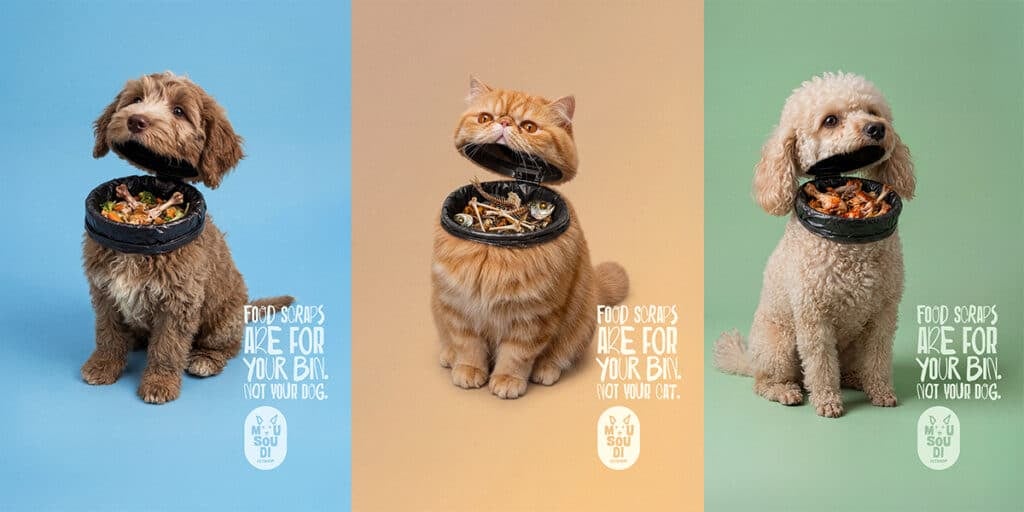
The look that appears beneath the table as soon as lunch begins is familiar to most dog and cat owners. A piece of meat or a bite from the plate can then easily turn into a reward, even though human food scraps can be harmful to animals’ health.
That everyday scene is the basis of Food Scraps, a print campaign presented in Greece by Mousoudi Pet Shop and Ogilvy Greece. Instead of photographs of food, nutritional warnings or lists of prohibited ingredients, the campaign shows owners what their habit looks like when translated into a literal image.
The dogs and cats in the ads have the bodies of waste bins. Their open mouths become lids, while chicken bones, fish heads and other meal leftovers stick out from inside. They are recognisable enough to appear endearing at first glance, but that reaction quickly changes once it becomes clear why the animals have been depicted in this way.
The message of the ads leaves even less room for misinterpretation: food scraps belong in the bin, not in a dog or cat. The visual idea thus connects two actions that are often viewed separately in everyday life. Throwing a leftover into the bin is considered normal, but many owners still see offering that same leftover to a pet as a sign of affection.
Food Scraps does not attempt to frighten owners with possible consequences or lecture them about proper nutrition. The ad first draws attention with the familiar sight of a pet, then changes it with a detail that creates discomfort. It is precisely from this shift that a warning emerges, one that can be understood without any additional explanation.
The idea is connected to the approach of Mousoudi Pet Shop, which presents itself as a brand focused on animal welfare. The agency states that the aim was to draw attention to the still common habit of feeding dogs and cats leftovers, which can have negative consequences for their health.

