

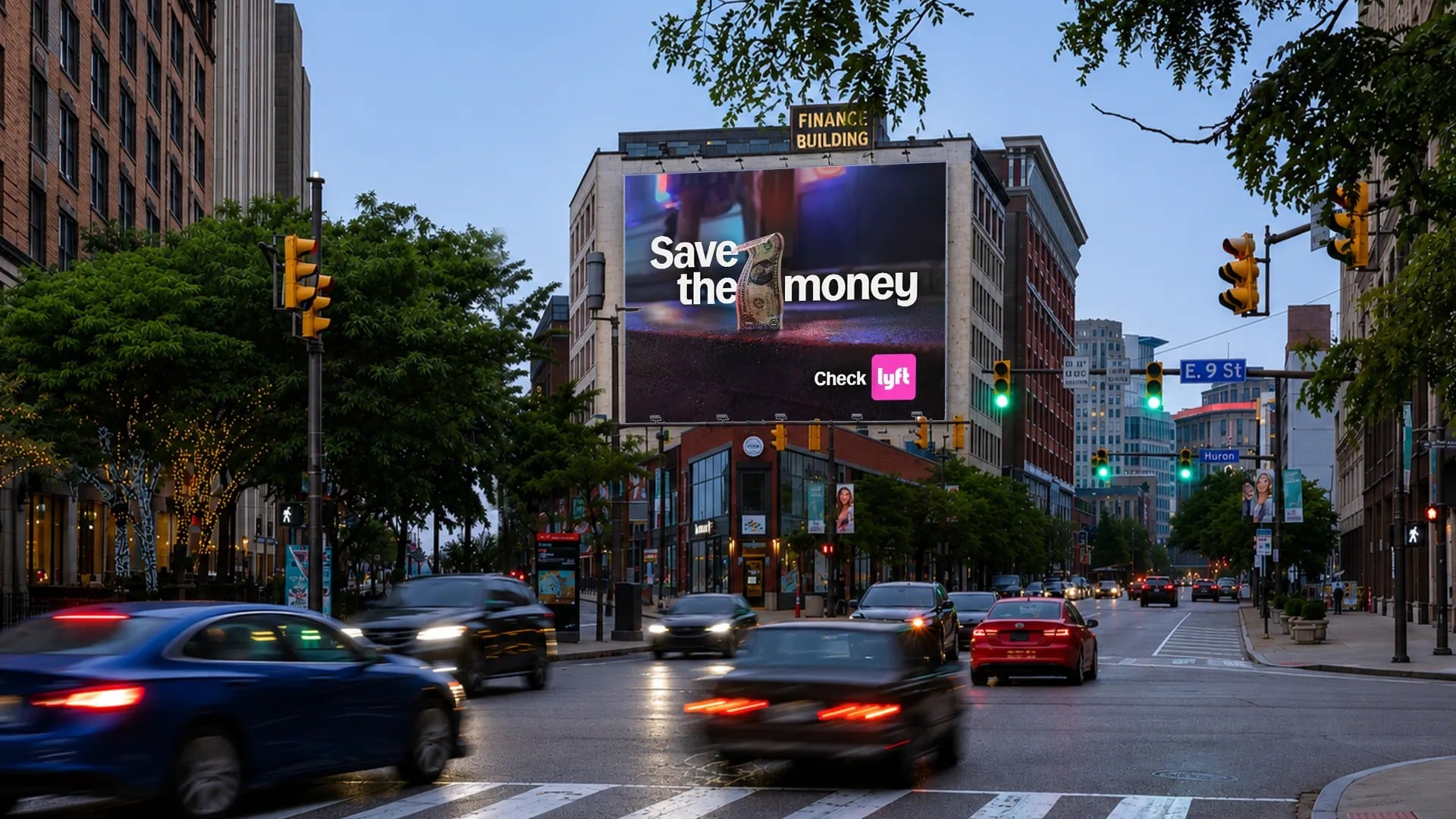
In a category where decisions are often made automatically, almost without thinking, Lyft decided to stand precisely at that point: between habit and choice. The new campaign Save the Money does not invite users to change apps, delete the competition, or make a big decision. Its message is much simpler: before you book a ride, check Lyft as well.
The campaign was created by the agency Zulu Alpha Kilo, and at the center of the story is a lonely one-dollar bill. It is not just a prop, but the main character of the campaign. Named Bill, the banknote wanders through city streets, goes through unpleasant and almost dramatic situations, while a serious narrator’s voice in the style of a public service announcement warns viewers about the money that is “forgotten” every day because users do not compare prices across several rideshare apps.
The humor of the campaign comes precisely from the fact that a small, everyday decision is treated with almost institutional seriousness. What could have been a dry message about saving money has been turned into a mock PSA story about abandoned money. The more serious the tone, the more absurd and memorable the idea becomes.
The starting point of the campaign is not only a creative joke, but research. According to the findings of a study by the National Bureau of Economic Research, only 16.1 percent of users check both rideshare apps in order to find a lower price. Research by economists from Harvard and Johns Hopkins, based on millions of rideshare trips in New York, also showed an average difference of 14 percent between the prices of Lyft and Uber for the same ride. For a user who takes 100 rides a year, that difference can mean around 177 dollars.
For Lyft, this is above all a question of habit. The phrase “calling an Uber” has entered everyday speech as a synonym for booking a ride, and precisely such automatic behaviors can cost users in the long run. Instead of directly attacking the competition, the campaign focuses on a simple change in behavior: taking a few seconds to check the price.
The hero film is 60 seconds long and was directed by Jeff Low from the production company OPC Productions. Special attention is drawn to the handcrafted performance of the character Bill. Instead of relying entirely on digital effects, the film uses practical effects and puppetry techniques, which gives the campaign an unusual warmth and tactility. Puppeteer Oliver John Taylor, known for his work on projects such as Eric and Star Wars: The Force Awakens, and Andy Gent, whose work includes the films Fantastic Mr. Fox and Coraline, worked on the project.
Throughout the film, Bill behaves almost like a human being: he slumps, shivers, lifts himself up hopefully when he hears footsteps, and then drops again when passersby walk around him. That small range of movements is enough for the banknote to become a character that the audience, however absurd it may sound, begins to believe in.
According to Cass Zawadowski, executive creative director for global brand at Lyft, the campaign shows what kind of brand Lyft wants to be. The idea, she says, works because it is human, carefully crafted, and clear enough to change user behavior. For Lyft, this is not just a campaign about a lower price, but a way to position transparency as a brand strategy.

