

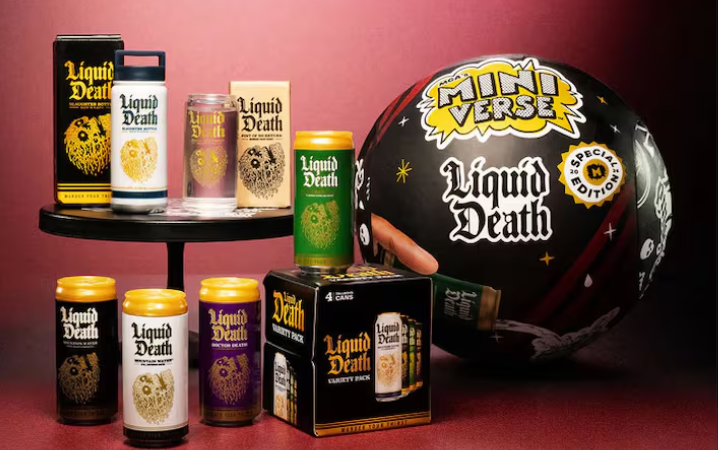
The new collaboration between Liquid Death and MGA Entertainment shows how brands are increasingly moving beyond traditional merchandise and transforming products into collectible objects designed for fandoms, social media, and internet culture.
Over the past few years, Liquid Death has built one of the most distinctive brand identities among FMCG companies by combining heavy metal aesthetics, absurd humor, and internet communication that feels more like an entertainment brand than a traditional bottled water company. That same logic now drives its new collaboration with MGA Entertainment through the Miniverse collectible line of miniature products.
The new “Miniverse Real Brands Liquid Death Special Edition” collection features four miniature versions of Liquid Death cans, alongside a series of accessories inspired by the brand’s original packaging and merch aesthetics. The collection includes miniature props such as a branded pint glass, a small “Slaughter Bottle,” display elements, and toy accessories intended for collectors, shelf-display culture, and social media content.
The launch is accompanied by a promotional video that uses Liquid Death’s recognizable communication style – a mix of dark humor, metal aesthetics, and intentionally exaggerated dramatization – this time set within a fully miniature world of products and collectibles culture.
In recent days, MGA Entertainment gradually teased the collaboration across social media, sparking widespread speculation among fan communities before the official product reveal. The collaboration therefore fits into the broader growth of the mini collectibles market, blind-box culture, and nostalgia-driven collaborations that have become especially popular among Gen Z and millennial audiences in recent years.
“Partnering with Liquid Death felt like a natural fit because both brands love breaking expectations and creating products that spark conversations among audiences,” said Josh Hackbarth, Chief Marketing Officer of MGA Entertainment, for Ad Age.
He added that the collaboration goes beyond the traditional food-and-beverage licensing model because it relies on internet culture, humor, fandoms, and a visual identity that audiences currently recognize and share across social media.
The collaboration also highlights how the collectibles market increasingly functions as an extension of the entertainment and social media economy, where products are no longer designed solely for purchase and use, but also for display, unboxing content, community identity, and online shareability.

