

Cannes Lions International Festival of Creativity concluded this year’s edition with the announcement of the final Lion winners. The final day brought Grand Prix awards in the categories Glass: The Lion for Change, Sustainable Development Goals Lions, Film Lions and Dan Wieden Titanium Lions, as well as the Grand Prix for Good award.
This year’s edition will also be remembered for Kenya’s historic result, as the country won its first Grand Prix at Cannes Lions. The recognition came in the category Sustainable Development Goals Lions for the work Paid Sick Leave for Cows, created for Too Good and signed by The Partnership Agency from Nairobi.
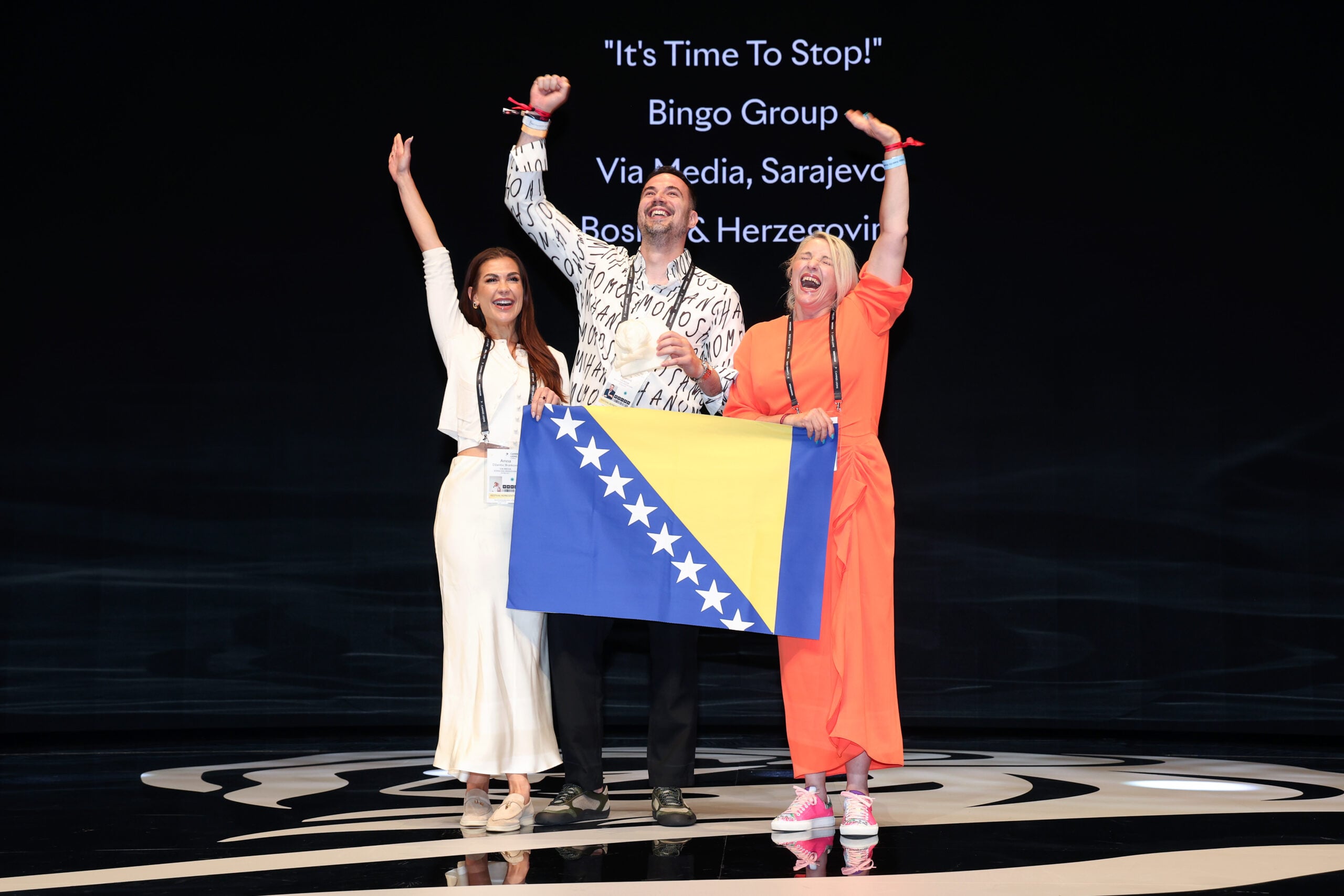
In this category, 289 entries were received, and the Jury awarded nine Lions: two Gold, two Silver, four Bronze and the Grand Prix. Paid Sick Leave for Cows connects labour rights and agriculture, opening the question of the value of work in food systems. Instead of remaining at the level of awareness raising, the campaign proposes a model that benefits people, business and animals involved in food production. Bronze in this category went to BiH agency Via Media for the campaign It’s Time to Stop.
The Glass: The Lion for Change category had 122 entries this year, and five Lions were awarded: one Gold, one Silver, two Bronze and the Grand Prix. The Grand Prix was won by Nigrum Corpus, a work created for IDOMED and Instituto Yduqs and signed by Artplan from São Paulo.
Nigrum Corpus addresses racism in medicine and turns it into a problem that future doctors learn to recognize, understand and treat. The work was designed as a multimodal medical textbook that sees racism as part of medical education and patient care, moving the topic from the space of social criticism into the space of concrete education and change in practice.
The largest of the final categories was Film Lions, with 1469 entries. A total of 45 Lions were awarded, including eight Gold, 14 Silver, 22 Bronze and the Grand Prix. The Film Grand Prix was won by two Super Bowl films for Claude: Can I Get a Six Pack Quickly? and How Can I Communicate Better with My Mom?. The campaign was signed by independent agency Mother London.
The darkly humorous films position Claude as an AI tool that promises not to show commercial messages in its products. At a time when the AI market is increasingly being shaped by advertising, the campaign uses that very space to ask where ads truly belong.
In the Dan Wieden Titanium Lions category, 138 works were entered. The Jury awarded five recognitions: four Titanium Lions and the Grand Prix, which was won by Haven, a work for Suncorp Insurance signed by Leo Australia.
Haven turns insurance into a long-term public initiative, combining education, design solutions and policy advocacy. The focus of the work is preparing households and communities in Australia for extreme weather conditions. Instead of classic communication by an insurance company, Haven builds a broader system of support and prevention.
The Grand Prix for Good award went to 600K Network, created for Comando Con Venezuela. The work was signed by Rainbow Lobster from Mexico City and Comando Con Venezuela from Caracas.
The campaign turned a simple QR code into a decentralized system for verifying election results. During the 2024 presidential elections in Venezuela, more than 600,000 citizens became part of an electoral verification network.
The festival’s Special Awards were also announced at the final ceremony. Ogilvy was named Network of the Year, ahead of VML and TBWA Worldwide. The title Independent Network of the Year was won by Rethink, while Mother and Wieden+Kennedy also entered the top three independent networks.
Agency of the Year is LePub from Milan. Second place went to VML from New York, while third place went to Rethink from Toronto. Among independent agencies, first place was won by Rethink from Toronto, ahead of Isle of Any from New York and Mother London.
The production recognition Palme d’Or was won by MJZ from the United States. They were followed by Biscuit Filmworks from the United Kingdom and CANADA from Spain. The title Creative Brand of the Year was won by Heineken, ahead of KitKat and IKEA.
In the In-house Agency of the Year category, first place went to Apple from Cupertino. Second was Google Creative Lab from Mountain View, and third was L’Oréal from New York.
Cannes Lions also announced agencies of the year across individual festival sections. Rethink from Toronto won the title Agency of the Year, Classic, while TBWA\Media Arts Lab from Los Angeles was named agency of the year in the Craft section. LePub from Milan won Agency of the Year, Engagement, while DAVID from New York won the title Agency of the Year, Entertainment. In the Experience section, VML from Warsaw celebrated, while Motion Sickness from Auckland won the recognition Agency of the Year, Good. In the Health section, first place went to Fallon from Minneapolis, while in the Strategy section, agency of the year is Publicis Conseil from Paris.
Among independent agencies, Rethink from Toronto won Independent Agency of the Year, Classic, while Isle of Any from New York was named independent agency of the year in the Craft section. Special from Los Angeles won Independent Agency of the Year, Engagement, while Wieden+Kennedy from Mexico City won the title Independent Agency of the Year, Entertainment. In the Experience section, WESAYHI from Sliema celebrated, while Motion Sickness from Auckland won the recognition Independent Agency of the Year, Good. Klick Health from Toronto was named independent agency of the year in the Health section, while Rethink from Toronto also won Independent Agency of the Year, Strategy.
With the final announcement of winners, the curtain came down on this year’s edition of Cannes Lions International Festival of Creativity. This year’s festival brought Grand Prix recognitions from Kenya to Australia, but also a significant success for the region. Croatian agency Imago Ogilvy won a Bronze Lion for the campaign A Cry for Hydration, while Sarajevo’s Via Media reached its first Cannes Lion thanks to the campaign It’s Time to Stop. Two regional recognitions concluded a week that once again showed that ideas created in this part of Europe can compete equally with the best on the global creative stage.

