

Artificial intelligence has become part of everyday life for Generation Z. They use it to search for information, find inspiration, organize their lives, learn, entertain themselves and communicate. AI is no longer a technology of the future. It has become routine. Yet the very generation that grew up surrounded by screens and algorithms is also showing an unexpected level of caution toward that same technology.
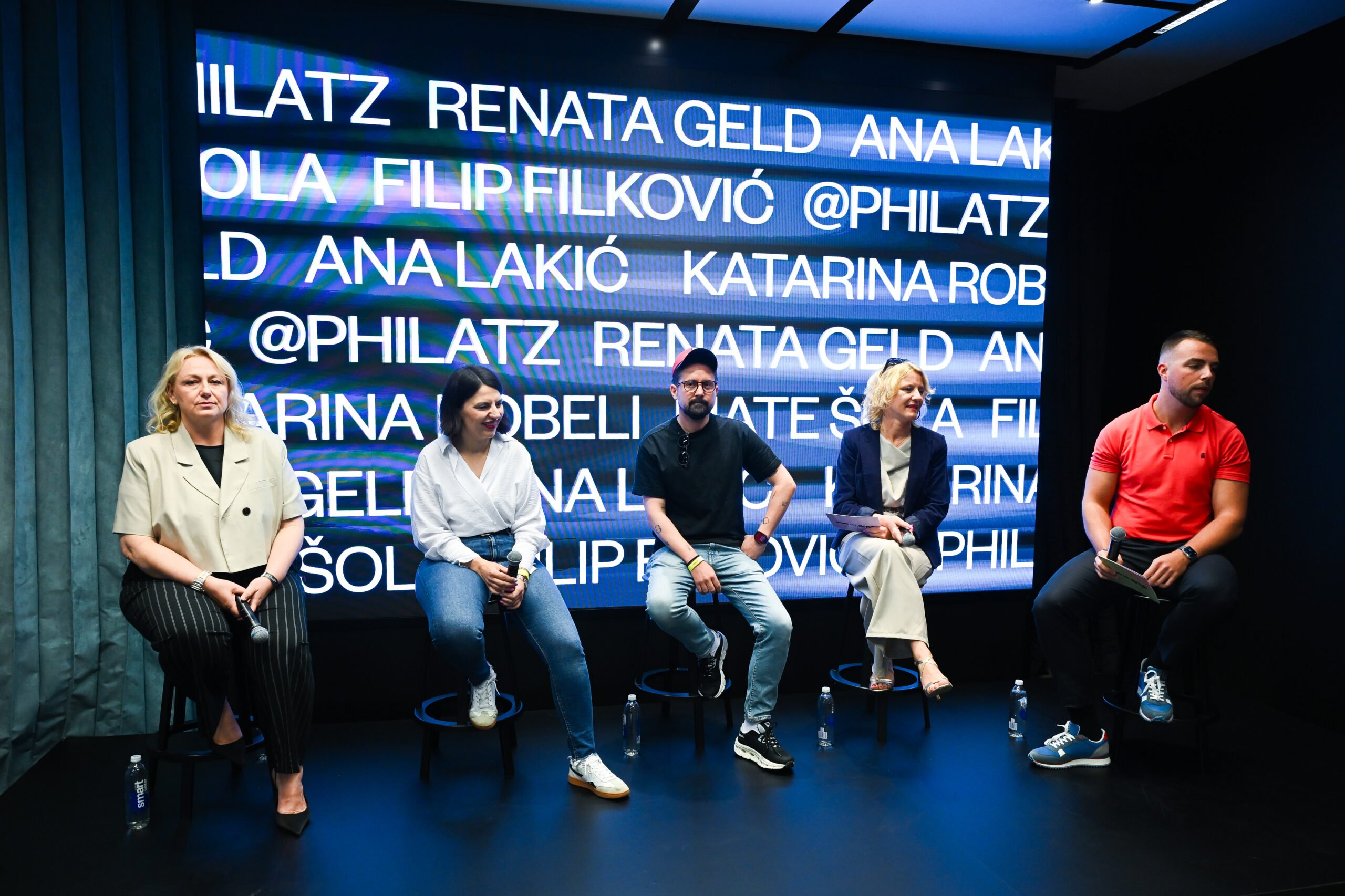
This was confirmed by research conducted by AMA Grupa (McCann & UM),, presented during at Dani komunikacija’s panel discussion on Generation Z’s relationship with artificial intelligence, where Katarina Robeli and Mate Šola spoke with Filip Filković, Renata Geld and Ana Lakić.
The research data revealed an interesting paradox: as many as 80 percent of Generation Z respondents use AI every day, but only one third truly trust it. That imbalance perhaps reveals the most important characteristic of young people’s relationship with technology today. They use it because it is unavoidable, but they do not approach it naively.
Generation Z grew up in a time of content hyperproduction, filters, algorithms and digital manipulation. For them, the internet is no longer a space of absolute freedom and trust, but a space of constant verification. AI fascinates them while simultaneously making them cautious, because they fully understand how easily it can create a false reality.
“Young people can very easily recognize generated content and they do not want to blindly trust everything they see,” said Renata Geld, founder of the Center for Cognitive Sciences at the University of Zagreb, concluding that distrust toward AI is partly the result of enormous media hype and the growing amount of content whose origin can no longer be clearly identified.
The research also showed that most respondents have noticed brands using AI in communication, making transparency one of the key questions of modern marketing.
The panelists agreed that brands will have to communicate openly when using AI, especially at a time when the line between authentic and generated content is rapidly disappearing.
“Audiences may accept creative, ‘unreal’ AI campaigns from playful and digitally oriented brands, but they still expect honesty, like with Senzacija, one of the brands from Jamnica’s extensive portfolio,” said Ana Lakić, Executive Director of Marketing and Research & Development of the Beverage Group at Jamnica Plus.
One particularly interesting point raised during the discussion was that today it may no longer matter whether something was created with the help of AI, but whether it is high quality and emotionally engaging. Speaking about the creative industry, Filip Filković emphasized that AI can be a tool, but not a replacement for authorship and original ideas.
“If you create content authorially with the help of AI, then it is still your content,” Filković said, adding that technology may accelerate processes, but cannot replace genuine human creativity.
His perhaps most important message focused on storytelling.
“Storytelling cannot be done by AI. We will end up with the same stories and the same clichés. Real stories have soul and move us to truly feel something and take action.”
At a time when algorithms can generate thousands of visuals, texts and videos in a matter of seconds, emotion becomes the key difference between content that simply passes by and content that truly stays with people.
A similar perspective was shared by Ana Lakić, who explained that AI is already significantly changing the way marketing teams operate.
“AI shortens the process, gives us answers faster and helps us plan campaigns better, but we still do not rely on it entirely,” said Lakić, emphasizing that all data still needs to be verified through relevant sources and research trusted by companies.
AMA Group’s (McCann & UM), research also showed that Generation Z will increasingly discover new brands through AI tools. AI may not yet be the final recommendation when it comes to purchases, but it is becoming the first step in decision-making, a kind of new “search engine” for a generation that no longer searches the internet in the same way as previous generations.
The panel ultimately opened what may be the most important question of the future: how much longer will we trust our own eyes? Because at a moment when AI can generate an almost perfect reality, the only remaining filter may be human intuition.
And Generation Z, it seems, understands that very well.
The official research results will be presented by AMA Group (McCann & UM), in the coming period, and we are already looking forward to hearing them.

