

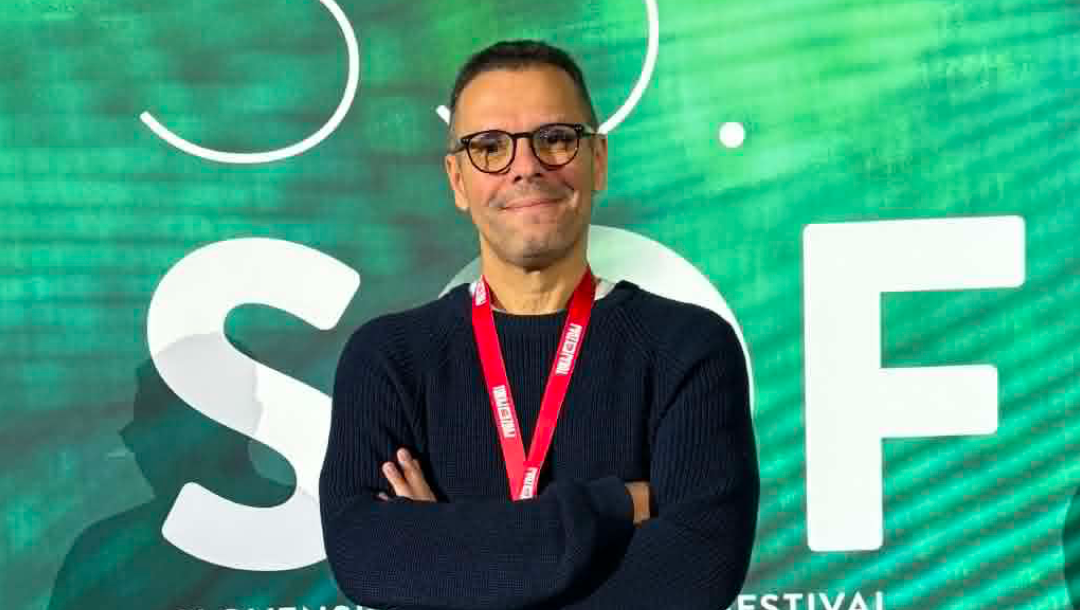
“Artificial intelligence can be either the greatest threat of our time or its greatest opportunity,” stated Fabio Seidl in his opening remarks. Seidl, former Global Head of Creativity and Brand at X and Meta. With 25 years of experience at the intersection of storytelling and emerging technologies (AI, AR, VR, and social media), he has worked with partners such as Disney, Samsung, Google, and T-Mobile on globally impactful projects.
On the SOF stage, he examined the transformation of creativity in the context of artificial intelligence and emphasized that, in the future, the greatest competitive advantage will belong to brands capable of building communities rather than merely running campaigns. In his view, intelligence must be understood in a broader sense: “Intelligence is not merely a mathematical formula. It is formed through curiosity and imagination.” Technology alone therefore does not generate breakthroughs; rather, it is the way it is used and the quality of the relationships we build with it that enables them.
Seidl argues that artificial intelligence excels at managing processes, automation, and optimization, but still lacks an understanding of human complexity. “We expect machines to recognize the individuality of people,” he noted, adding that this is precisely where the human role becomes essential: “Automation masters the question of how, while human talent still understands why and what.” In this context, he believes the value of creatives is shifting from idea generation toward understanding people, culture, and broader context — an increasingly demanding task: “Understanding people will always be more difficult than understanding technology.”
He also devoted significant attention to fandoms and fan communities, which he sees as a powerful yet still underutilized element of modern marketing. He is convinced that one-way communication models are disappearing, as future brands will not only address audiences but actively involve them in co-creation. “It doesn’t matter whether you have a big idea if you don’t understand how it connects with people,” he warned, adding that culture is the fundamental driver of innovation: “Innovation is driven by culture. You must understand what people feel and what they talk about.”
He views artificial intelligence primarily as a tool for creating more relevant and useful experiences, while emphasizing that technology without human participation remains limited. “If we make technology useful and hyper-relevant, the machine will do what machines do,” he explained. He concluded with a remark that strongly resonated with the audience: “Whatever you do with new technology, you must primarily think about how you will encourage people to participate.” In a time when discourse is often focused on the power of algorithms, Seidl highlights a key thesis: the future does not belong to technology itself, but to those who know how to use it to achieve a deeper understanding of people.

