

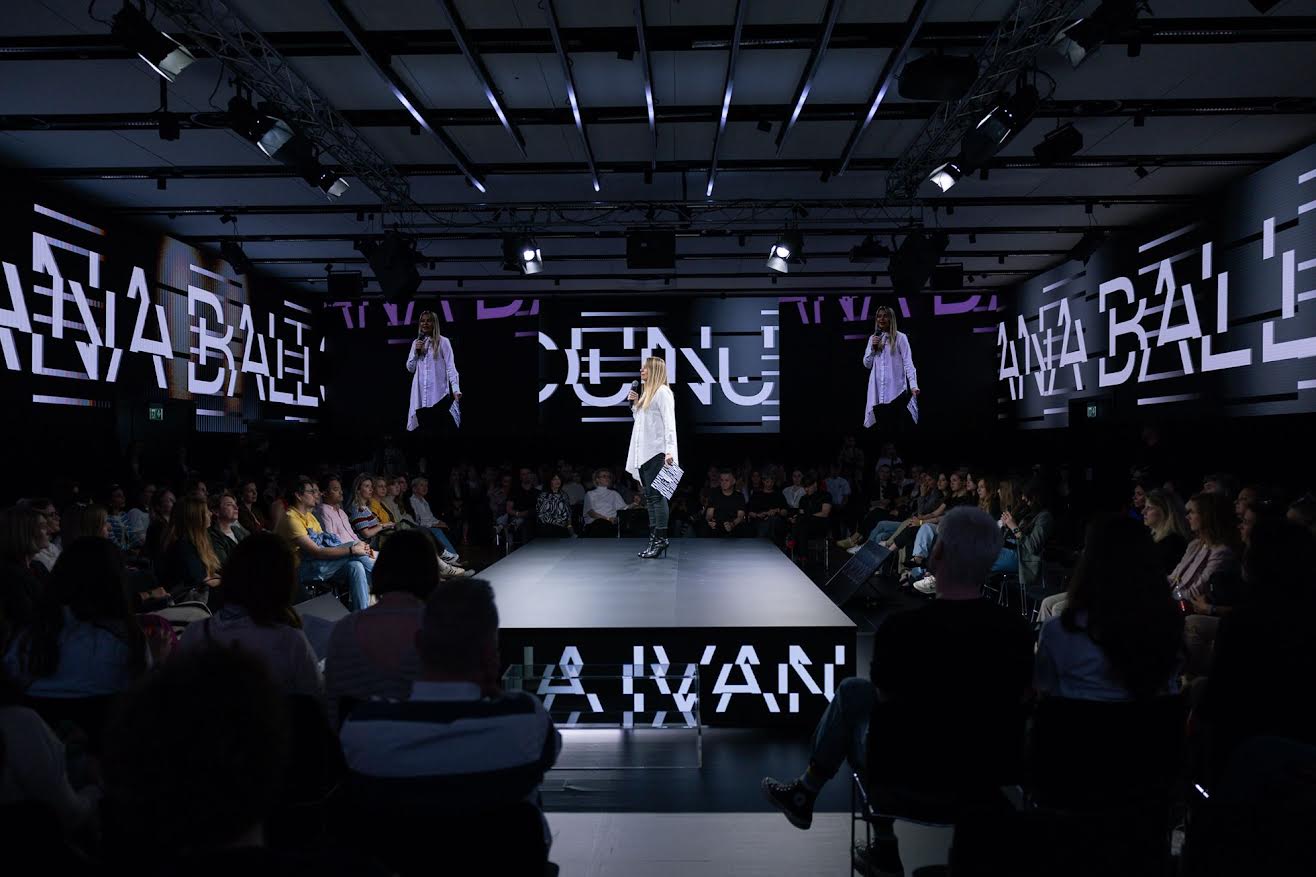
Dani komunikacija 2026 once again turned Rovinj into the central meeting point of the regional communications and creative industry, but this year’s edition of the festival already showed on its first day that the focus is no longer only on inspiration and big names, but on questions that directly affect the way the industry functions today.
The twelfth edition of the festival opened on May 7 in an atmosphere that clearly demonstrated how much the communications scene has changed in recent years. More than a classic festival gathering, Dani komunikacija today functions as a place where market pressures, technology, creativity, regulation and changes in audience behaviour collide.
The festival was opened by members of the Dani komunikacija Organising Committee: Dunja Ivana Ballon, Jelena Fiškuš, Davor Bruketa, Angela Buljan Šiber and Damir Ciglar.
Speaking about this year’s programme, Dunja Ivana Ballon emphasised that the idea behind the festival was not to offer a single message or a linear narrative, but to reflect the way the industry itself functions today. “We did not design the programme as a single message to be ‘read’, but as something that happens throughout the entire festival – with overlaps, contrasts and layers, just like the industry it reflects. The industry no longer functions linearly, so there is no reason for the programme to look that way either; the idea was not to confirm what we already know, but to open topics that may not always be comfortable, but are important for the further development of the profession,” she pointed out.
Jelena Fiškuš also reflected on the broader social and market context, emphasising that the communications industry today carries a much greater responsibility than simply selling products. “We all know that in the main hall we listen to leading global names, but the programme dealing with topics relevant to our market and our everyday reality carries equal weight. In a world that is becoming increasingly uncertain, it is important that we act as a community – because we are not only selling products, but also have a real opportunity to shape values, culture and the perception of the present,” she said.
The main programme opened with a conversation featuring Stephan Loerke, one of the key voices of the global advertising industry, who spoke about the relationships between advertisers and agencies at a moment when market rules are changing faster than the industry is able to redefine them.
Special focus was placed on pitch processes and the way they continue to shape a large part of the communications market. The topic is particularly relevant for the regional market as well, considering that the HURA Intelligence Hub recently presented the Agency Selection Guidelines, developed according to the frameworks of the World Federation of Advertisers and VoxComm, with the aim of introducing more transparency, accountability and sustainability into relationships between clients and agencies.
Following the discussion on market relationships, the programme turned towards the broader economic and technological context of the industry. In the lecture Tomorrow’s Advertising Market, Today, Daniel Knapp opened a question the industry often asks only once changes have already become obvious: what is actually changing and why.
Through data on investments, the media market, platforms and regulatory changes, Knapp demonstrated how the market is already transforming under the influence of AI technologies, new distribution models and changes in digital advertising.
One of the more notable lectures of the first day was also delivered by Dora Pekeč, who spoke about communication in an environment where there is no longer a single audience or a single version of a message.
Drawing from her experience in political communication, including the Zohran for NYC campaign, Pekeč spoke about how every message today enters a space in which it is simultaneously reinterpreted, challenged and adapted, often completely outside the control of those who originally created it.
In such an environment, communication no longer functions as a predefined system of messages, but as continuous decision-making in real time, where context often becomes just as important as the message itself.
The themes of relationships between politics, regulators, the public and brands were further explored through the discussion Communication Under Pressure: Navigating the Push and Pull of Politics, Stakeholders and Competing Interests powered by Ožujsko pivo, which focused on what communication management looks like today in a space where the boundaries between market, society and politics are becoming increasingly blurred.
Although the first festival day already opened a series of key questions for the industry, the main part of the programme is still to come. The second day of the festival is expected to feature some of the biggest names of this year’s edition, including Mark Pollard, Chris Do, Neil Patel, Steve Keller and Alex Cattoni.
After only the first day, this year’s Dani komunikacija already demonstrates that the industry no longer gathers solely because of trends and inspiration, but because of the need to understand how attention, markets, influence and communication function today at a moment when the rules are changing almost week by week.

