


The communications industry today operates in an environment where messages change by the hour, audiences actively shape campaigns, and the difference between relevant and invisible increasingly depends on a brand’s ability to be different, not just “better”. These were precisely the questions at the center of this year’s traditional press briefing at Dani komunikacija 2026, where festival organizers and main stage speakers opened discussions around the topics currently defining the state of the industry.
Speaking at the media conference were Dunja Ivana Ballon, festival and program director, Jelena Fiškuš, President of the Management Board of HURA and member of the Organizing Committee, as well as this year’s main stage speakers Chris Do, Mark Pollard and Dora Pekeč, who, after the briefing, further commented for Media Marketing on some of the most discussed topics within the communications industry today – from strategy and differentiation to political communication and the audience’s relationship with content.
Speaking about the role of festivals today, Dunja Ivana Ballon emphasized the importance of creating a space where the industry can gather and openly discuss the changes affecting the entire communications landscape:
“This year’s program is not linear or one-dimensional – it has overlaps, contrasts and layers, just like the industry it reflects. That’s why it doesn’t happen only inside conference halls, but across different locations and formats, and we intentionally included perspectives from outside the industry as well – science, culture and politics, as the context influencing how we present attention, time, channels and perception today.”
Building on that, Jelena Fiškuš told our portal that the regional context remains essential for understanding both the market and the communications industry:
“I always think it’s important to look at the regional market because these are the things happening right here around us, and we are not that different. It’s great to observe experiences from global markets and learn from them, but what is happening in our own market is what should really concern us.”
According to her, this is exactly why Dani komunikacija 2026 continuously tries to open discussions that directly reflect the reality of the regional market.
“We always need to open topics that are relevant – trends, current situations, budgets and the strategies our brands use. None of this is the same abroad as it is here, and that’s why I think it’s important to create space for discussion. Not only through an entire series of panels, but also through competitions that ultimately showcase the very best work.”
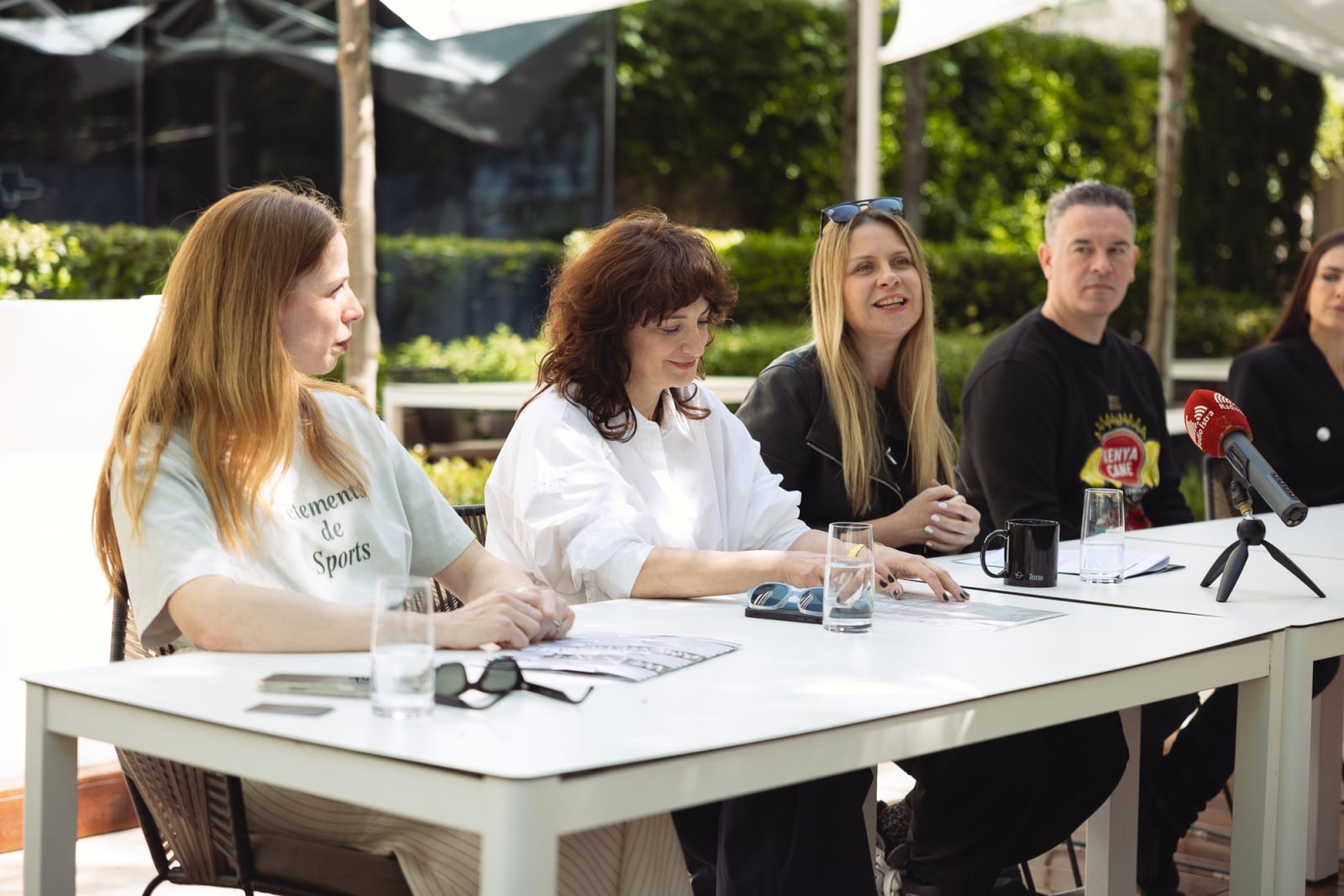


During the briefing with Dora Pekeč, the discussion also touched on how political and public communication functions today in an environment where audiences no longer simply react to campaigns, but actively influence their interpretation and distribution.
In her statement for Media Marketing, she explained why successful campaigns today are too often reduced solely to social media and virality:
“A lot of people talk about the Mamdani campaign as a social media campaign. They called him ‘the social media candidate’, but I think people misunderstand that we didn’t win because of social media. Social media was a way to amplify the message, but everything was in the message and the content.”
As she explained, the key to the campaign was clear and simple communication around issues that directly impact people’s everyday lives:
“Just because you create content for social media doesn’t automatically mean people will trust you.”
One of the speakers who attracted significant media attention was Chris Do, founder of The Futur and an Emmy Award-winning designer, who spoke during the briefing about what truly creates differentiation in today’s market:
“You have to stay curious and ask a lot of questions. A tremendous amount of power lies exactly in that.”
According to him, at a time when AI and technology increasingly provide answers, the critical skill becomes the ability to ask the right questions because “we are the ones who need to know what to ask and how to ask it.”
A similar point was raised by Mark Pollard, one of the world’s best-known strategists and author of the book Strategy Is Your Words, who spoke during the briefing about how superficially the term “strategy” is often used today.
“Everyone talks about strategy, but almost nobody actually uses it.”
For Media Marketing, he also discussed the differences between more developed and smaller markets, explaining that the dynamics of work and communication change significantly depending on the structure of the industry itself and the openness of audiences.
“In developing markets, you often have much more diverse audiences. Some people come from marketing and advertising, others from entrepreneurship or the NGO sector, while audiences in more developed markets tend to be much more homogeneous.”
He added that in some markets people are far less willing to engage in interaction and open discussion, while in others they are significantly more open and communicative.
The press briefing at Dani komunikacija 2026 once again demonstrated that today’s communications industry is becoming less focused solely on campaigns and increasingly centered around questions of trust, audience attention and the actual relevance of messages in a space that changes by the hour. These were precisely the themes shaping the talks in Rovinj – from strategy and differentiation to virality and the audience’s relationship with content.

