

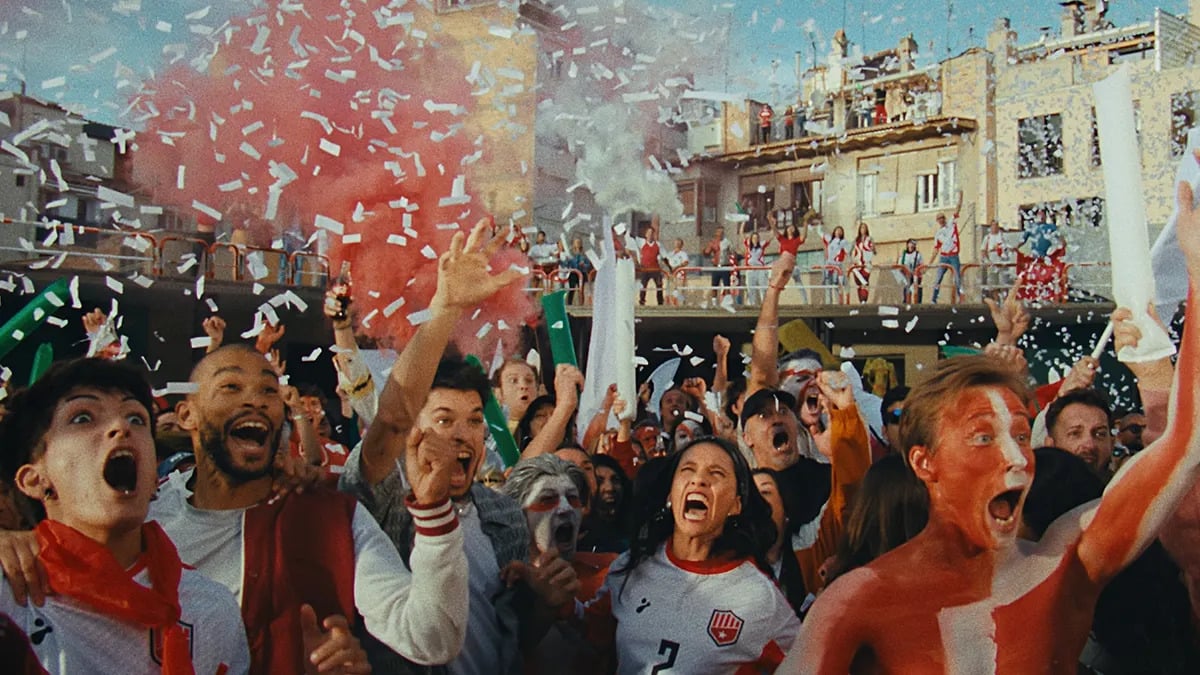
Coca-Cola is building its campaign for FIFA World Cup 26 around what is not seen on the scoreboard, but defines the entire viewing experience. The nervousness before the match, the silence during the VAR check, the disappointment after conceding a goal, the relief when the decision changes and the euphoria that then overwhelms the fans.
The global campaign Feel It All spans 48 countries and lasts six weeks, connecting TV films, social media, local activations, a partnership with Panini and AI content that will follow the daily rhythm of the tournament. After the films Bubbling Up and Uncanned Emotions, the final part of the campaign is titled No Better Feeling and focuses on one of the most tense moments in modern football, waiting for a decision after a VAR check.
The film follows fans in a moment in which everything can change in just a few seconds. A goal by the opposing team first brings shock and disappointment, then silence follows as the referee checks the footage, and then complete relief and celebration when the decision is overturned. It is precisely this transition from nervousness to euphoria that Coca-Cola uses as the space in which the brand appears naturally, without needing to be louder than the game itself.
The film features José Mourinho and J Balvin, with the voices of commentators Peter Drury and Luis Omar Tapia. Still, the campaign is not built around big stars, but around fans. Celebrities, families, friends, people in apartments, studios, bars and at public screenings are shown through the same emotional experience, because the tournament brings all of them the same kind of tension, hope and celebration.
The creative part of the campaign was developed by WPP Open X, led by Ogilvy, with support from WPP Media and WPP Production. The three films function as three parts of the same fan journey. Bubbling Up announced the first excitement around the tournament, Uncanned Emotions opened space for fan rituals and emotions that grow before the start, while No Better Feeling enters the very peak of the match.
A special part of the campaign takes place on social media through the AI series José vs. Mourinho. In it, two digital versions of Mourinho discuss matches, moves and topics that fans talk about during the tournament. One version is connected to Coca-Cola Classic, and the other to Coke Zero Sugar, bringing the brand’s portfolio into a format designed as a fast reaction to what happens between and after matches.
The series is being created in collaboration with Goal.com, Google Cloud and the technology company Grail. The production uses image generation, video synthesis and voice modeling so that content can be created quickly enough to follow fan conversations across a large number of markets. For Coca-Cola, this is a continuation of experimenting with AI content, but this time in a format that depends on speed, reaction and the unpredictability of sport.
The campaign also shows how much the role of social media is changing in major sports activations. Coca-Cola is increasing the share of social media investment from the previous 15 to 20 percent to 30 to 40 percent of the total media budget for the tournament. In addition, a reserve fund has been prepared that can be redirected during the tournament toward content and formats that show the best results.
Instead of simply shortening TV spots for digital channels, Coca-Cola has organized social media centers in 40 countries for this tournament. Their task is to follow conversations, produce local content and adapt communication to the habits of fans in individual markets. Each of the 48 markets has adapted the global campaign to local audience behavior, language and the way matches are watched.
Alongside the digital part, one of the biggest elements of the campaign remains physical and collectible. Panini and Coca-Cola are distributing one billion branded sticker packs around the world, making it the largest such program in the company’s history. The packs connect the fan ritual of collecting stickers with digital activations and give the brand additional space in fans’ everyday lives.
The program also includes the FIFA World Cup Trophy Tour by Coca-Cola, as well as Super Fan Experiences in all 16 host cities in the United States, Canada and Mexico. In this way, the campaign expands from global films to local experiences, from AI debates to stickers, from major stadiums to living rooms where matches are watched with family and friends.

