
There was a time when a good brand only needed a quality product, a decent slogan, and a few ads the audience would remember. Today, producing content is no longer the problem. The real challenge is staying visible in a world where people scroll through thousands of messages, ads, videos, and notifications every single day.
In that endless digital noise, mediocrity has become the most expensive mistake a brand can make.
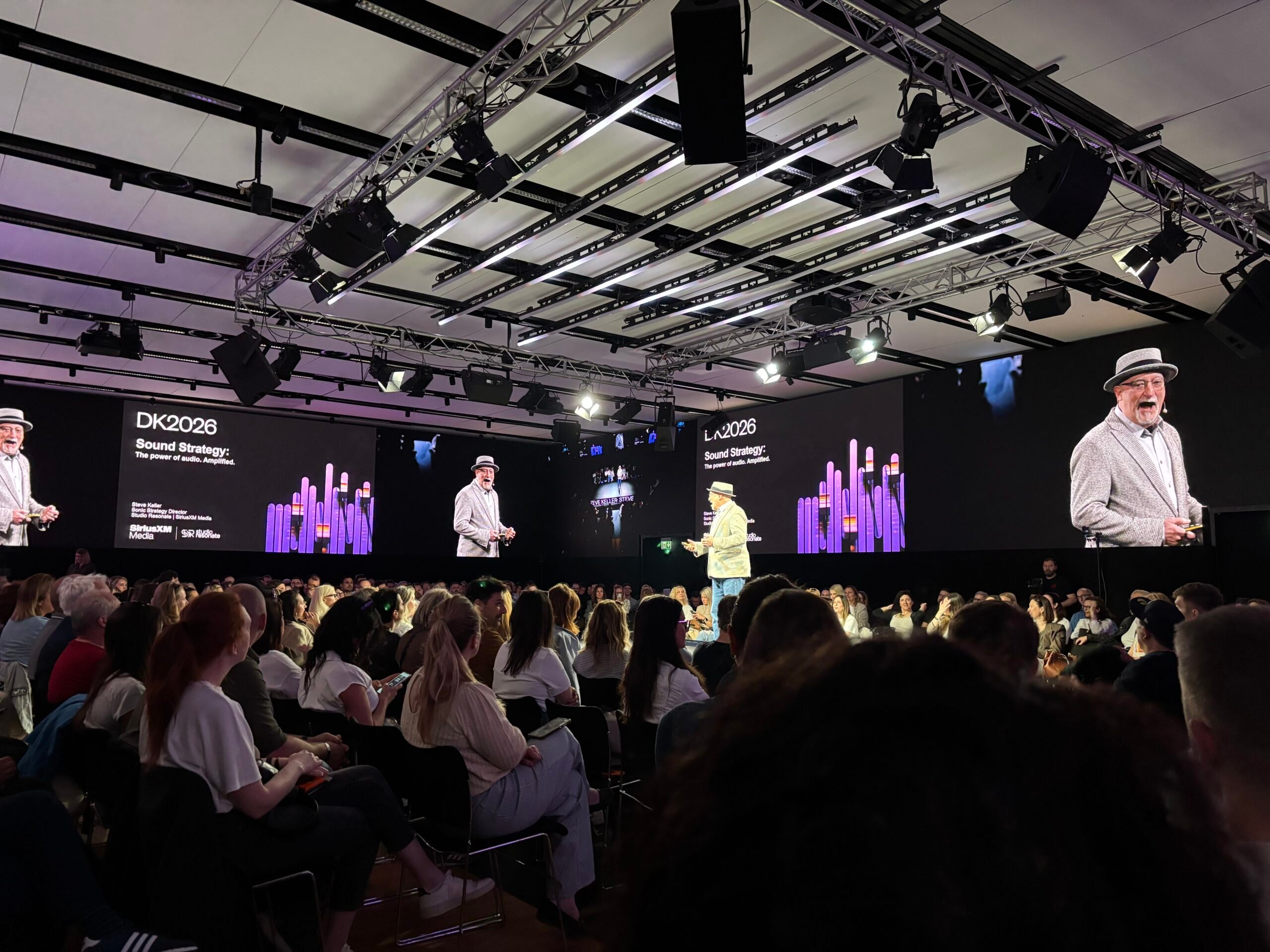
That was precisely the common thread connecting two very different, yet fundamentally related talks at the Dani komunikacija 2026. The first was delivered by Alex Cattoni, a copywriting and branding expert, while the second came from Steve Keller, audio alchemist and Director of Sonic Strategy at Studio Resonate. Cattoni spoke about words, identity, and the courage to take a stand. Keller, meanwhile, focused on sound, emotion, and the fact that people often feel before they even begin to think.
People do not buy rationally as much as they like to believe they do
Alex Cattoni presented her “REPEL” method, arguing that recognizable brands are not built by trying to appeal to everyone, but by clearly showing who they are for – and who they are not for.
The central thesis of her talk was simple: today’s audiences are not looking for a reason to say “yes”, but for a reason to say “no.” Brands that remain vague, generic, and overly cautious are usually ignored before they even get the chance to be considered.
“Customers are looking for a reason to dismiss you before they even consider that you could be an option.”
For years, companies were taught to be “universal,” “safe,” and “acceptable to everyone.” However, algorithms, social media, and shifts in audience behavior have completely changed the rules of the game. That does not mean a brand has to be aggressive or confrontational. It means it needs character. A point of view. Clearly defined values. Today, people do not buy products alone; they buy a sense of belonging, identity, and confirmation of their own beliefs.
That is why the most successful modern brands are often the ones brave enough to be specific.
Cattoni referenced the example of the True Classic brand, which designed T-shirts that were not just ordinary shirts, but a source of confidence for men who do not fit into the standard fitness aesthetic. She also pointed to Telfar, a brand that positioned inclusivity against the exclusivity traditionally associated with luxury. Each of these brands did the same thing: they identified an emotion, frustration, or problem their audience already felt and turned it into identity.
Cattoni also insisted that brand language is often more important than visual identity itself. The best brands create their own vocabulary, their own communication rhythm, and their own worldview.
Memory is money
While Cattoni focused on language and identity, Steve Keller demonstrated how our decisions are actually formed far below the level of conscious thinking.
His talk on Sonic Strategy served as a reminder that marketing is not only about what people see, but also about what they feel – even when they are not consciously aware of it. Keller argues that the brain processes sound much faster than visual information, which is why audio has a more direct influence on emotions, mood, and behavior.
According to Keller, we react to sound 20 to 100 times faster than to images.
And perhaps that is the biggest lesson of modern branding: people often feel a brand first, and only later rationally explain it. He discussed experiments that seem almost unbelievable. Music, for example, can change the perceived taste of wine, chocolate, coffee, and even cheese, depending entirely on the music being played.
One such experiment involved French and German wines. When French music played in a store, customers more frequently chose French wines. When German music played, they selected German wines more often. Most people later claimed the music had no influence on their decision.
Brands often believe they persuade audiences through arguments, information, and rational benefits. In reality, people make emotional decisions far more often – and only later rationalize them.
The strongest brands today are not only building visual identity, but memory. That is why Keller argues that “Memory is money.” Because the purpose of marketing is no longer just immediate sales. The goal is to become a mental shortcut – the first association that appears when a customer eventually makes a decision.
That is why the world’s biggest brands are recognizable not only by their logos, but also by their sound, language, tone of communication, and the emotion they create. McDonald’s is recognized through the melody “I’m Lovin’ It.” Apple through its startup sound. TikTok through its notification tone.
That is not accidental. It is memory engineering.
Sound is not merely an addition to communication; it directly shapes emotion, memory, perception, and human behavior. That is precisely why sonic strategy should be viewed as a serious business and marketing tool, rather than just background music for advertising.
In the era of AI and content hyperproduction, people are once again searching for humanity
We can all agree that technology has changed marketing, but it has not changed human nature. The more automated content, generic campaigns, and characterless communication audiences are exposed to, the more they value authenticity, emotion, and a sense of genuine connection.
Every marketing team today must ask itself: Who do you want to gather around your brand? Who are you willing to turn away? And are you brave enough to say it out loud?