

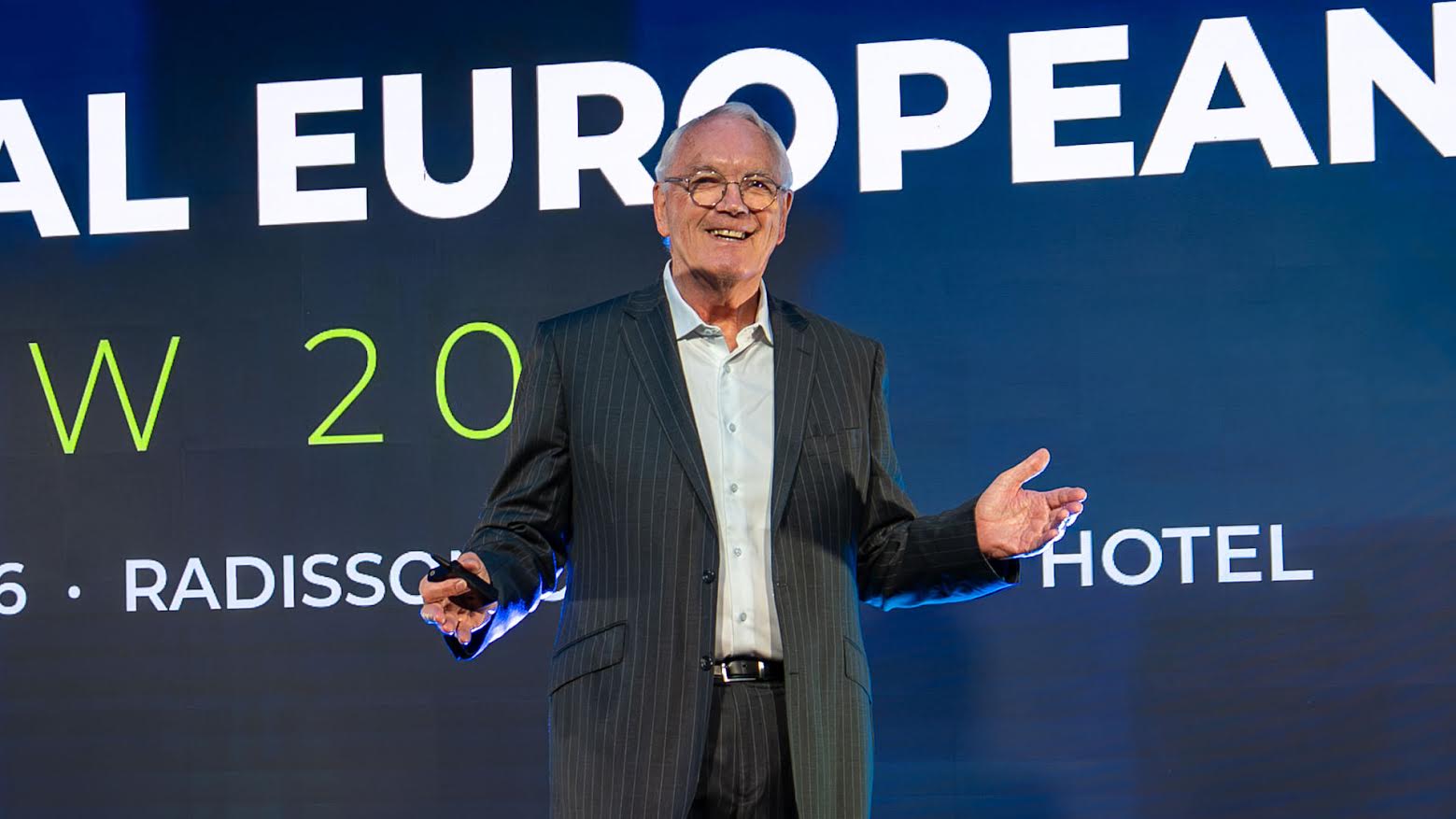
Outdoor advertising has an opportunity to increase its market share, but to do so it must provide more convincing evidence of campaign results and more reliable audience data. These were among the priorities outlined by Tom Goddard, President of the World Out of Home Organization (WOO), at the Central European Forum in Warsaw, where he discussed how to turn consumer trust into sector growth.
According to him, OOH is recording double-digit growth, driven by the development of digital outdoor advertising, but is still growing more slowly than online media in the global marketplace. Goddard expects that this relationship could change over the next five years and beyond, partly because of a shift in how advertisers view social media.
He sees audience trust as an opportunity for OOH. He cited research, including a study by the US company OUTFRONT, which, he said, ranks outdoor advertising first among media in terms of consumer trust. He links this advantage to brands’ presence in physical spaces and believes the industry should communicate it more clearly to advertisers.
His assessment comes alongside criticism of digital platforms’ business practices. Goddard warned of advertising fraud, from fake impressions and clicks to fake conversions, which creates costs for brands and calls the reliability of advertising systems into question. He also identified the growing volume of low-quality content generated by artificial intelligence as a problem, while AI is simultaneously changing how search and the advertising associated with it work. He also pointed to regulatory pressure on technology companies, particularly regarding the protection of younger users.
However, part of his address focused on weaknesses within the OOH sector itself. He identified demonstrating campaign effectiveness as an urgent task, announcing that a broader industry initiative was being prepared to help address it. He also linked this to the need for better audience measurement. In many markets, he noted, such systems either do not yet exist or are not sufficiently comprehensive and consistent. Better-quality data therefore remains one of the fundamental requirements for further development.
He sees similar obstacles in the process of buying advertising space. Although the industry is making progress in programmatic buying, much of its business still requires considerable manual work and relies on disconnected systems. Goddard therefore called for the consolidation of platforms and advertising technology providers.
The fourth area concerns how the industry presents its own advantages. Alongside the work of WOO, which, according to the figures presented in his address, represents 300 OOH media owners worldwide, Goddard believes more active national trade associations are needed. He sees collaboration on demonstrating effectiveness, measurement, technology and promotion of the sector as a condition for securing a larger share of advertising budgets.

