

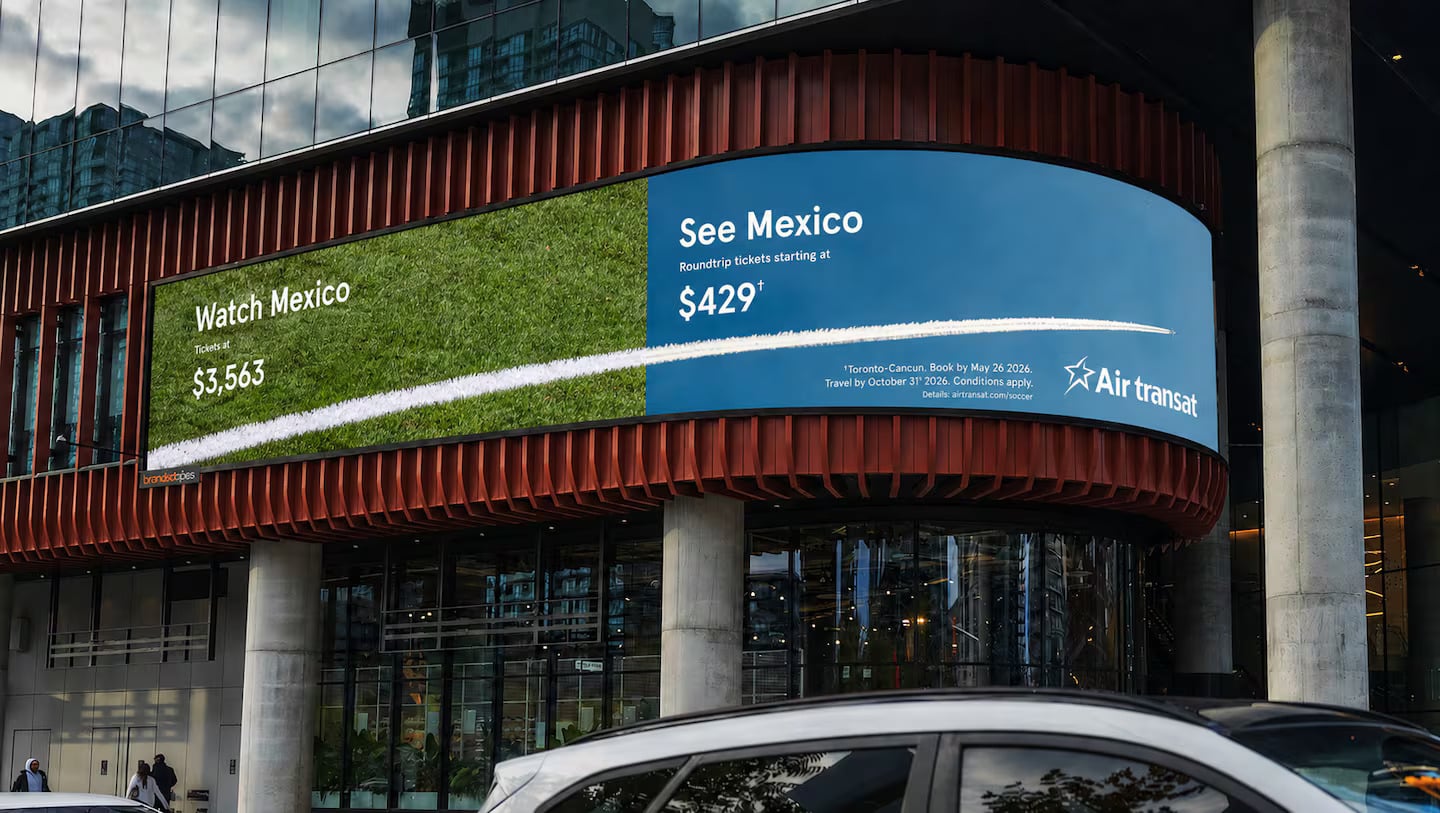
As FIFA World Cup 2026 approaches, one topic is already dominating conversations among fans – extremely high match ticket prices. It is precisely around that tension that Air Transat and Courage Montreal built the “Tickets-Tickets” campaign, transforming the entire discussion around expensive stadium tickets into an argument for travel.
Instead of promoting destinations in a traditional way, the campaign uses a simple but very precise insight: for the price of a single World Cup ticket, many fans could buy a round-trip flight ticket and travel directly to the country of the national team they support.
The campaign visuals compare real match ticket prices with Air Transat flight prices to countries such as France, Portugal, England and Mexico, suggesting that the experience of travel, local culture and atmosphere could perhaps have greater value than a single seat inside a stadium.
The campaign was developed as a reactive and earned-first concept that naturally enters online sports conversations, particularly at a moment when discussions about the accessibility of World Cup tickets have become one of the main topics among fans on social media.
Unlike many brands that attempt to aggressively use tournament hype during major sporting events through generic sports messaging, Air Transat avoids traditional sponsorship language and does not try to “pretend” to be an official tournament partner. The focus of the campaign is not the stadium itself, but the culture that exists outside it – the streets, cafés, everyday life and the experience of the destination itself. Courage Montreal says the entire idea came from a desire for the brand not to interrupt culture, but to become a natural part of it.
The campaign further demonstrates how travel marketing today is increasingly moving away from selling destinations themselves and increasingly trying to sell a feeling of cultural participation and belonging. In this case, Air Transat is not only selling airline tickets, but the idea that football culture can be experienced directly in the streets of Lisbon, Paris or Mexico City, even without entering a stadium.
The campaign’s visual system was developed through OOH, DOOH and digital formats using simple split-screen comparisons between the cost of watching a match and the cost of travel, making the idea instantly understandable and highly adaptable to real-time internet discussions.

