

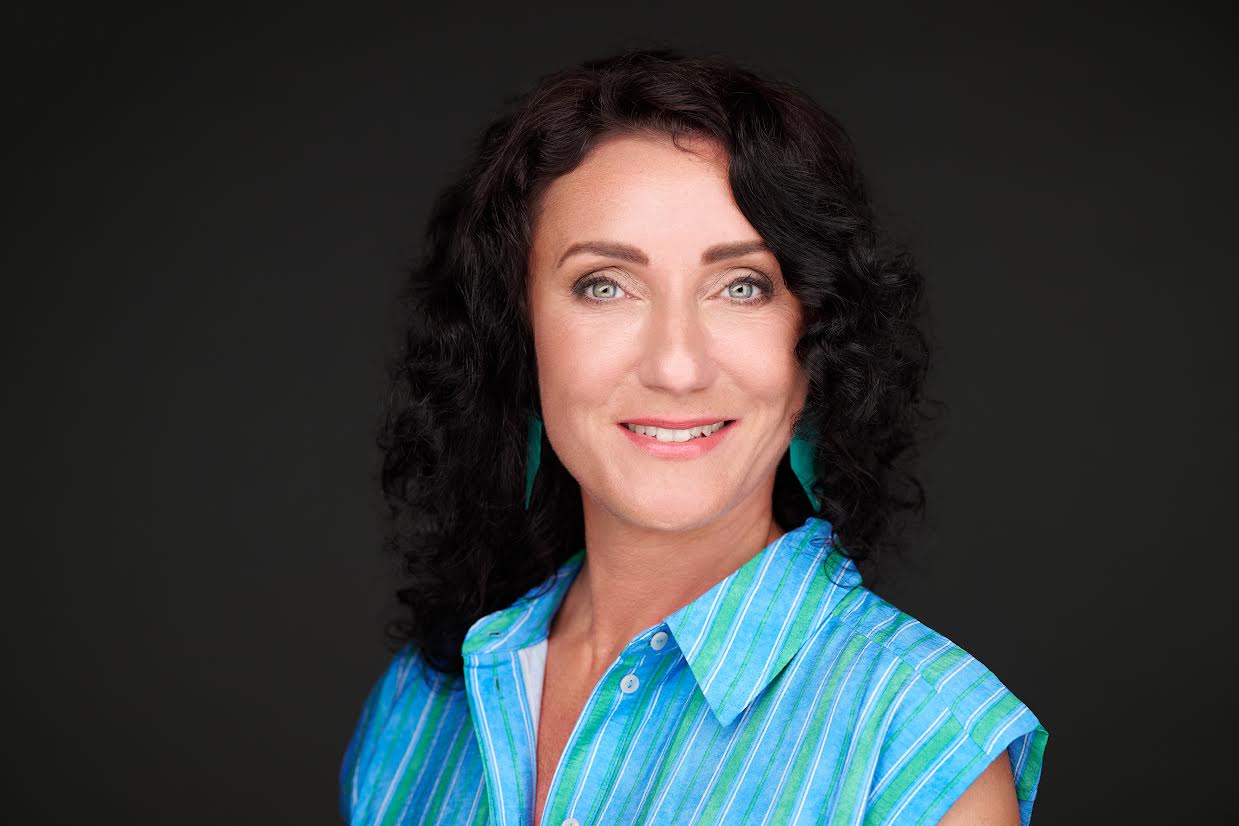
For organisations working with vulnerable children, the most powerful story is not always the one that should be told. Varró Gabriella, who has spent the past ten years planning and implementing communication, advocacy and research campaigns for SOS Children’s Villages Hungary, approaches communications from the perspective of both a sociologist and a communications professional, with particular attention to social issues, equal opportunity and child protection.
With 15 years of experience in communications and child protection and a background that also includes education policy, she was named PR Professional of the Year by the Hungarian Public Relations Association in 2026.
In this interview for Media Marketing, Varró Gabriella discusses the ethical limits of using children’s stories in fundraising, the challenge of building public trust in the nonprofit sector, the realities of NGO communications in Hungary and why the success of a campaign, in her view, should ultimately be measured by its ability to contribute to social change.
SOS Children’s Villages has a long international history and operates in many countries around the world. Who originally founded the concept of SOS Children’s Villages, what does the organization represent globally, and how is its mission specifically reflected in Hungary?
The basic concept of SOS Children’s Villages originated in Austria after the Second World War, when countless children were orphaned and countless women were widowed. The first children’s village was set up in Imst, where single women took in children who had lost their parents. This was an innovative idea at the time. Rather than growing up in an institution, children should grow up in a family-like environment with an SOS mother and a community of siblings. In fact, it was like a small village, with families living in houses side by side within a specific area. This initiative in Imst sparked an international movement, and SOS Children’s Villages now operates in 137 countries. Since the Second World War, the organisation has undergone significant transformation. Unlike in the past, the majority of children today do not enter state care because of the death of their parents, but rather due to poverty, abuse, neglect, or parental addiction.
Consequently, the nature of the problem has also changed. Secondly, foster parents are no longer just single women, but often married couples or even men. The concept has also undergone structural changes. In Hungary, for example, we broke with the tradition of foster families living in neighbouring houses around 10 years ago. We physically dismantled the ‘children’s villages’ and relocated the families because social integration is better served if children have as much contact as possible with the outside world and other families. Recently, there has also been a greater emphasis on professional programmes that focus on prevention and aim to support families at risk of losing their children.
Children are among the most sensitive subjects when it comes to fundraising and public communication. At the same time, organizations sometimes use images and stories involving children in their marketing and fundraising campaigns. As a communications professional and sociologist, how do you view the use of children in advertising and fundraising campaigns? Where should the ethical boundaries be drawn between raising awareness, telling authentic stories and protecting children’s dignity and privacy?
This is a very sensitive issue, and I feel that it is not discussed enough within the communications profession. We know that close-up shots of children’s faces are the most effective way to raise donations and awareness. Since PR first emerged, companies, civil society organisations and political actors have all employed this tactic. However, ethically, this raises more issues when it comes to sensitive topics such as child protection, abuse, violence, poverty and illness. Children cannot gauge the impact of the media or how it will affect their lives if they come forward with their own stories. In fact, many adults are not capable of this either, as it is not their area of expertise and they do not understand how the media works.
I have met countless young people in their twenties who, after leaving the child protection system, did not want their new environment — their boss, partner or neighbours — to judge them based on their past. They deleted social media posts they had previously made and kept their past to themselves. They should be free to decide as adults what they wish to reveal to the public. However, I believe that it is the responsibility of journalists and communications professionals to ensure that what they publish about adult interviewees is accurate and ethical, and to assess whether the interviewee can cope with the burden that comes with public exposure. I have had more than one adult interviewee whose story we ultimately did not use, or whose name we changed for their protection. Some stories simply cannot be told, even if it were the award-winning campaign of the century.
Fundraising and donations are an important source of support for organizations such as SOS Children’s Villages. What is the current legal framework for donations and sponsorships in Hungary? Are donations eligible for any form of tax relief or tax benefit, and do you have any available figures showing how much was donated to charitable and nonprofit organizations in Hungary during 2025?
In Hungary, direct donations made by private individuals are not eligible for a general personal income tax allowance. However, individuals can allocate 1% of their personal income tax to civil society organisations when filing their tax return each year. Businesses are treated more favourably under the regulations: under certain conditions, a donation to a public benefit organisation can reduce the corporation tax base, and an even greater reduction can be claimed for long-term donations. Sponsorship is a different arrangement, as the sponsor usually receives commercial benefits in return.
Currently, there are no official figures available on the total amount donated to charities and non-profit organisations in Hungary in 2025. However, reliable data is available on 1% personal income tax donations.
In 2025, there were approximately 5 million taxpayers in Hungary, 2 million of whom donated 1% of their tax to civil society organisations. This suggests that there is still room for growth in this area. This equated to a total of 20.27 billion forints for NGOs. While this is a significant sum, it is important to emphasise that it does not represent the total amount donated in Hungary. These donations were received by 31,000 civil society organisations, and fierce competition for these funds occurs when tax returns are filed.
Transparency and accountability are essential when it comes to donations and the nonprofit sector. In Croatia, recent cases involving sports organizations and public funds have raised questions about financial transparency and the proper use of funds. Have there been similar cases or concerns in Hungary involving the misuse of charitable donations or nonprofit funds? How important are transparency, financial accountability and public trust for organizations working with donations?
Public trust is one of the most important assets of the non-profit sector. If donors do not know how their money is being used or feel that organisations are not being honest about their operations, this undermines trust not only in those organisations, but also in the entire civil society sector in the long term. In Hungary, concerns have been raised and continue to be raised regarding the transparency of civil society organisations and fundraising. However, it is important to distinguish between individual cases of misconduct and the functioning of the non-profit sector as a whole. For this reason, civil society organisations established a body in 2012 to strengthen the credibility and transparency of fundraising organisations and foster public trust in them.
This self-regulatory accreditation system is voluntary, but members must adhere to the strict provisions of the Code of Ethics. Organisations must, among other things, ensure the transparency of their operations, financial management and fundraising practices, and the acquisition and maintenance of membership are subject to regular scrutiny. This is an important commitment because donors not only give money, but also expect organisations to use their support for the stated purposes and in the stated manner. This is precisely why I believe transparency and accountability are not merely financial matters, but form the basis of the social credibility of civil society organisations.
What does working for SOS Children’s Villages Hungary personally mean to you? More broadly, how large is the nonprofit and NGO sector in Hungary in terms of employment? Do you have any figures or estimates regarding how many communications and PR professionals work within the sector, and how frequently NGOs rely on external PR and communications agencies?
In my view, the success of a communications campaign should not be measured merely by the number of press appearances, but by its ability to bring about social change. In my case, the campaign should not only raise funds, but also influence how people think about child protection. There are many issues that we either talk about very little or think about in overly simplistic terms. I therefore believe that civil society organisations must raise funds, generate public awareness, and initiate professional dialogue simultaneously.
The non-profit sector in Hungary employs hundreds of thousands of people, but typically only larger organisations are able to employ communications staff, while only a few – mainly the largest – work with PR agencies. While more and more NGOs recognise the importance of communication, I still frequently encounter the mindset that they do not invest in it because they do not see brand-building as providing a quick return on investment. They would rather spend their money on one-off fundraising campaigns that generate quick returns than on building a consistent online presence or creating innovative campaigns. Many still only run campaigns during the personal income tax donation period, when there is already a huge amount of communication noise. With 31,000 civil society organisations competing for funding, they will have to communicate in an increasingly professional manner.
SOS Children’s Villages works with some of the most vulnerable members of society, which means that communication is not only about visibility, but also about trust. What is the biggest communication challenge when communicating sensitive social issues today, and how can organizations ensure that their communication inspires people to act without exploiting emotions?
At SOS Children’s Villages, we have a strong child rights policy that prohibits children under the age of 18 from appearing in the media. When we introduced this policy twelve years ago, we encountered strong resistance from the press; initially, many cancelled their features because they found the story uninteresting without a child’s face. Both the media and politicians used children without scruples; nobody cared at the time what would become of them after the report. Today, children’s rights are given greater emphasis, but they are not upheld everywhere. Even for those over 18, we only allow young people to appear if they have received the appropriate information and preparation. I sit down with them and go through it all so they understand what this means for them; their carer, psychologist, mentor or I am present during the interview. And even then, it’s not certain that they’ll understand what the press will do with their story, but they’ll feel more emotionally secure because they’re not sitting alone facing a journalist in a completely unfamiliar situation. You can’t leave them on their own during a process like this.
You have to be there by their side the whole time, because they’re laying their trauma bare in public. And when she recounts what happened to her once again, she relives it all over again. And it won’t end when she leaves the studio; it will continue to work away inside her, over and over again. She’ll realise that tens or hundreds of thousands of people will watch her video and comment on it. And she won’t be able to stop herself from checking the comments. The professional challenge when it comes to fundraising and a media campaign, given such strict child protection regulations, is to find a format where you can talk about children without showing them, whilst ensuring the message remains powerful. It is equally challenging to strike the right balance: to show just enough to grab people’s attention, whilst avoiding the most brutal and intimate stories of the disadvantaged group. To portray disadvantaged people with dignity. If you show too much horror, it can backfire and you may lose your audience; instead of holding their attention, they’ll simply click away. Even the tabloid press has its limits.
And finally, on a more personal note: If you were not working in communications and at SOS Children’s Villages Hungary, what do you think you would be doing today?
After university, I went into sociology, political science and media; I worked in all three fields for quite some time, but almost always on similar topics relating to human rights and children’s rights. I’ve worked in an agency setting, designing campaigns on road safety; I’ve worked in public administration, drafting speeches for ministers; yet it’s the former two areas that resonate with me the most. If I weren’t here, I’d probably be working on the same topics at a research institute, because I’m very interested in social issues and data-driven planning – in understanding what lies behind these phenomena and how to bring about change most effectively.

