

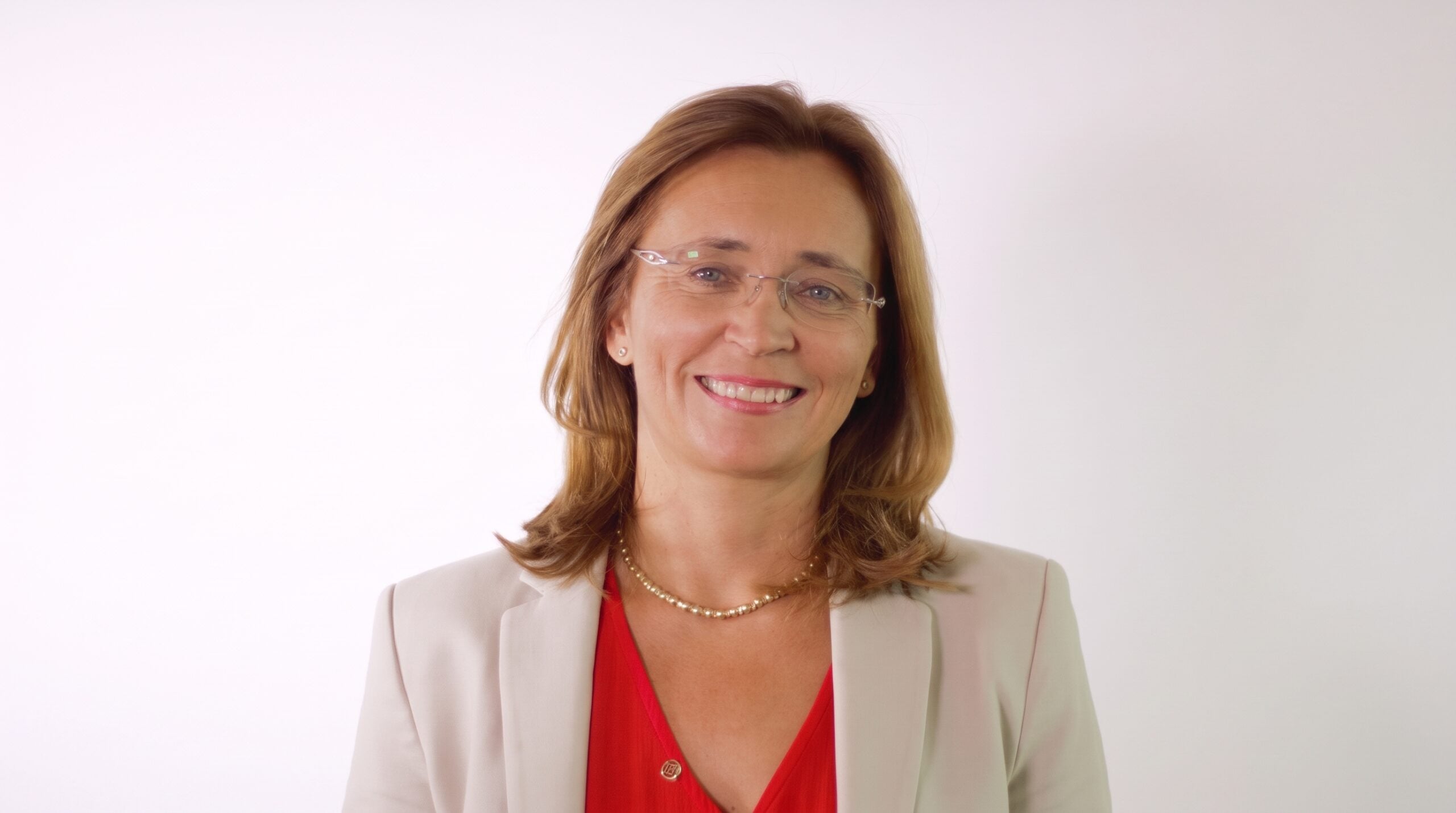
From journalism and editorial work in Slovenian media to an academic career and the leadership of one of Slovenia’s largest cultural projects, the professional journey of Prof. Dr. Suzana Žilič Fišer brings together different perspectives on the communications profession. Before entering academia, she worked at media organisations including POP TV, RTV Slovenija and Večer, and today she is a Full Professor at the University of Maribor and Head of the Institute of Media Communications. She was the first woman in Slovenia to attain the rank of Full Professor in the field of Media Communications and has led 25 international research projects throughout her career.
A particularly significant chapter in her career was leading Maribor 2012 – European Capital of Culture, a project she headed from 2011 to 2013. She continued to build on this experience through her involvement in international expert panels of the European Commission responsible for the selection and monitoring of European Capitals of Culture. Her work also includes research in media management, communications and cultural policies, while her contribution to the profession has been recognised with the PRO PR Globe People Achievement Award.
In this interview with Media Marketing, she discusses the challenges of educating future communications professionals, the importance of public relations in public administration and the experiences gained from positioning Maribor internationally. She also reflects on the changes artificial intelligence is bringing to the communications profession, the expectations of Generation Z and the importance of connecting the experience of older generations with the knowledge of younger ones.
You are one of the few experts who successfully bridge theory and practice. You contributed to the development of communication education in Maribor, laying the foundations for the systematic study of media communications. What challenges do you currently see in academic programmes in communications and public relations? To what extent should these programmes be adapted to changes in the profession and the needs of the labour market?
Today, great challenges arise in education in the field of communications, as technological and social development is extremely fast. Changes in the field of communication include major changes in the integration of various tools that are now part of all our processes, both in the professional field and in the private field. The study programme of media communications at the largest faculty at the University of Maribor, FERI, is still the only one of its kind in Slovenia after 20 years, and the interdisciplinary study programme includes the field of humanities, social sciences, technology and arts. I believe that this is an important added value in the effective development of the field of communication. Today, it is clear that we need to be digitally literate, while at the same time understanding the broader social context when entering the field of communications. The biggest challenge, however, is certainly how to integrate all the tools for effective communication, while maintaining the maximum degree of human creativity and sincerity.
Maribor was the European Capital of Culture in 2012, and you were responsible for leading the communication activities of this major project. Such a project involves not only city branding and identity building, but also engaging national, regional and international audiences. How do you assess the communication and international positioning of Slovenian projects today? Do you believe that public administration sufficiently recognises the importance and strategic role of public relations?
I was managing the ECoC as a CEO. Given that I consider the field of communication to be crucial, especially in such large public projects, I was also at the forefront of communication. The project involved so many different countries, institutions, cultural people, citizens and citizens, because inclusion is fundamental in projects that strive to change society. If we want to change values, if we want to transform the city, it cannot be done without the citizens. Indeed, with a young, enthusiastic team, we worked a lot to bring the project closer to people, to spread the values that are fundamental to the binding of the city, and to offer a lot of events for all target publics. European Commission asked me to be a part of the international expert panel for six years and I selected and supervised other ECoC cities. We have analysed, studied and visited hundreds of cities in six years, and I can say that Maribor has made a huge leap in terms of visibility and understanding of creativity and culture during the ECoC era. The transformation of the city is only possible with the help of citizens, and it is possible with their empowerment, for which communication is crucial. For Maribor, the European Commission particularly emphasised the engagement of the project team and public involvement, as well as successful communication, even though the economic and political crisis was extremely difficult at the time. The understanding of the importance of communicating with the public is still quite low at the level of public administration. Public relations is much more than recording the successes of a ministry, municipality or mayor. Public relations is an important link between an institution and those for whom these public institutions are intended, citizens.
Artificial intelligence is transforming personal and business communication every day, including public relations, marketing and the media. How do you view the development of artificial intelligence in the field of communications? What do you consider its greatest benefits and opportunities, and which potential risks and threats should communication professionals not overlook?
Artificial intelligence really changes our lives, our work, processes, society. It is important to understand that it can benefit us when we include tools that help us to be more efficient, while at the same time doing what contributes to his and his social progress. Artificial intelligence cannot replace human creativity, but it can destroy it if a person is satisfied with what AI offers him. There are dangers when we blindly trust what AI offers with data. And yet, AI is a collection of data, a large system created by man. It is also dangerous if we blindly trust everything it offers us. Today, humans are already on a big test of what they leave for AI, but at the same time they realize that they are competitive only if they use AI as tools. In the age of AI and in the field of communication, we must be aware that the world is changing, that communication remains a fundamental human activity. It is important to include tools to achieve efficiency, and the key to the success of communication is also a human virtue: creativity and sincerity.
What advice would you give to the public and private sectors when it comes to hiring, managing and developing younger generations, particularly Generation Z? We often hear that younger generations have high expectations regarding salaries, flexibility and working conditions, sometimes even before gaining significant professional experience. How do you view these expectations, and what can employers do to build strong relationships with young employees while addressing both their needs and business objectives?
It is true that younger generations have different expectations, different attitudes towards work, different values and are digitally literate. However, it is true that every older generation has said for the younger generation that they are different and that they have too high expectations. Generation Z grew up in a different world, where information is available immediately, changes are fast, and work-life balance is an important value. This is not necessarily a weakness, but an opportunity for organizations to think about ways of leading. Of course, young people need to understand that almost all things are related to experience, knowledge and responsibility. High expectations are not a problem as long as they are accompanied by a willingness to learn, commitment and a desire to create added value. We need to make it clear to young people that rights and duties are also accompanied by responsibility, discipline and commitment, and results. I think it is important for organizations to connect the experiences of older generations with the energy, digital knowledge and new perspectives of young people. Those organizations that are able to connect both sides, establish a relationship in which expectations and responsibilities meet on both sides will be most successful.
Your professional career spans communications, education and strategic project management. What are your main professional activities today, and which projects are you currently involved in? What professional challenges and goals are particularly important to you at this stage of your career?
It is true that my work and education have been related to the field of communication for decades, whether it is related to the media, the creative sector or project management. I also find this area extremely important, and I believe in the importance of education in this field, so I am grateful for the opportunities to work in an environment that offers me all this. Both education, scientific research, writing and project management are areas that satisfy me professionally. Strategic management of large projects has certainly been a great professional and business challenge, so I am grateful that I was able to contribute to the management of projects in the field of culture that are certainly changing society, both in Slovenia and internationally. Educating young people is something that always brings me joy and satisfaction when I accompany young people on their journey, when I find out how important it is to enable young people to develop and find their talents. It is also crucial that they remain committed to high standards of communication, which are key to the well-being of society. These are many professional challenges that improve me, but I believe that as a society we still have a lot of work to do in the field of communication.
You are a recipient of the PRO PR Globe People Achievement Award, which recognises individuals for their contributions to the development of the public relations and communications profession. What does this recognition mean to you personally, and how important is it to have your professional work recognised at an international level?
I am grateful for the recognition that has recognized my work and contribution to the profession. Of course, every recognition is beautiful, but you are especially touched by the one that comes from people who understand your work, passion and the values you follow. This international recognition is a great honor for me, but of course also a responsibility and confirmation that with dedication we can leave positive traces both in people and in the profession. I am especially pleased that my work in the field of communication is recognized at the international level, as communication transcends local, national borders. Communication has long been not only a tool for transmitting information, but a fundamental building element of trust, connection and positive changes in the wider society. Throughout my professional path, I have always believed that people are at the center of every success story. For me, communication has never been just a profession, but a way to connect, create trust and open up new opportunities. And I see this recognition as a thank you to all the amazing people I have had the opportunity to work with, learn from and create beautiful stories together. I also believe that the future belongs to those who know and are able to listen, understand and build bridges between people, generations and cultures. And if I can contribute at least a small part of this through my work, then my professional work makes real sense.

