

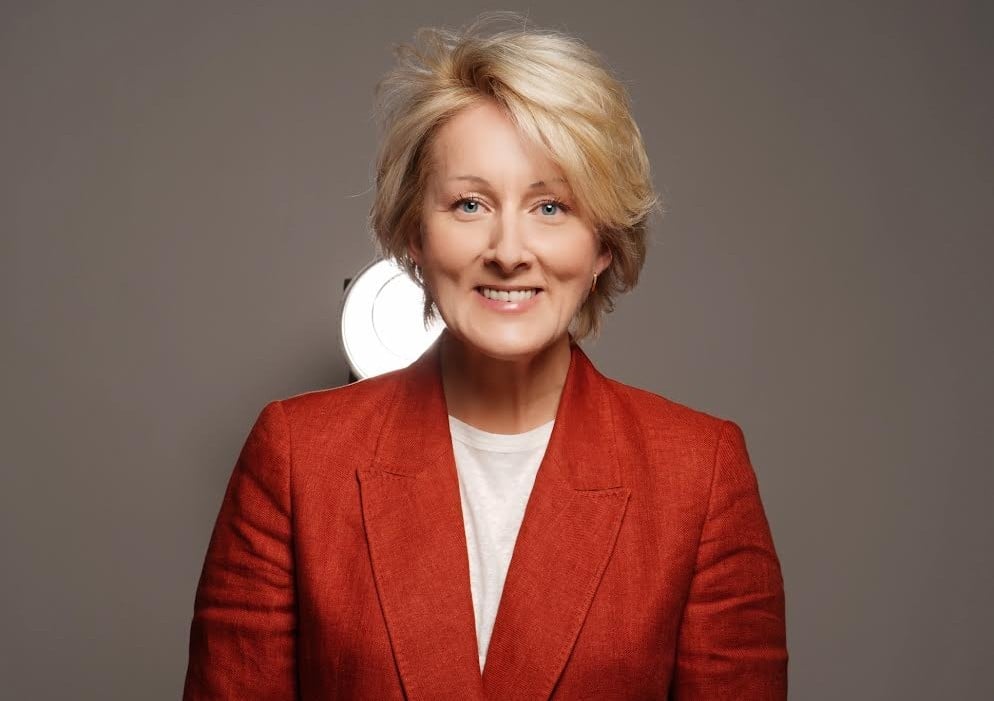
Suzana Đorđević, Director of Hemofarm Foundation, has been working for more than two decades at the point where communications, social responsibility and the public interest meet in concrete programs. Since 2015, she has led a foundation that does not view health only as a matter of the healthcare system, but as a broader social value connected to education, culture, knowledge, trust and the responsibility of the community.
In an interview for Media Marketing, she talks about why corporate social responsibility is no longer a matter of image, but of business maturity; how companies can build trust at a time when people find it increasingly difficult to believe in a better future; and why young people increasingly expect employers to offer meaning, stability, development and values that do not end with declarations.
A special part of the conversation is dedicated to ethical communication in sensitive social topics. Đorđević explains where she sees the line between public interest and self-promotion, how Hemofarm Foundation approaches topics such as organ donation and mental health, and why the visibility of socially important issues does not depend only on budget, but on relevance, trust and the ability to show people why these topics concern all of us.
What is the mission of Hemofarm Foundation?
The mission of Hemofarm Foundation is to turn care for people’s health into a broader social value.
For us, health is not only the absence of illness, nor is it exclusively a matter of the healthcare system. It is reflected in the way we take care of ourselves, of our physical and mental health, but also in every person’s right to a better-quality healthcare service and to a community that does not look away when someone needs support.
For more than three decades, we have been building public-private partnerships and bringing people together around a simple but important idea: a healthy society is not an abstract goal, but a shared task. No one can build a better system alone, but everyone can take on part of the responsibility.
That is why, through programs in health, education and culture, we support people and ideas that represent the engine of development of modern society. We believe in knowledge, in young people and in society’s ability to change when those who know, can and want to contribute gather around important goals.
Why should companies invest in corporate social responsibility?
Because long-term business value is no longer measured only by profit. It is also measured by trust, reputation, the company’s ability to attract and retain people, and its contribution to the stability of the community on which it itself depends.
No company operates outside society. If society loses trust, if young people lose a sense of meaning, if employees do not see purpose, business cannot remain stable in the long term either. The market is not separate from the community; it depends on it.
That is why social responsibility is no longer a question of image, but of business maturity. Companies have knowledge, people, infrastructure, technology and influence. When they direct that strength toward the public good, they show that they understand what business in the 21st century is.
This is also confirmed by global trust research. The Edelman Trust Barometer 2026 reveals that only 32 percent of people globally believe that the next generation will live better than today. This is not only a social statistic, but a business alarm. When people stop believing in the future, the responsibility of business is to help rebuild it through its knowledge, investments and partnerships.
The issue of young people is especially important. The latest research on Generation Z and millennials shows that they increasingly seek meaning, stability, skills development, work-life balance and employers whose values are not merely declarative. They are not looking for perfect companies. They are looking for those that do what they say.
That is why corporate social responsibility is not a cost, but an investment in trust, reputation and long-term sustainability. Companies that understand their social role do not choose between profit and responsibility. They know that business strength is also measured by the value they create for society.
For Hemofarm and STADA Group, the Foundation is exactly such a space: a bridge between the company and the wider community, business responsibility and the public interest.
Where do you see the line between ethical communication and self-promotion? Have you encountered crisis communications during your work at the foundation?
The line is where serving the public interest ends and serving one’s own visibility begins.
Of course, an organization should be visible. Important social topics must not remain invisible. But visibility in itself is not a value. It becomes one only when responsibility, commitment and real contribution stand behind it. Otherwise, communication easily becomes noise. And when we are talking about health and human lives, noise is not only tasteless, but also irresponsible.
Today, people can precisely feel the difference between an organization that communicates for reputational effect and one that communicates out of responsibility toward the topic, people and the community.
A good example is the campaign “The Most Important Call in Life”, which we have been carrying out for ten years. It is one of the most sensitive projects we work on, because it deals with a deeply human, medically complex and socially sensitive topic.
Through the stories of doctors, patients waiting for a transplant or those who have been transplanted, as well as their families, we open space for a responsible public conversation about organ donation, with more knowledge, empathy and trust.
For us, that is the essence of ethical communication: not to take up space from the topic, but to open space for it. Not to use someone else’s vulnerability for one’s own visibility, but to place one’s own visibility in the service of the public good and the people waiting for a donor.
There has been progress. New legal solutions in the field of organ transplantation are an important institutional step. But our work is not finished as long as there are patients waiting for a transplant.
When it comes to crisis communications, the work of the foundation is, by its nature, public and reputationally sensitive. We are aware of the risks, but so far we have not had a more serious communication crisis, primarily thanks to good preparation, verified information, relevant partners and experts.
It is important to us that everything we bring into the public space is responsible, verified and purposeful: that it informs, initiates change, encourages people to seek support, sends them the message that they are not alone and contributes to greater trust in topics important for people’s lives.
Do the media understand the importance of corporate social responsibility topics, or is it sometimes necessary to invest additionally in their visibility?
We live in a time when public attention is short, and trust is hard to earn.
Important social topics today share the same space with superficial content, algorithms, sensationalism and disinformation. The media understand their importance, but that is not enough. It is up to us to show why these topics are important for people’s lives, translate them into a language the public understands and tell them through authentic stories.
Mental health is a good example. It is not only a topic of health policy, but also a question of family, school, the workplace, young people, leaders and the culture in which we live. More than one billion people live with mental health problems, while depression and anxiety cost the global economy around one trillion dollars annually. This means that mental health is not only an individual’s private struggle, but also a question of productivity and quality of life.
That is why I believe that visibility is not built only with a budget. It is built with relevance and the ability to show people that major social issues concern each of us.
Only then do the media and the community become partners in the public interest, and corporate social responsibility stops being a section in the newspaper and becomes a space for conversation about what kind of society we want to be.
If you were not doing this job, what would you be doing?
Probably a job in which I would again try to be useful.
I was fortunate to spend my entire working life doing what I believe in: first as a journalist at Radio Studio B, then as an activist in the civil sector, and today at the head of a corporate foundation. The forms have changed, but the essence has remained the same: opening important topics, connecting people and creating space for something concrete to change.
I think a person can be useful for as long as they are alive. And that is exactly what I intend to be.

