

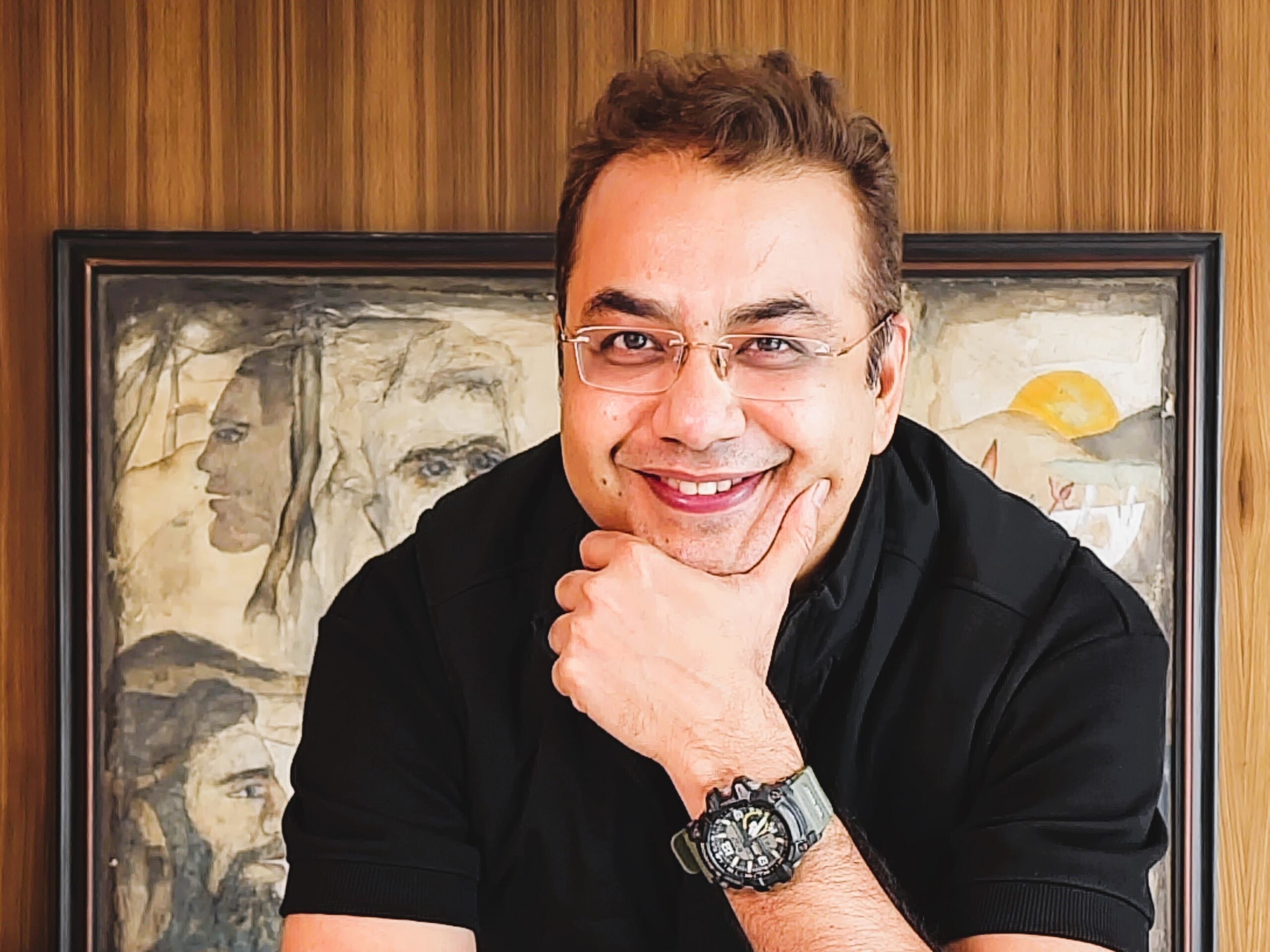
Reputation is not built on what a company says about itself, but on what others say about it when it is not in the room. For Sujit Patil, Chief Communications Officer (CCO) at Godrej Industries Group, this idea forms the foundation of a profession to which he has dedicated more than two decades. At a time when a reputational crisis can spread at the speed of a single screenshot, and artificial intelligence can produce in seconds content that once took hours to create, he believes that the greatest value of communication professionals will not lie in the volume of messages they produce, but in their ability to exercise sound judgment, understand context, and build trust.
Patil leads the brand, communications, and reputation strategy of an Indian industrial group founded in 1897, whose operations span various sectors, from chemicals and agribusiness to financial services. An engineer by training, he began his career selling technological equipment and is now among the few communication professionals in India accredited by the International Association of Business Communicators (IABC). He is the recipient of three international Gold Quill awards and the 2024 SABRE Individual Achievement Award, and co-author of the book The Pursuit of Reputation.
The occasion for this interview is the PRO PR Globe People Achievement Award, which Patil sees not only as a personal achievement but also as recognition of a profession whose most important contributions often take place far from the public eye. In this interview, he discusses why communication professionals are not automatically guaranteed a seat at the decision-making table, how AI is changing the value of their work, and why, over the next five years, public relations will increasingly move away from managing perception and towards building trust.
Throughout your career, you have become widely recognised for your expertise in corporate reputation. Although reputation management may sound straightforward, there is no universal formula for building and maintaining a strong reputation. What would you highlight as the most important principles of effective reputation management, and what are the greatest challenges organisations face in this area today?
Reputation is not what you say about yourself. It is what people say about you when you are not in the room. That single idea shapes everything I believe about the discipline. I would highlight three principles. First, reputation is earned in operations before it is expressed in communications. A brilliant campaign cannot rescue a broken promise; it only makes the gap more visible. Second, consistency compounds. Trust is built the way a company has been built over generations: through thousands of small, unglamorous decisions that line up with a stated purpose. Third, speak with humility and speed in equal measure. Silence is read as guilt, and certainty without evidence is read as arrogance.
The greatest challenge today is that reputation now moves at the speed of a screenshot. Stakeholders are no longer an audience; they are a network, and every employee, customer and investor is a publisher. Add to that fragmented attention, synthetic media and a widening trust deficit toward institutions, and the old playbook of controlling the narrative simply expires. The new playbook is to earn the narrative, daily, and to be the first credible voice when it matters.
Leading one of the world’s major industry groups comes with significant responsibilities. What is your strategy for corporate communications across the group, and to what extent does senior management recognise the strategic importance of public relations and the role of communication professionals in achieving business objectives?
Our strategy begins with a simple conviction: a group with many businesses must not become many brands that happen to share a name. We were founded in 1897, and our purpose is to craft tomorrow. Communication’s job is to make that purpose visible and coherent across industries as different as chemicals, agribusiness, consumer products, real estate and financial services. In practice, that means a shared architecture of values and narrative, with each business free to speak in its own voice. We think of it as one spine, many limbs. The spine is trust, innovation and responsibility; the limbs are the specific stories each business needs to tell its own stakeholders.
On the second question, I will be direct: the seat at the table is not granted, it is earned. Leadership values communication when it sees us anticipate issues rather than clean them up, translate strategy into language that employees can act on, and connect business outcomes to what stakeholders actually care about. When communicators bring insight and not just output, the conversation changes from ‘can you announce this?’ to ‘what should we do about this?’. That shift, I am glad to say, is where we increasingly find ourselves.
We are witnessing constant technological change, and India is increasingly recognised for its highly educated workforce and expertise in information technology. Does your group use artificial intelligence tools in its communication processes? What is your perspective on AI’s future role in public relations, and do you believe it will replace communication professionals, or primarily transform the way they work?
Yes, and with deliberate discipline. We use AI where it removes friction: listening to conversations at scale, synthesising research, accelerating first drafts, tailoring content for different audiences and languages. We are equally deliberate about where it must not decide: judgment, ethics, tone in a crisis, and anything that carries the group’s name and trust.
My view is that AI will not replace communication professionals. It will replace communication tasks, and there is a difference. The craft of the future moves up the value chain. When a machine can produce a competent draft in seconds, competence stops being a differentiator. What becomes scarce is taste, context, empathy, courage and the ability to say, ‘we should not say this.’
The professionals at risk are those who confuse activity with value. The ones who will thrive treat AI as a tireless junior colleague: fast, useful, occasionally wrong, and always in need of supervision. And with synthetic content multiplying, verified human authenticity becomes a premium asset. In the AI era, the most valuable thing a brand can be is believable.
Looking at the development of public relations both nationally and globally, what are the greatest challenges facing the profession today? How do you see the role of public relations evolving over the next five years?
The profession faces three tests. The first is credibility: in a world of misinformation, PR must hold itself to a higher standard of truth than the environment around it, or it forfeits its license to operate. The second is measurement: we still too often report impressions when the boardroom wants impact on trust, talent, risk, and revenue. The third is talent: we must attract people who are as comfortable with data and technology as they are with language.
Over the next five years I see the role evolving from message-maker to meaning-maker. Communication leaders will increasingly act as the organisation’s reputation risk radar, internal culture architect and external conscience, all at once. The boundaries between corporate communications, sustainability, public affairs, employee engagement and digital will blur. Those who can integrate them will shape strategy; those who guard silos will be bypassed. If I had to compress the shift into one line: PR is moving from the business of managing perception to the business of building trust, and trust is a far harder, more valuable job.
If you had not pursued a career in public relations and communications, what profession or path do you think you would have chosen instead, and why?
Two paths come to mind, one practical and one personal. As a qualified instrumentation Engineer, I started my career selling high-end process control equipment, and I believe I would have stayed in sales. Selling sophisticated technology teaches you the fundamentals of everything I do today: listening before speaking, understanding what the customer truly needs, earning credibility through competence and handling objections with grace. Frankly, sales and communications are the same discipline wearing different clothes. Both are about trust, and both end with someone deciding to believe in you.
The alternative is a gentler one: weekend farmer. I enjoy it. There is no better teacher of humility than the soil. You cannot rush a crop, you cannot spin a monsoon, and you reap precisely what you have sown. That is also, incidentally, the best definition of reputation I know.
What does receiving the PRO PR Globe People Achievement Award mean to you, both personally and professionally?
Personally, it gives me immense joy, and I will resist the temptation to call it mine alone. Communication is a team sport played largely behind the scenes. When it works, nobody notices; when it fails, everyone does. This recognition belongs to the colleagues who have stayed up late with me on crisis nights, the teams that co-created massive brand campaigns alongside, quietly prevented issues from ever becoming headlines, and the mentors who invested in me long before I had earned it.
Professionally, I see it as a recognition of the function itself, a signal that people who build and protect reputations are central to how organisations create value.

