

Perhaps the biggest paradox of today’s creative industry is not technology, budgets, or even client relationships, but the fact that agencies are simultaneously expected to deliver stability while constantly changing. While some try to optimise processes and seek security in data and tools, others still believe that ideas are the only thing that makes a long-term difference. Between these two extremes, a space emerges where creativity must be both disciplined and playful – both serious business and, to some extent, a game.
That is why the conversation with the Bruketa&Žinić&Grey team does not follow typical industry topics, but rather focuses on details that reveal more about mindset than strategy – from an AI alter ego potentially taking over part of the work, to an internal culture of humour as a way of coping with pressure, to a very down-to-earth reminder that communications, however much we love them, do not save lives.
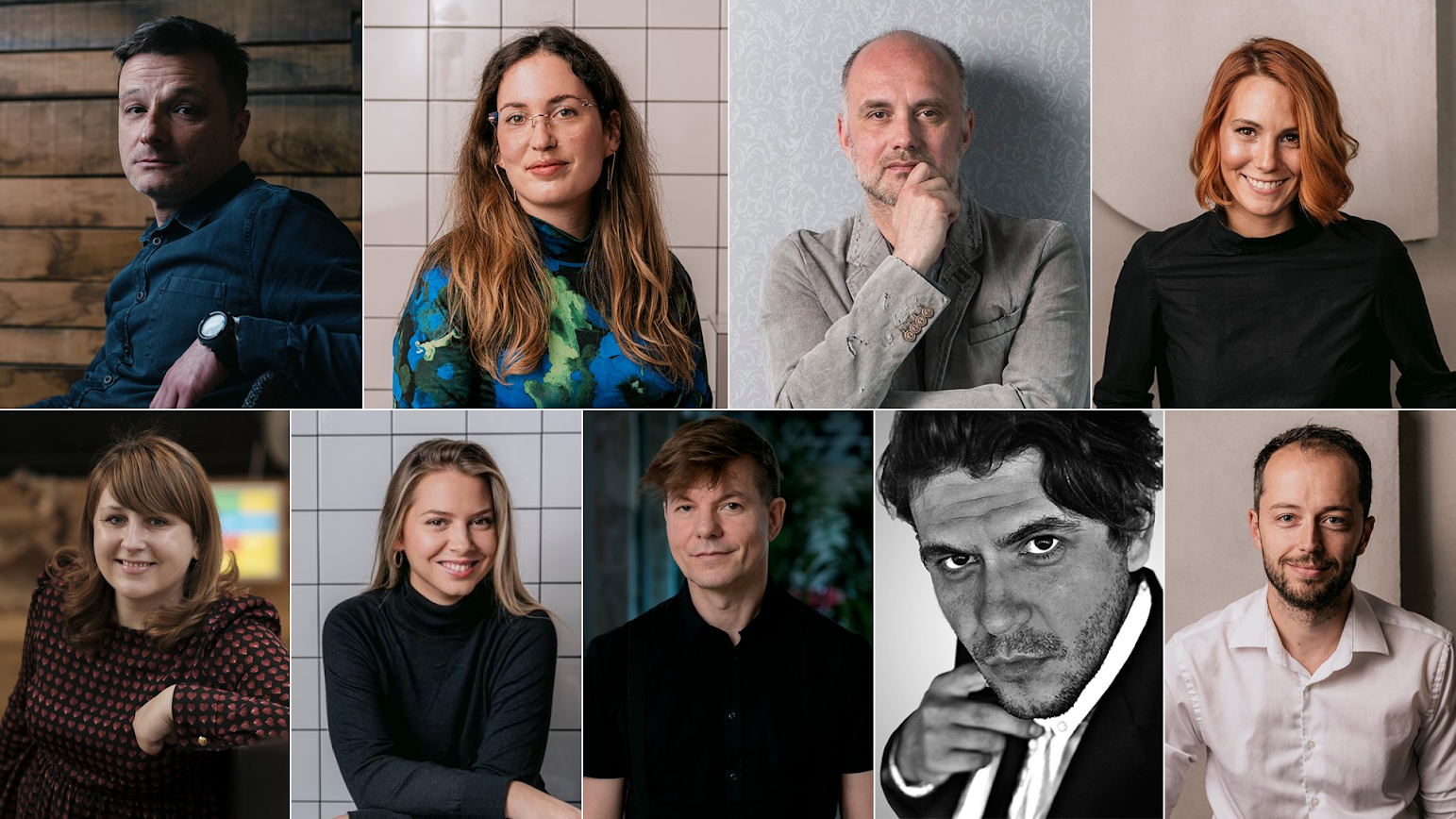
Taking part in the discussion about these topics, as well as creative risks, internal habits, attitudes towards technology, and changing audience expectations, were Nikola Žinić – Chief Creative Officer, Siniša Waldinger – Chief Creative Officer, Davor Bruketa – Chief Creative Officer, Vanja Činić – Creative Director, Vlatka Mifka – Creative Director, Roberta Kranjec and Lucija Mlačak – Account Directors, Grgur Knezić – HR Business Partner, and Maša Ivanov – Director of Client Relations.
Nikola Žinić, Chief Creative Officer
- If you had to summarise 2025 in one strategic decision you would make again, and one you would handle completely differently today, what would those two “plot twists” be?
Like every year before it, 2025 was a year in which we constantly had to change speed, direction and habits. Although that is not always comfortable, I would repeat the decision not to cling to old solutions just because they are familiar. That is harder than it sounds, but every year confirms the same thing: the speed of abandoning bad habits is just as important as the speed of learning new ones. So I would have given up some established processes and “agency securities” even earlier and more radically. What we have not and will not give up is the belief that ideas are the main driver. That we continue to produce unexpected ideas that work for clients, regardless of circumstances.
Siniša Waldinger, Chief Creative Officer
- What pushed your agency most to grow up this year, and what made it playful again like a child?
I think the key to our agency’s success and what has kept it creatively relevant not only this year but for decades is precisely our ability to balance maturity and childlike playfulness. I believe it is the fate of every creative organism to walk that edge without ever fully stepping onto either side. And to be completely honest, I cannot say this is the result of some deep strategic decision, but when you gather strong creative personalities in one place who love and understand their work, it simply happens. In the end, work has to be fun, otherwise it is just work.
Davor Bruketa, Chief Creative Officer
- If the Adriatic industry were a company listed on the stock exchange, what rating would you give it entering 2026, and why should investors keep or sell their shares?
Rating: Fu – cking – awesome.
Vanja Činić, Creative Director
- Which idea in 2025 made you stand up from the table and say “OK, this is why I still do this job”?
The idea that in 2025 I still have a job made me stand up from the table and say: “OK, this is why I still do this job!” Jokes aside, 2025 was truly turbulent, but also a year of brilliant ideas. Bold, unexpected, different. OK, if you put a gun to my head right now and demanded that I single out just one, I would choose the one that genuinely challenged me and made me look at things from another perspective. And that is the idea that Alfred, my AI agent, a digital version of me developed in collaboration with renowned prompt engineers and leading global neuroscientists, will soon be doing all my work. If I must be brutally honest, since Alfred has been giving 100 percent of himself 24/7, 365 days a year and handling tasks more and more successfully, I hardly think about work at all. While I enjoy sea bass fillet with sun-dried tomato sauce and homemade gnocchi at restaurant Zlatna školjka, Alfred answers business emails. While I relax in a spa centre at Terme Olimia, Alfred leads a sprint workshop with a client. While I enjoy winter outdoor activities in Madonna di Campiglio, Alfred drafts a strategic pitch introduction in bullet points. Already today Alfred can perform most of my tasks, which means that in 2026 I will have even more time for panel discussions, biohacking and Taylor Swift concerts. Imagine, in two or three years I will not work because Alfred will technically do all my work. Total vibe shift. That idea in 2025 made me stand up and say: “OK, this is why I still doing this job!”
- What was your biggest creative risk this year, and did it pay off in the way you expected or in a way you could not predict?
Thank you for the excellent question! My biggest creative risk was taking a longer break from writing How2Mijau texts for Media Marketing. I admit that was a serious mistake on my part and also a huge loss for the entire industry. To be clear, How2Mijau is not about personal branding or shameless self-promotion, it really is not, I do not care about that at all, whatever… The point is that every day on LinkedIn I receive hundreds of messages from loyal readers: “When is the new How2Mijau coming out?”, “How2Mijau always lifted my mood; since it stopped I take antidepressants and I am not well”, “Where did the only marketing column in the Adria region with backbone and guts disappear?” It is clear to me that How2Mijau has immeasurable impact on the industry, always challenges, relentlessly asks “why?”, is digital first… but I did not expect such a harsh reaction from the marketing public. Harsh but justified, it must be said. The fact that How2Mijau no longer runs is a terrible injustice and entirely my fault toward future thought leaders, renaissance all-rounders and always-oners with a growth mindset. I cannot bury my head in the sand anymore, that is obvious. It is my moral and professional duty to correct that injustice and continue where I left off.
Vlatka Mifka, Creative Director
- Which creative weakness in the regional industry is persistently hidden, and what would you do if someone appointed you to “expose” it during 2026?
If someone appointed me to “expose” a creative weakness in the industry, I would tell them snitches get stitches. Jokes aside, I do not think there is any weakness the industry consciously hides, there is no big conspiracy. If I really have to say something, even though it sounds pretentious to “expose” anything, it seems to me that communication strategy in the region is still positioned like Santa Claus; creatives are not convinced it really brings them gifts. Maybe that is a legacy from times when creativity was more intuitive and budgets larger. Maybe it is resignation because strategies and platforms change every time leadership changes on the client side. Either way, I believe working according to a defined strategy is a skill worth learning.
Roberta Kranjec, Account Director
- How do you today balance client business growth with realistic team capacity, and where do you draw the line when “just a bit more” could cause long-term damage?
We achieve balance through careful assessment of market conditions and internal capacities. We draw the line when further workload would compromise delivery quality, team wellbeing, or the long-term value of partnership with the client. We always communicate openly with clients about realistic possibilities and propose sustainable deadlines and priorities.
- Which internal agency truth did you first have to admit to yourselves, and only then to the client, to keep the relationship healthy long term?
Despite our intrinsic sense of importance, communications do not save lives. A healthy balance between ambition and real circumstances has allowed greater understanding and more effective collaboration.
Lucija Mlačak, Account Director
- Which common assumption about consumers did you have to “break with a hammer” in 2025 because it was no longer true?
The assumption that constant presence equals importance. Visibility still has value, especially in a sea of autopilot content, but 2025 taught me audiences have a strong sense of timing. The issue is not that brands communicate with them, but when and why. In practice I often saw that less communication at the right moment produced greater effect than constant presence without a clear reason. We did not stop being present, but we stopped speaking just to be seen. And honestly, that brought peace both to us and to audiences.
- If you had to predict one psychological shift in audiences in 2026 that will most change communication, what would it be and why is it invisible until it happens?
I think audiences are slowly moving from the need to see themselves in brands toward the need to feel lighter with them. In a flood of daily content, we increasingly seek relief, something that does not require extra energy, explanation or engagement. Less “this is me” and more “this helps me decide more easily, calm down, remove excess”. This shift is hard to notice because it does not happen suddenly or through new formats or trends. It happens quietly, through skipping content that is too demanding, emotional or attention-heavy. In 2026, communication with the most value will be the one that understands audience state, not just identity, and knows when it is better to say less or nothing.
Grgur Knezić, HR Business Partner
- Which new skill, habit or ritual in the team this year could you label as “born in the Adriatic industry”, something that exists nowhere else?
What we could label this year as something uniquely ours is the conscious cultivation of humour as part of organisational culture. At BŽG we call management the Central Committee, words like “prejebeno” and “zakurac” appear on our walls, and dry self-ironic humour serves as a shared language when things are neither simple nor easy. This is not provocation for provocation’s sake, but a way to handle pressure, absurdity and uncertainty without pathos or fake corporate seriousness. That humour is not an escape from responsibility but a tool for preserving sanity, connection and team resilience. It reminds us we can be very serious about what we do while relaxed enough to laugh at ourselves first, then move forward.
Maša Ivanov, Director of Client Relations
- What was the most unexpected sentence you heard from a client this year, and how did it change your brief, campaign or relationship?
Although we have been in this business a long time and little surprises us, we certainly do not live in an Emily in Paris ideal agency world. Positive feedback from long-term clients is always valuable. I would especially highlight an end-of-year message where a client sincerely thanked us for the energy, flexibility and dedication we bring to every project. Because that kind of relationship enables open and effective communication and of course makes us even more creative.
- If someone offered you to start 2026 with a single act of courage, professional, creative or human, that would push you out of your comfort zone and move the industry forward, which act would you choose and why?
If I started 2026 with one act of courage, it would be stepping out of the safe agency-client relationship as we know it. After 11 years in an agency, I know how often we choose solutions that are “good” but not truly brave. I would choose a partnership where risk, responsibility and results are shared, without hiding behind processes, deliverables and presentations. Where it is acceptable to say no, admit mistakes and start over. I believe the industry today does not need more tools or trends, but more trust, humanity and courage to do things that slightly scare us.

