

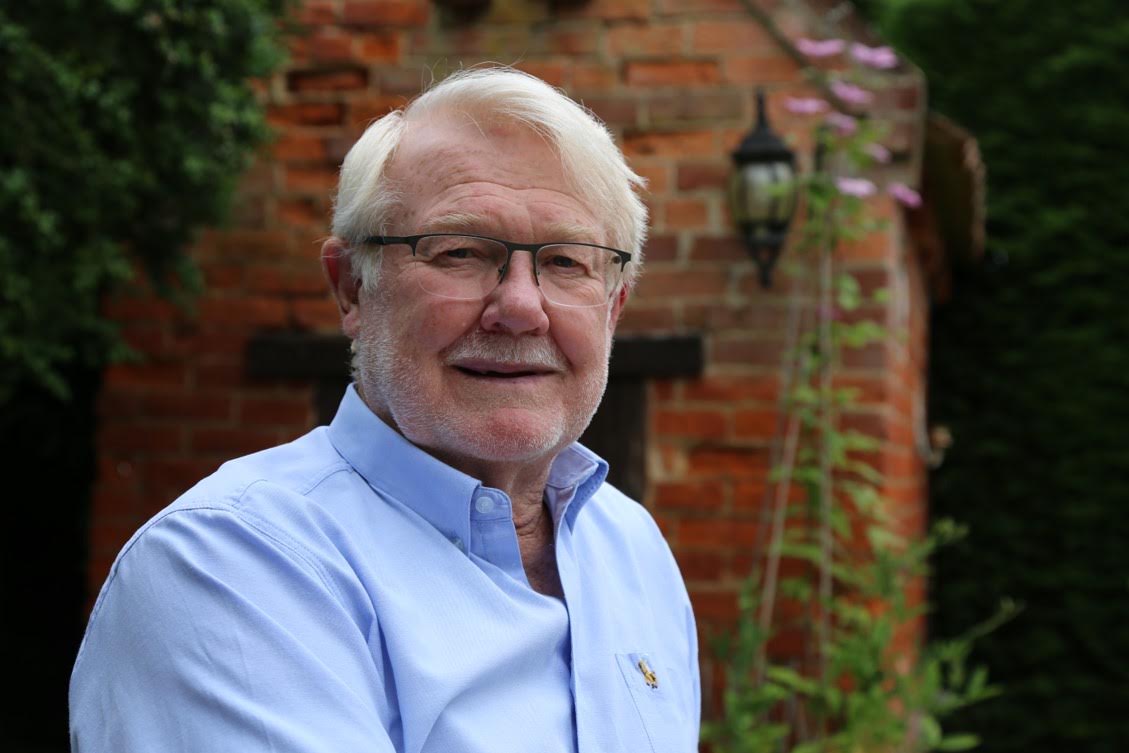
Richard Linning has worked throughout his career as a journalist, public relations and public affairs consultant, and public policy advocacy expert. He gained experience in Australia, London, Hong Kong and Brussels, working for governments, companies, non-governmental organizations and international institutions.
As a former president of the International Public Relations Association (IPRA) and the European Confederation of Public Relations (CERP), Linning spent years connecting the global communications community. In recognition of his contribution to promoting the free flow of information, he was appointed an honorary member of the Senate of the University of Bucharest.
In an interview with Media Marketing, he discusses the Rome Declaration on Responsible Green Communication, the possibilities and limitations of artificial intelligence, the negative perception of PR, and the importance of truth, transparency and ethics in contemporary communications.
You have devoted your entire career to communications, first to journalism and then to public relations, with a particular focus on building and supporting the community of communications professionals in Southeast Europe and around the world. When you look back on your work, which moment made the strongest impression on you?
One moment encompasses all the others: being appointed an honorary member of the Senate of the University of Bucharest, in recognition of my contribution to promoting the free flow of information as a key component of a functioning democratic society. Over the years, this has involved numerous countries and different activities. Among the communities of like-minded people that I continue to support are White Nights of St. Petersburg, Croatia’s PRO PR conferences, the Latvian Public Relations Association and the Middle East Chapter of the International Public Relations Association (IPRA). The principle of the free flow of information is widely accepted, but its universal application, unfortunately, is still lacking.
For the past five years, you have been the president of a non-governmental organization that recently launched the signing of the Rome Declaration on Responsible Green Communication. Why is this declaration important for public relations professionals and organizations operating in the field of communications?
The key word here is responsibility. We are facing a genuine tsunami of information and opinions on green issues. Is climate change real? Is this policy or product “greener” than another? What exactly is greenwashing? It is therefore no surprise that the public debate is confused and citizens are skeptical.
The challenges posed by immediate, “bottom-up” media, both traditional and digital, cannot be underestimated. The Declaration answers the question of how communicators can respond responsibly and practically to the challenges defined by international agreements such as the Paris Climate Agreement and the United Nations Sustainable Development Goals.
It provides concrete guidelines for responsible green communication. It is particularly important that it recognizes the need to respect linguistic, cultural, political and religious differences. The fact that this initiative originated in Croatia is a source of pride.
Do you think artificial intelligence will replace public relations professionals or provide them with additional support?
Public relations will do what it has always done when faced with communication innovations: embrace them and adapt. During my lifetime, I have witnessed many such changes.
Take the internet as an example. What was initially only a faster communication channel has now, thanks to social media, algorithms, data mining and artificial intelligence, become a tool through which we can reach and influence every individual user personally, with an incredible speed and precision that we could not previously have imagined.
Does this mean the end of public relations? Absolutely not.
Artificial intelligence saves time on routine tasks and can analyze, monitor and research in a few seconds what once required days. It is an almost perfect assistant. However, as Forbes magazine pointed out in August 2025 when discussing how to navigate this new information ecosystem: “As artificial intelligence systems filter, prioritize and even create content, PR strategies must take into account both human and machine audiences.”
Artificial intelligence can answer questions at lightning speed, but it is up to us to ask the right questions.
How would you assess the global position of the public relations profession today?
Unfortunately, the term “public relations” often carries negative connotations globally. PR stunt, PR spin, unethical behavior, manipulation, one-sidedness and deception are just some of the labels attached to the profession. And, as we know, mud sticks easily.
Changing that perception is the responsibility of us all.
As key participants in preserving the integrity of the communication process, public relations professionals should strive for honesty, transparency and accuracy in everything they do. Those who fail to do so should be publicly called out.
The Code of Ethics of the Public Relations Society of America (PRSA) represents the values of the entire profession: “Each of us sets an example for others, as well as for other professionals, through our pursuit of excellence with high standards of performance, professionalism and ethical conduct.”
In your opinion, what skills should a person working in public relations have today?
I would recall the words of Albert Einstein: “Imagination is more important than knowledge. Knowledge is limited, while imagination embraces the entire world.”
Above all, there must be a desire to understand what we want to achieve and how to get there. What is the goal? How do we accomplish it?
Curiosity is the driving force, while the tools available to us today, including artificial intelligence, expand the boundaries of our possibilities.
In brief, a person entering the public relations profession should be proactive, an excellent communicator, a builder of relationships and networks, and a strategic thinker. Many professionals I have met over the years have already demonstrated precisely these qualities at a world-class level.
Does truth still exist today? Does ethics exist? Is transparency still present, or have these values been lost?
German-Swiss philosopher Friedrich Nietzsche argued that objective truth is impossible and that there are only perspectives and interpretations shaped by individual interests.
This is precisely where the fundamental dilemma of public relations lies. Is this product really the best? Is this policy the one that should be followed? Is this politician the best choice?
Naturally, when we represent a particular position, the interpretation of truth is often guided by the client’s interests. However, there must also be room for the other side. The key question is: can this be done ethically?
As an advocate of the free flow of information, I believe in the principles of the Code of Ethics of the International Public Relations Association (IPRA), which emphasizes integrity, transparency and responsibility as the foundations of ethical professional conduct. The Rome Declaration applies the same principles to the field of green communication.
However, as chair of the WICMI working group that drafted the Declaration, I was aware of the need to respect cultural, political and religious perspectives and different interpretations when defining ethical standards. After all, as Nietzsche argued, truth is always a matter of perspective and interpretation.

