

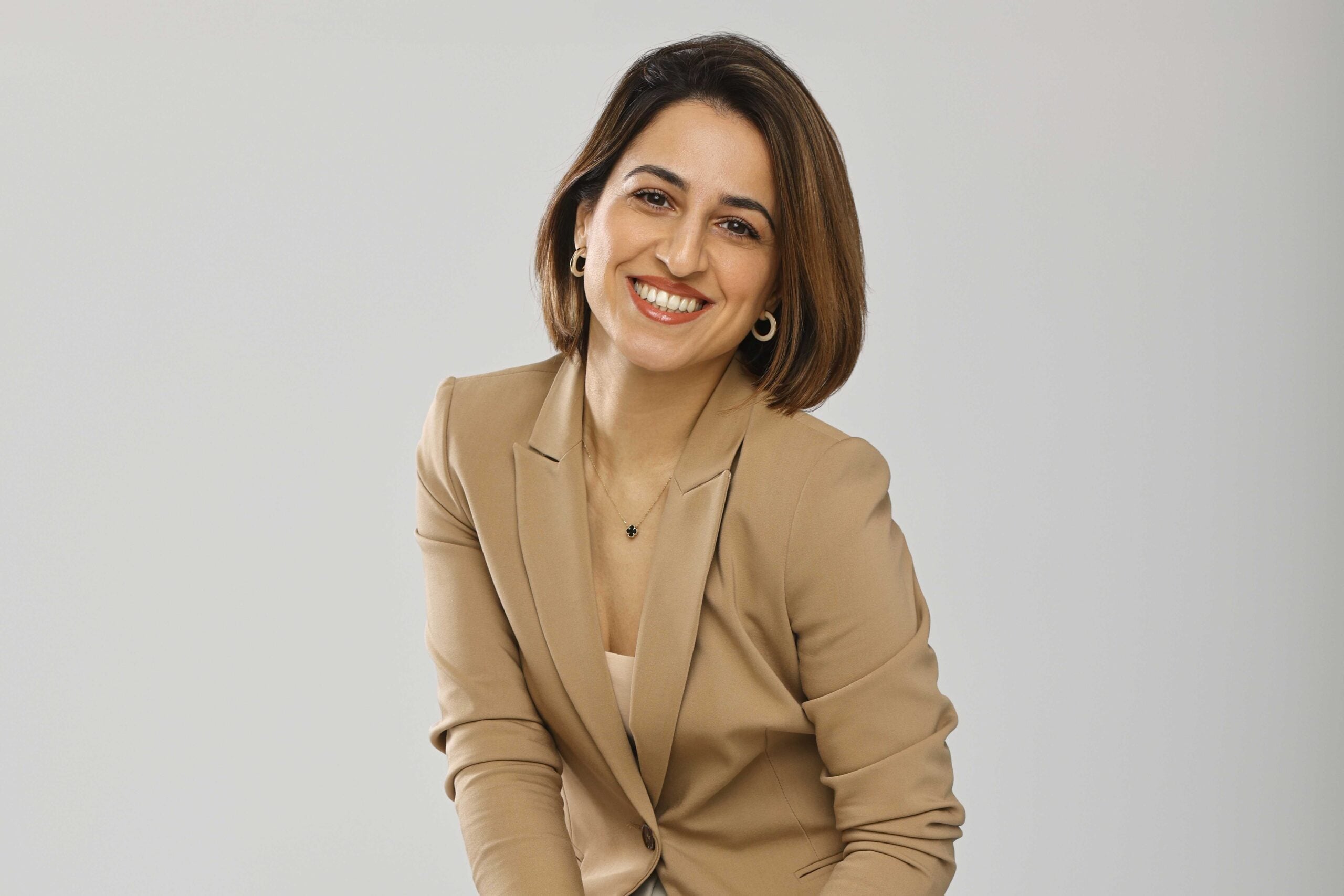
More than two decades of experience in marketing and brand management, gained in multinational and domestic companies, have shaped the professional journey of Nermina Kadrić, now Marketing Director at Alma Ras. Working across different industries and international business environments has given her experience in developing marketing strategies, brand management, digital marketing, and corporate communications, as well as the conviction that a brand’s strength is measured not only by the success of its campaigns, but by the trust it manages to build and maintain.
Trust is precisely one of the main topics of our conversation. How can a brand preserve its recognizable identity as customer habits change, how can short-term sales results be balanced with long-term development, and what makes a good relationship between a company and a marketing agency today? Kadrić discusses her experience in developing the Alma Ras brand, the importance of product quality and the shopping experience, as well as communication that must deliver on its promises.
We also discussed the future of the fashion industry, expectations of agency partners, and the role of artificial intelligence in creative processes. At a time when technology enables increasingly rapid content production, she reminded us of a value that no tool can provide on its own – a genuine understanding of the people a brand addresses.
The vision behind the Alma Ras brand has positioned the company as a high-quality and recognizable brand, whose identity and products have earned the trust of customers across the region. Your role in this process is certainly very challenging, as building a successful brand is not easy, and maintaining and developing it over the long term is even more demanding. How would you describe the development of the Alma Ras brand, and what key factors have contributed to its distinctive identity and market success?
Alma Ras is a brand that has grown thanks to customer trust, and it is precisely that trust that has built their loyalty over time. Even today, despite digitalization, the development of artificial intelligence, and numerous modern marketing tools, I believe that one of the most powerful forms of marketing remains personal recommendations, or the famous “word-of-mouth marketing.” Our customers are our strongest brand ambassadors.
Of course, over the years we have followed trends, developed, innovated, and adapted to the market. But one thing we have never compromised on is product quality. Quality is a broad concept, but for Alma Ras, it primarily means carefully selected materials, craftsmanship, and excellent cuts that ensure comfort when worn.
I often say that marketing can attract a customer to try a product for the first time, but it is the product that keeps them coming back.
Still, the story of a successful brand is much more complex. There is also service quality, the shopping experience, product availability, the relationship with the customer after purchase, and a range of other details. I could talk about all of this for much longer, but then we would probably be writing a handbook rather than an interview.
What are your customers’ shopping habits like today, and how are they changing under the influence of new trends, digitalization, and lifestyle changes? How do you view the current state and future of the fashion industry, and which brands and trends do you find particularly interesting and worthy of attention?
Shopping habits have changed significantly over the past five years, but I would say that customers’ basic preferences have not changed to the same extent.
We live faster-paced lives today, so customers expect shopping to be simple, accessible, and secure. They want to save time, find products easily, have the option of simple returns, and feel secure when shopping, especially online.
However, what has not changed is the expectation of value for money. And that value does not refer only to the price or the product, but to the entire experience, from the first contact with the brand to after-sales service.
When we talk about the future of the fashion industry, I believe that quality, functionality, more responsible production, and product durability will play an increasingly important role. I find the development of the quiet luxury concept interesting, but not necessarily as a luxury price segment, rather as a philosophy in which quality, simplicity, and durability take precedence over passing trends.
I am particularly interested in brands that manage to remain true to their identity while adapting to the modern customer. I think that achieving this balance will be one of the greatest challenges facing the fashion industry.
Marketing communications are strongly connected to a brand’s identity and values. What are the key messages that Alma Ras wants to convey to the market and its customers? What do you want your brand to be recognized for, and how do you use communication to build trust, emotional connections, and long-term customer loyalty?
At the center of Alma Ras brand communication are always women and men, their needs, feelings, and desire to feel good in what they wear. Our core message is not simply that we offer a quality product, but comfort, confidence, and the feeling of being comfortable in one’s own skin.
Our slogan “Dodir koji volim” (“A Touch I Love”) very simply sums up what we want customers to experience through every interaction with the brand.
I believe that emotional connections are not built solely through beautiful campaigns and creative messages. They are created when customers genuinely recognize what a brand promises through its communication in the product and shopping experience.
That is why we strive to communicate authentically, consistently, and with purpose. I particularly like campaigns that, beyond their commercial purpose, also have broader value, that evoke emotion, start conversations, or tell stories people can relate to.
For me, successful communication is when customers do not simply feel that we are trying to sell them something, but that we truly understand them.
What has been your biggest business challenge during the development and positioning of the Alma Ras brand? Have the greatest obstacles been public relations and regulatory procedures, human resource management, market competition, or other factors? Can you highlight a specific situation that put you in a particularly demanding position and explain how you successfully overcame it?
I think that the greatest challenges in brand management are not always individual crisis situations, but the ability to maintain a brand’s relevance over the long term, especially in a rapidly changing market.
For me, one of the greatest professional challenges has been precisely balancing long-term brand development with short-term business objectives. Marketing must contribute to sales results while simultaneously protecting the values, identity, and trust that have been built over the years.
This becomes particularly evident during periods when the market demands quick reactions, stronger promotional activities, or adaptation to consumer habits. At such times, it is important to make decisions that deliver results today without compromising the reasons customers will choose us tomorrow.
Such situations require a great deal of analysis, collaboration between different departments, and sometimes the courage not to follow every market trend.
I believe that the ability to preserve long-term trust while continuously adapting is one of the most important responsibilities of anyone managing a brand.
As a brand, what do you expect from the marketing and communications agencies you work with? What criteria do you use when selecting agency partners, how important is long-term collaboration to you, and in what situations do you consider changing agencies? Which services do you use most frequently, and what do you consider essential for a quality relationship between a brand and an agency?
Above all, I expect agencies to have an in-depth understanding of the brand. I believe that thorough preparation is often just as important as the execution itself. An agency must devote time to getting to know the brand, its values, customers, market, and business objectives. Only then can it deliver a solution that truly makes sense.
Creativity without an understanding of the brand can produce an interesting campaign, but not necessarily a good result.
I greatly value long-term partnerships, but I believe that trust must be continuously earned. I would like agencies to treat each of their clients with the same attention and enthusiasm as at the beginning of the relationship, when they are still trying to prove themselves.
I know that this is not easy, but I believe that consistent quality is the only sustainable model for long-term collaboration.
For me, a good agency is not merely a service provider that executes tasks, but a partner that understands the business, asks the right questions, and brings added value.
We are witnessing the increasingly rapid development of artificial intelligence platforms and tools that not only create digital posts and design solutions, but are also having a growing impact on the production of video commercials and other marketing content. Have you already started using artificial intelligence to create content for Alma Ras, and to what extent? How do you assess its potential to transform the fashion industry, creative processes, marketing, and communications? Do you believe that artificial intelligence will primarily be a tool that enhances creativity, or could it fundamentally change the way brands build their identity and communicate with customers in the long term?
It would be almost unimaginable to claim that we do not use artificial intelligence today. We use it both consciously and unconsciously, because it is already integrated into numerous tools and platforms we use every day. Just look at how algorithms and targeting work in digital marketing today.
I believe that AI, if used wisely, can significantly improve the quality of work, accelerate processes, facilitate data analysis, and open up new creative possibilities.
However, as with everything, balance is important. I am not an advocate of excessive reliance on AI, especially when it comes to creative processes and brand communication.
Personally, I always prioritize emotion, authenticity, and a genuine understanding of customers’ needs and desires. For me, personalization is not just an algorithm that offers someone the right product, but a brand’s ability to show that it listens to and understands the people it addresses.
Customers need to feel that there is a real story, emotion, and intention behind the communication, rather than simply aesthetically appealing content.
AI can help us become more efficient and creative, but we must not allow technology to make us lose what matters most, and that is the human dimension of communication. In my opinion, this is precisely what makes the difference between content that merely attracts attention and communication that leaves a lasting impression.

