

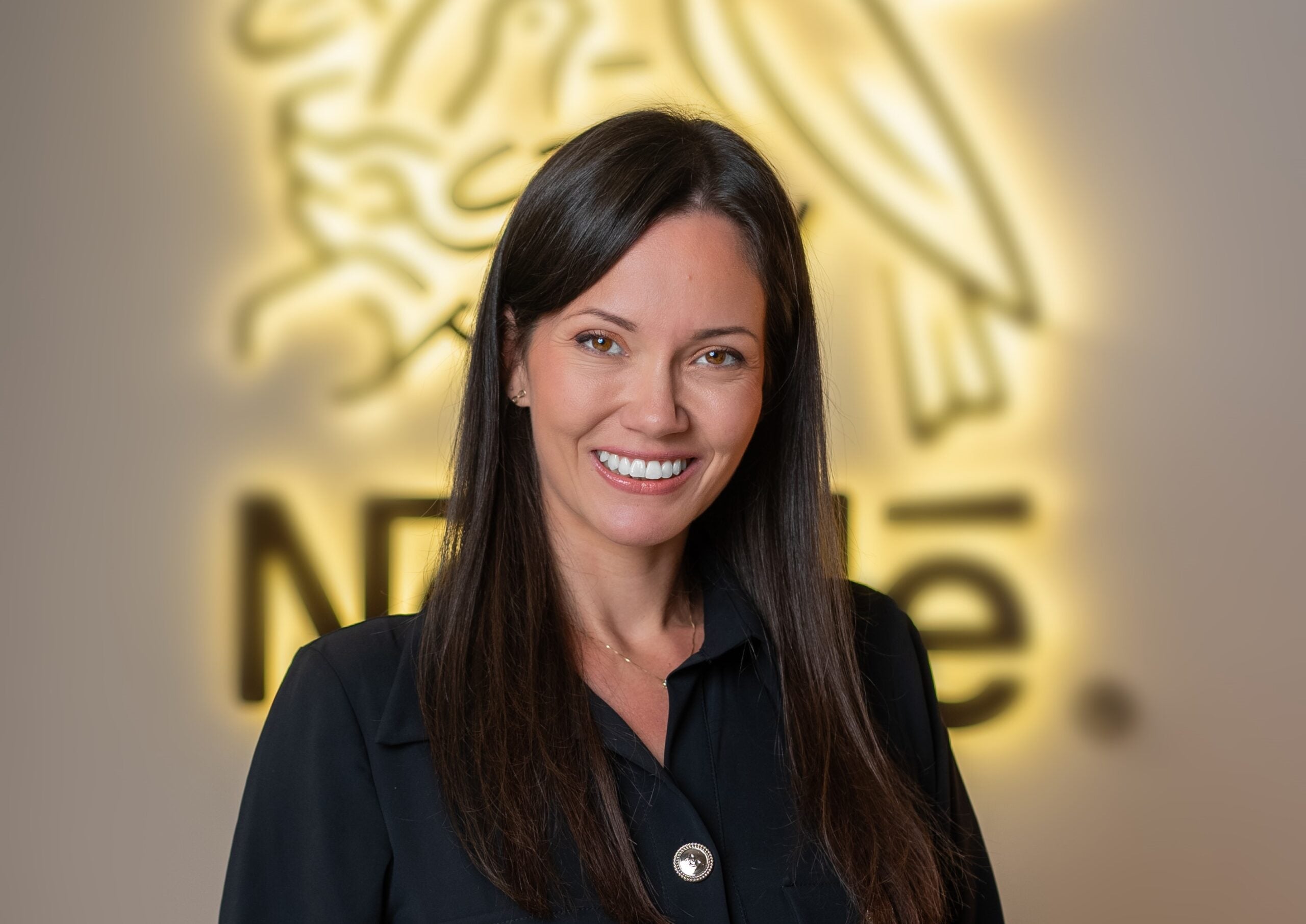
Milica Milanović, PR Manager at Nestlé Serbia, has for years been leading the communication of projects that connect business operations, sustainable development, and the company’s social responsibility. Her role includes much more than traditional public relations – from crisis communication and relations with institutions to ESG topics, sustainable production, and corporate reputation.
Through her work, she is particularly involved in communicating initiatives such as Nestlé for Healthier Kids – Healthy Growing Up, regenerative agriculture activities, as well as the sustainable practices of the Nestlé Surčin factory, which operates according to the “Zero Waste to Landfill” principle. An important part of these projects also relates to food donations and support for local communities, through which the company has been developing a broader social impact in recent years.
In the following interview, she talks about what the position of Public Affairs & Communications Manager in large companies entails today, why ESG topics have become an important part of reputation management, what the status of the PR profession in Serbia is, and how artificial intelligence and digital transformation are changing the way companies communicate with the public.
What does it mean to be a Public Affairs & Communications Manager at Nestlé, what areas does this role cover, and what are the key responsibilities?
The first thing people naturally think about is public relations, and communication topics at Nestlé extend across several key areas: sustainable development, children’s and family health, youth employment, as well as the company’s business operations themselves. However, this role includes much more than that, primarily corporate social responsibility, crisis communication, relations with government bodies, institutions, civil society organizations, chambers, and business associations, as well as participation in numerous initiatives and bodies focused on improving regulation and the business environment. The key responsibility is preserving and building the company’s reputation as a trusted brand – not only in terms of product quality and availability, but also through care for the community in which it operates.
Nestlé in Serbia, through its factory in Surčin, has achieved significant sustainability and business goals. Can you tell us more about that?
The Serbian Nestlé factory is a pioneer in many circular economy practices, and in 2019 it became the first food production facility to achieve the Zero Waste to Landfill goal, meaning that not a single gram of waste is disposed of in municipal landfills, but instead separated, sent for recycling, or converted into energy production.
The factory also has the most advanced wastewater treatment facility, which is at the same time the company’s largest local investment, worth 1.2 million CHF. In this way, the factory purifies 65,000 liters of water every day and safely returns clean water back to nature. In addition, there are numerous other ways resources are being conserved, such as packaging and logistics optimization, LED lighting, insulation panels made from recycled materials, and similar solutions.
“Zero Waste to Landfill” is a very interesting communication concept, but what does it actually mean in standards and practice, especially considering ESG reporting and regulatory requirements in the markets where Nestlé operates?
Nestlé’s goal is to achieve net-zero greenhouse gas emissions by 2050. That goal requires transformation and adaptation across the entire value chain – from agriculture, transportation, processing, packaging, and distribution, all the way to sales. Therefore, the Zero Waste concept holds an important place in that process and, as such, forms part of the ESG reporting framework. Additionally, topics like this, as well as many others that fall under the “E” and “S” in ESG, are becoming increasingly important to consumers, who no longer place their trust in companies that do not operate in these ways – not only as buyers, but also as potential employees.
How would you evaluate the status of PR professionals in Serbia, and what is the position of PR agencies?
Unfortunately, I think our profession has partly been degraded due to a lack of understanding of what it actually entails. For many people, “PR” is still just someone who sends press releases to newspapers and has editors’ phone numbers to call and ask them to publish something. However, within the business community, the status of PR professionals does not lag behind other corporate functions, because in those circles there is a clear understanding of the importance of corporate reputation and the consequences of poor reputation management.
My beginnings are connected to a PR agency, and I believe not much has changed since then: agencies are run by some of the best PR experts, while for younger professionals they are most often a learning station before continuing a career in a company or the public sector. Today I can say that a PR agency is an irreplaceable partner for a company, because what you bring from the inside and what they bring from the outside together leads to the best ideas and results.
Which moment in your career left the strongest impression on you, aside from the awards you have received?
There have been several, for example the recognition for best crisis communication, my first interview for Politika, or my first panel discussion with some of the experts I respect most in this field. However, what I will remember forever, and what truly helped me set my priorities for future work, was a photograph from one of the food donation deliveries, when I actually saw for the first time who those people were, what kind of problems they were facing, and how much what we do means to them. That is an irreplaceable feeling, stronger than any fulfilled KPI.
How do you see the future of public relations in the context of the growing influence of artificial intelligence and digital transformation?
I do not think the future of public relations is under threat, because spoken words and authentic written content are irreplaceable, and they reflect the relationship and respect toward the audience, consumers, and clients. That certainly does not mean AI has no role in PR – quite the opposite, it provides us with incredible tools, digital platforms, saves time, and often inspires us. I would say this is a major transformation we must go through, and we need to acknowledge that things are definitely no longer the same, but that the human factor in this field remains indispensable.
What advice would you give to young professionals who want to build a career in communications and public affairs?
Not to rush, because progress and success do not come overnight; to learn a lot, listen, read, and write; and not to impose authority, but to build it through knowledge, expertise, and above all – humanity.

