

In a series of conversations in which we are trying to understand how the Adriatic industry is thinking as it enters 2026, we speak with those who do not offer quick recipes, but clear positions. About long-term decisions that build reputation. About risks that lie not in brave ideas, but in boring solutions. About an industry full of talent, yet still too dependent on individual effort instead of systems that last.
In this conversation, we are not looking for the “best campaign of the year,” but for moments when you stand up from the table because it becomes clear why this work is still being done. We talk about local insights that are worth more than expensive benchmarks, about AI that is both a toy and a mirror at the same time, about an audience overwhelmed by content, but which occasionally still pauses and asks itself: “Wait, why am I watching this?”
The conversation with the Imago team is a very grounded look at an industry that wants to remain relevant, real, and creatively accountable – even when it says that the bravest move might be not to go to a single pitch.
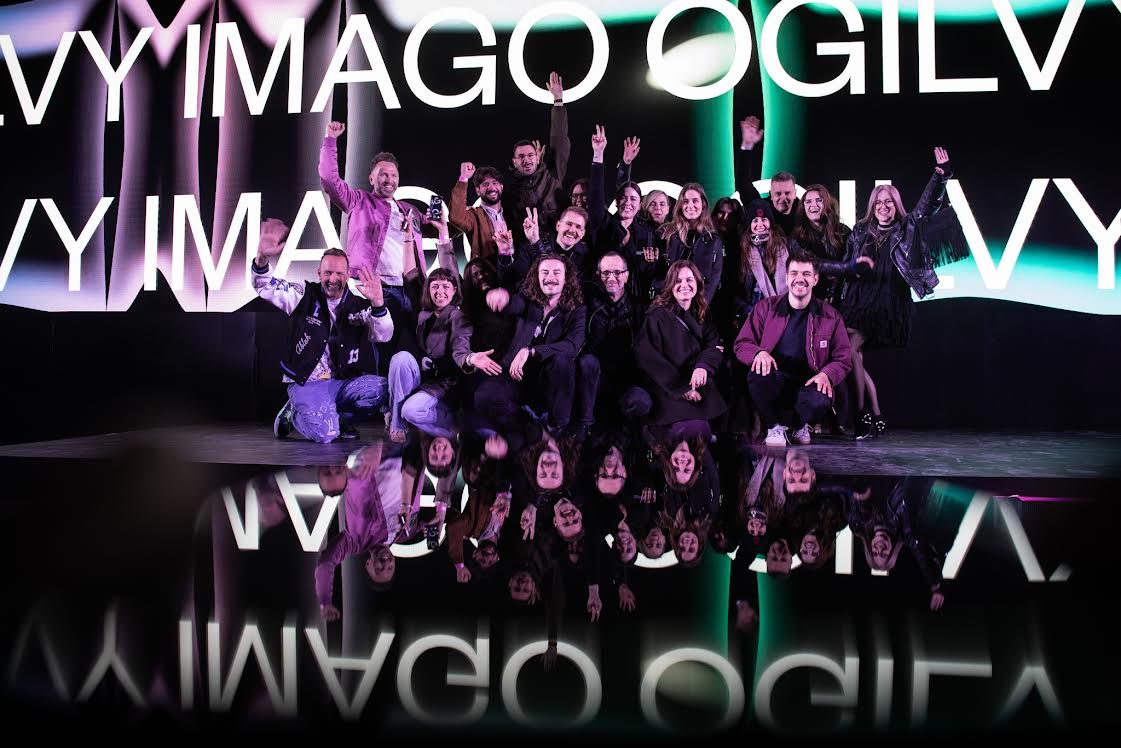
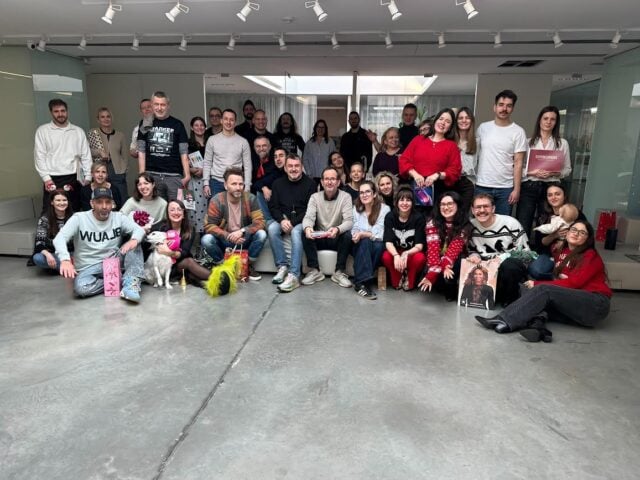
If 2026 is the year in which we stop pretending that we know everything, this conversation with Darko Bosnar – Chief Creative Director, Dina Dretvić – Head of Creative Strategy & Executive Director, and Nela Fegić Moguljak – Head of Digital & Executive Director, offers a behind-the-scenes look at one of the most awarded agencies of 2025.
If you had to summarise 2025 in one strategic decision you would make again, and one you would completely change today – what would those two “plot twists” be?
The decision to invest energy in what builds reputation in the long term, rather than in quick, short-term wins, is one we would always repeat. Old habits and inefficient processes maintained “because it’s always been done that way” need to be changed faster.
What pushed your agency to grow up the most this year, and what made it play like a child again?
Although Imago has existed for more than 33 years, it continues to progress every single day, in every sense. Both in making “adult” decisions and in drawing out that mischievous and curious inner child in each of us. From an adult perspective, it’s always good to remind yourself that not every opportunity is necessarily a good one.
Sometimes it’s simply necessary to say NO and preserve the energy (and sanity hehe) of the entire team. And the shiny new toy over the past year has definitely been AI, along with experimenting and exploring all the possibilities it offers – and it doesn’t seem like it will bore us any time soon.
If the Adriatic industry were a publicly listed company, what rating would you give it going into 2026? And why should investors (or shouldn’t they) hold on to the shares?
Stable, built on solid foundations, but sensitive to changes in pace: the industry is full of talent, experience and creative capital, but it still operates within frameworks that struggle to absorb rapid market shifts.
Why hold the shares: new generations are coming, work models are changing, and creativity in the region is increasingly delivering real business impact, not just aesthetic value.
Why be cautious: without longer-term investment in people, knowledge and sustainable business models, any stronger market pressure is quickly reflected. Growth still too often relies on individual effort and too little on systems.
Which idea in 2025 made you get up from the table and say, “Okay, this is why I still do this job”?
Looking back at 2025, we can’t single out one idea that made us get up from the table, but rather a moment when we realised that, as a team, we experienced a whole series of such ideas – and that we managed to turn them into concrete results. From being among the most awarded agencies at almost all the festivals we entered, to the title of Agency of the Year at the national IdejaX festival.
It’s that rare feeling when you’re no longer just chasing trophies, but through your work you see a clear change in the business and in the brands you work with, and it becomes crystal clear why we still do this job. In projects such as “Better to stop than to fall asleep” for INA, where we told a socially responsible story about driver fatigue through an unexpected, technologically innovative format; “Mojoj vezi” for Hrvatski Telekom, where technology becomes a bridge between generations rather than a barrier; and “The Last GUC GUC” for Studena, which showed that even in the FMCG category you can tell a witty, memorable story with a very distinctive signature, we turned emotional storytelling into measurable business results for brands.
It is precisely in that combination of bold, thoughtful ideas and unexpected execution – which led us to success at festivals and the status of Agency of the Year – that the moment happens when you stand up from the table and say: “Okay, this is why we still do this job.”
What was your biggest creative risk this year, and did it pay off in the way you expected… or in a way you couldn’t have predicted?
For us, the biggest creative risk is always doing something expected and uninteresting. This job gives us a rare opportunity to make our own working day exciting, and that’s most clearly visible in the projects we work on. We almost always try to offer clients a solution that addresses their challenge in a different way. We often debate the risk of the message we are putting out. Except in rare situations where the goal is solely to say that a product exists, we believe that the biggest risk is actually communicating in a boring, uniform language. To be noticed, communication has to be interesting, unexpected and different. A billboard we pass by has to give us something in return for the three seconds of attention we give it. Sometimes it will make us laugh, sometimes provoke us, anger us or teach us something new. A billboard that just stands there and offers information we didn’t ask for, in a way that doesn’t interest us, is for any brand actually the biggest creative risk.
Which creative weakness does the industry in the region persistently hide, and what would you do if someone appointed you to “expose” it during 2026?
We’re not sure if it’s the biggest weakness, but it seems to us that we collectively listen more often to trends coming from the West than to the domestic market and the local consumer. We’re all easily “enchanted” by the shine of expensive and unattainable advertising, while in reality our consumer is triggered by a local insight that most often comes from a completely different galaxy than what initially appears to us as a benchmark.
We don’t know if this is necessarily the biggest weakness, but it seems to us that as an industry we often listen more carefully to trends coming from the West than we truly listen to the domestic market and the local consumer. We are all easily “enchanted” by the shine of expensive and unattainable advertising, while in reality our consumer is triggered by a local insight that most often comes from a completely different galaxy than what initially strikes us as a benchmark.
Which common assumption about consumers did you have to “smash with a hammer” in 2025 because it was no longer true?
The assumption that consumers know what they are actually consuming (us included ;) ).
2025 showed that we are massively consuming AI-generated, low-quality content – not because it’s good, but because it’s everywhere. It’s cheap, fast, the algorithm pushes it, and consumption happens almost without any mental resistance. In such an environment, the question is no longer how to stand out, but how to look real at all. When AI rabbits are jumping on trampolines, differentiation no longer lives only in the message, but in brand authenticity, as well as in the unique taste and sensibility of the people creating that content.
If you had to predict one psychological shift in audiences in 2026 that will most change communication, what would that shift be, and why is it invisible until it has already happened?
Unfortunately, we can’t predict the future, but we can wish that in 2026 we move from passive content consumption towards micro-moments of awareness. After a period of mass consumption of AI-generated content, we don’t expect to suddenly become smarter and more critical, but we will occasionally become more aware that we are overwhelmed. Those brief moments of “Wait, why am I watching this?” will be key. The shift is invisible because it doesn’t happen continuously, but in the cracks of attention. This is where the role of strategy and creatives with experience, knowledge and taste becomes evident: not just to produce more content, but to create thoughtfully and authentically.
Which new skill, habit or ritual in your team this year could be labelled as “born in the Adriatic industry”, as something that exists nowhere else?
It’s true, it wasn’t born this year, but for four years now Imago hasn’t worked on Fridays. And while it’s hard to beat a non-working Friday as a benefit, what was truly “born in the Adriatic industry” is what came out of it. The non-working Friday taught us discipline, but also reminded us of respect for time – our own and others’. In an industry that often glorifies overtime and constant availability, it has become our small but stubborn act of resistance. Having 52 extended weekends a year is not a luxury; it’s a strategic decision that makes the team better, more rested and more creative in the long run.
What was the most unexpected sentence you heard from a client this year, and how did it change your brief, campaign or relationship?
The most unexpected sentence was definitely – “That’s it, we have no corrections!” :)
If someone offered you the chance to start 2026 with a single “act of courage” – professional, creative or human – that would completely push you out of your comfort zone and move the industry one step forward… which act would you choose and why that one?
An act of courage for 2026? Not going to a single pitch.
But we’re pitch junkies ;) So, see you at the pitch!


