

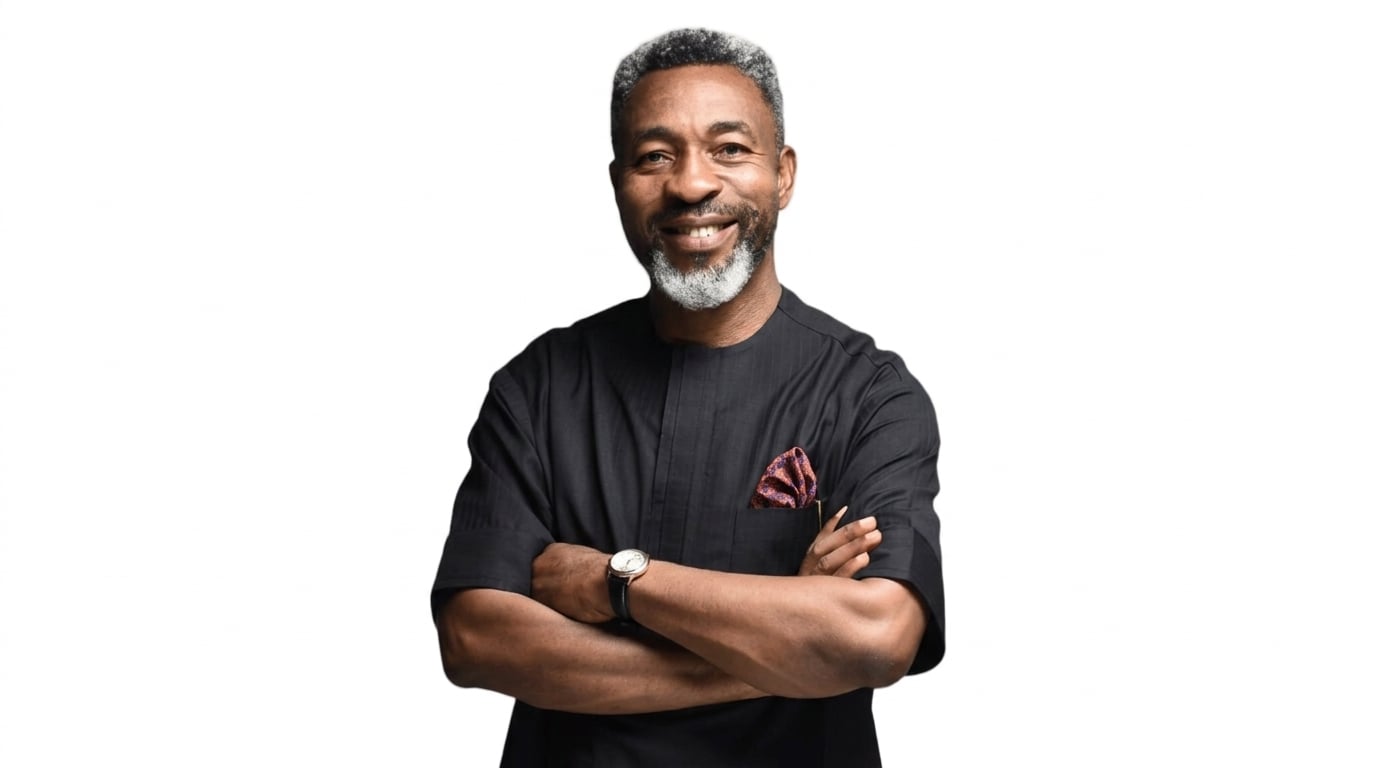
Dr. Ike Neliaku is the 15th President, Chairman of the Council of the Nigerian Institute of Public Relations (NIPR) and a second-term Member of the Board of the Global Alliance for Public Relations and Communication Management. An accomplished public relations leader and marketplace entrepreneur, he holds a Bachelor’s degree in Theatre Arts from the University of Jos, a Master’s degree in Political Economy and a Ph.D. in Development Studies from the University of Abuja. He has also undertaken executive programmes in National Development at the Political Warfare Bureau, Taipei, and the London School of Economics.
Under his leadership, the NIPR has expanded its membership by more than 3,500 within three years, digitised its systems, strengthened professional regulation and enforcement, established the Nigeria Reputation Management Group (NRMG), secured the hosting rights for the 13th Edition of World Public Relations Forum (WPRF) in Nigeria holding from 16th-21st November, 2026. He is currently championing the establishment of the world’s first University of Public Relations and Leadership in Nigeria.
In this interview with Marketing Magazine, Dr. Neliaku reflects on his career and leadership journey, the evolution of public relations in Nigeria, national reputation, artificial intelligence and expectations for the forthcoming WPRF Abuja 2026.
Throughout your remarkable career, you have spent more than 35 years working in communications. Three years ago, you were elected as the 15th President of the Nigerian Institute of Public Relations (NIPR), an organisation with more than 7,000 members. You are currently preparing for the largest global PR event, which will take place in Abuja from 15–21 November and is organised by the Global Alliance. Could you tell us more about this event?
Thank you very much. When I campaigned for the Presidency of the Nigerian Institute of Public Relations in 2023, I did so under the mantra, “New Dawn.” It represented a commitment to bring fresh thinking, new initiatives and innovative products into the Institute and, ultimately, to reposition the public relations profession in Nigeria. Since my election in August 2023, we have pursued that commitment deliberately. Our ambition is not simply to administer the NIPR, but to leave behind enduring institutions and systems that will give the Institute and the profession a quantum lift beyond where we met them.
That brings me to the World Public Relations Forum. We describe the WPRF as the “World Cup of Public Relations.” But for us, it is much more than a professional conference. It is a reputation project that Nigeria as a country, and Africa as a continent, take very seriously. We are delighted to host this landmark edition in Abuja. Our ambition is clear: to deliver the biggest, brightest and boldest WPRF ever held. Africa is rallying behind Nigeria, and we are preparing to welcome approximately 3,000 delegates from more than 126 countries across six continents. We are also greatly encouraged by the cooperation and support we are receiving from the Federal Government of Nigeria and other stakeholders.
WPRF Abuja 2026 is unique for several reasons. First, it will be held alongside the 37th African Public Relations Association Conference, creating an unprecedented convergence of global and continental communication leadership. Second, we expect the Forum to produce the “Abuja Declaration”, an important statement intended to help shape the future direction of public relations and responsible communication globally. We hope it will become a significant reference point for the profession, in the tradition of landmark global conversations such as the 1978 World Assembly of Public Relations Associations in Mexico City. Third, we plan to inaugurate the University of Public Relations and Leadership (UPRL) in Gudi, Nasarawa State, an institution conceived as the world’s first specialised university dedicated to public relations and leadership. Fourth, we are working towards the inauguration of the Nigeria Public Relations Place (NPRP), conceived as a landmark national headquarters for the profession. Fifth, the African Ministers of Information and Communication Roundtable will convene on the sidelines of the Forum, bringing policymakers and communication leaders together to discuss some of the most pressing communication challenges facing our continent.
There is also a strong social and cultural dimension. Among other activities, we are organising the Nigeria Jollof Rice and Akara Festival, through which we hope to feed about 10,000 people in Abuja while showcasing an important part of our cultural cuisine identity.
All these will complement the WPRF Knowledge Conference, world-class learning, strategic networking, cultural exhibitions and the opportunity for professionals from around the world to experience Nigeria and Africa firsthand.
Why is this communication event already being described as the event of the year in Africa?
Because it is an event of many firsts, but beyond that, the calibre and diversity of personalities and institutions identifying with the Forum demonstrate its significance. We anticipate participation at the highest levels of government, business, international institutions, academia, media and the global communication profession. Invitations and engagements extend across institutions such as the United Nations system, the World Bank, INTERPOL, the African Union, the European Union, UNESCO, the World Customs Organization, World Association of Press Councils and several other major international bodies. Our expectation is to host 3,000 delegates from about 126 member countries of Global Alliance, and our promise to them is simple: the biggest, brightest and boldest WPRF. That promise goes beyond the conference halls. From our carefully curated programme and knowledge sessions to Nigerian hospitality, cuisine, culture, entertainment and networking, we intend to use the Forum to tell an authentic Nigerian and African story.
More importantly, the theme – “Responsible Communication: The Voice of the World”, could hardly be more timely. We live in an age in which communication can travel around the world in seconds. Unfortunately, false, reckless or irresponsible communication can damage relationships, undermine institutions, destabilise economies and deepen social divisions with equal speed. Responsible communication does the opposite. It creates understanding, builds trust, moderates conflict and gives societies a basis for constructive dialogue. In that sense, responsible communication does not merely give people a voice; it helps ensure that the voice of the world contributes to understanding rather than division.
That is the deeper purpose of WPRF Abuja 2026.
When people think of Nigeria, they often think of insecurity and significant social differences, which is understandable given that Nigeria has a population of more than 220 million people. How would you explain to the general public how public relations is practised and managed operationally in Nigeria?
There are really two issues in that question.
First, Nigeria, like every major society, has challenges. No country is without its difficulties, including countries we often regard as models. What matters is how a society acknowledges its challenges, confronts them and builds institutions capable of producing sustainable solutions. Nigeria is a vast and complex country. Some of the challenges frequently highlighted internationally are more pronounced in particular locations than others and should not be generalised as the everyday experience of the entire country. Considerable efforts are being made to address these issues, and progress is being recorded.
The second issue concerns public relations practice in Nigeria. The profession has evolved significantly since the establishment of the Nigerian Public Relations Association in 1963, which subsequently became the Nigerian Institute of Public Relations. A defining moment came in 1990 when the NIPR received statutory recognition through Decree No. 16 of 1990, now cited as the Nigerian Institute of Public Relations Act, Cap N114, Laws of the Federation of Nigeria, LFN 2004. The legislation gives the Institute responsibility for determining professional standards and regulating public relations practice in Nigeria. That statutory foundation has helped us strengthen professional standards, deepen ethical discipline, expand the body of knowledge and improve professional education and certification.
Today, public relations in Nigeria operates across virtually every sector of society – government, corporations, civil society, development institutions, academia, consulting, technology, energy, aviation, maritime, and many others. The NIPR also works through specialised hubs and sectoral groups, including Maritime, Aviation, Energy, Consulting, and Young Professionals platforms. The Young Professionals Hub is particularly important because we recognise that the sustainability of any profession depends upon deliberately developing a competent, ethical and credible successor generation.
Ultimately, our philosophy is that public relations is not merely about publicity. It is about relationships, trust, reputation and leadership.
Nigeria is transforming and wants to present an image that will change global perceptions of the country. In your opinion, what needs to be done to achieve this?
The answer is collective responsibility.
However, I would make an important distinction: Nigeria should not simply seek to “present an image”. Reputation cannot sustainably be manufactured. Our objective should be to build the reality we desire and then project that reality truthfully, confidently and ethically. Nigeria is a nation of good people with enormous human, cultural and economic potential. What we need is greater intentionality in telling our own story, wherever and whenever the opportunity presents itself, while continuing to address those areas where our performance does not yet match our aspirations.
Reputation takes years to build but can be damaged very quickly. That is why every Nigerian has a role to play. We particularly encourage our young people to recognise the enormous influence they wield through TikTok, Instagram, Facebook, X and other digital platforms. Every post, video and conversation contributes, however slightly, to the global perception of Nigeria. Digital citizenship therefore comes with reputational responsibility.
Leadership is equally critical. As John Maxwell famously observed, “Everything rises and falls on leadership.” But nation-building cannot be left to government alone. It is a collective enterprise. As professionals and responsible citizens, our role is to support transformational leadership and necessary reforms, hold institutions to appropriate standards, contribute ideas and expertise, and tell Nigeria’s story with honesty and confidence.
The strongest national brand is ultimately built by national performance. Communication must then ensure that the world sees, understands and appropriately values that performance.
What does the media landscape in Nigeria look like?
First, let me acknowledge the Nigerian media community for the tremendous partnership and support it has extended to the NIPR since the beginning of my administration in 2023. The media have helped bring many of our programmes and nation-building initiatives into public consciousness.
Nigeria has one of Africa’s most vibrant, diverse and competitive media environments. We have a rich tradition of journalism and a highly plural media landscape spanning public and private television, radio, newspapers, magazines and rapidly expanding digital platforms. The Nigerian media continue to perform important democratic functions, setting the agenda, interrogating public policy, fostering dialogue and strengthening accountability, while operating under challenging economic, technological and institutional conditions.
Our media environment is also highly democratised in terms of ownership and platforms. The digital revolution has widened participation even further: today, virtually anyone with a smartphone can become a content creator or information distributor.
But freedom must always travel with responsibility.
Professional journalism requires accuracy, fairness, verification and respect for the rights and dignity of citizens. Institutions such as the Nigerian Press Council and other professional and regulatory mechanisms contribute to promoting standards and addressing excesses. So, while our media ecosystem has its challenges, as media systems everywhere do, it remains energetic, influential and indispensable to Nigeria’s democratic development.
How many media outlets are we talking about when someone needs to communicate important news? Is media coverage paid for when distributing a press release, or is earned media still the dominant practice?
Nigeria is a vast country with a population exceeding 220 million and a remarkably diverse media ecosystem. There are numerous television and radio stations, newspapers, magazines, online publications, blogs, podcasts and social media channels serving national, regional, state and community audiences. But effective public relations is not about counting media outlets. It is about understanding which platforms matter to the audience you need to reach.
We always emphasise the importance of understanding the operating environment before prescribing a public relations solution. You must know your audience, their media consumption habits, language, culture and the channels they trust. For example, there are communities in Nigeria where radio remains the most effective means of mass communication. A beautifully written newspaper campaign may have limited impact there if the intended audience primarily consumes information through radio or community-based channels.
Regarding paid versus earned media, both exist in Nigeria, as they do in many markets. Genuine news value, strong relationships and credible information can generate earned coverage. At the same time, organisations legitimately purchase advertising, sponsored content and other forms of paid media. The important principle is transparency. Public relations practitioners must understand the distinction between earned, owned, shared and paid media and use each ethically and strategically. The point needs to be made that media organisations are businesses with operating costs, but professional credibility requires that journalism and commercial content are appropriately distinguished. For the public relations practitioner, the objective should never simply be to “get coverage”; it should be to achieve credible communication with the right audience through the right channel.
What should someone know if they want to pursue a career in public relations in Nigeria, and what skills should they possess?
The first thing to understand is that public relations in Nigeria should be approached as a strategic leadership function. Particularly in Nigeria today, we have started to reemphasise the concept of development communication as an important public relations tool for our environment, because we believe that one of Nigeria’s core needs is development drive. In other words, public relations for us is far beyond being merely as publicity or media engagement.
Public relations builds trust, protects reputation, strengthens relationships and contributes to organisational and national development through ethical, transparent and culturally intelligent communication. This is why in 2025, the Governing Council of NIPR approved the Nigerian definition of public relations as, “a strategic leadership role that builds trust, reputation, lasting relationships, and drives inclusive development through ethical, transparent, and culturally respectful communication.”
In addition to the direction provided by the Nigerian definition I stated above, a potential practitioner should also develop competence in research, strategic thinking, stakeholder management, organisational strategy, public opinion, reputation management, crisis communication, media relations, digital communication, measurement, professional ethics, etc. Practitioners must also understand data, artificial intelligence and emerging technologies. But beyond technical competence, they need judgement, emotional intelligence, curiosity, integrity and the ability to understand people.
While it was once conventional to associate public relations primarily with graduates of mass communication and related disciplines, the profession in Nigeria has become increasingly multidisciplinary. Today we have lawyers, doctors, engineers, economists and professionals from many other backgrounds successfully transitioning into public relations. The NIPR provides professional education and robust training programmes to help such individuals develop the specialist knowledge required to transit and practise effectively.
My advice to any young person entering the profession is simple: learn continuously, understand people, protect your integrity and never stop asking questions. Technology will change, platforms will change and communication channels will change, but trust will remain the currency of public relations.
The use of artificial intelligence has become a daily practice for many public relations agencies around the world. What is the current situation regarding the adoption of AI in Nigeria?
Artificial Intelligence has come to stay. There is no question about that.
It is already transforming virtually every field. Be it medicine, engineering, education, finance, media, marketing, and of course, public relations and communication. Nigeria is part of this transformation. Public relations professionals are increasingly using AI for research, content development, media monitoring, data analysis, audience insights and several other functions.
However, our position at the NIPR is that adoption must be accompanied by responsibility and ethics. The Global Alliance for Public Relations and Communication Management is very strong in this respect. In 2025, it adopted and issued the Venice Declaration for Responsible AI, which has become an ethical guide and anchor for global adoption of AI as a public relations tool. Building relationships, earning trust, managing reputation and supporting good governance are fundamentally human responsibilities. They are too important to be surrendered entirely to machines.
AI can process enormous quantities of information and enhance productivity, but it does not replace human judgement, empathy, cultural intelligence or ethical responsibility. The practitioner must remain accountable for the communication that ultimately reaches the public. We have therefore made AI capacity development a priority for our members. Our philosophy is simple: we should use technology to amplify human intelligence, not allow human judgement and emotion to become subservient to technology. The future, in my view, does not belong to AI alone. It belongs to professionals who know how to combine the power of AI with the irreplaceable qualities of human intelligence, empathy and ethical judgement.
Being the President of a professional organisation is certainly not an easy task, especially considering different opinions, perspectives and expectations. LinkedIn, as a communication tool, has enabled global networking. How transparent are Nigerian public relations professionals in their communication, both nationally and internationally?
You are right. Serving on the Council of an organisation such as the NIPR is certainly not a holiday assignment. It is a responsibility and an opportunity to contribute to the advancement of the profession.
There have naturally been challenging moments, but I am particularly grateful for the resilience, commitment and sacrifice of the current Council and Management. There have been long hours of meetings, extensive consultations and difficult decisions, all directed towards ensuring that the Institute continues to move forward. Our commitment from the beginning has been to build a legacy that will outlive our tenure.
One of the ways we have managed diverse opinions and expectations is through an open-door leadership philosophy. We believe that different perspectives strengthen decision-making. Creative ideas often emerge, sometimes, from constructive disagreement, so we create room for people to be heard.
Regarding Nigerian public relations professionals and digital platforms such as LinkedIn, our consistent message is that these platforms should be used as instruments for building relationships, sharing knowledge and strengthening reputation, not destroying them. Transparency is fundamental to credible communication, but transparency must also be accompanied by accuracy, responsibility and professional judgement.
The digital age has given every professional a global microphone. What you publish in Lagos can be read in London, New York, Nairobi or Singapore within seconds. Therefore, Nigerian practitioners must increasingly see themselves not only as national professionals but as global reputation ambassadors.
There are areas where we can improve, certainly, but I believe the strength, creativity and professionalism of Nigerian practitioners far outweigh our weaknesses.
Among the many events you have attended or contributed to creating, which one would you highlight as having had the greatest impact on you, apart from the upcoming conference? Which event will remain an unforgettable milestone in your professional career?
That is a difficult question because we are talking about a professional journey spanning more than 35 years.
For me, every meaningful engagement has been an opportunity to learn, acquire knowledge and grow. Across more than three decades, there have been hundreds of events, assignments and encounters, each serving a different purpose and contributing something unique to my development.
So, rather than identify a single event, I would speak about experience.
I have had the privilege of working across both the public and private sectors, serving under six Ministers of Information and holding senior management responsibilities within the Presidency of Nigeria. It is the aggregation of these experiences, the people I encountered, the institutions I served, the crises I witnessed and the lessons I learned, that has shaped the professional and leader I am today.
If I must identify one particularly eventful chapter, however, it would be my service in the Office of the First Lady of Nigeria between 2010 and 2015.
That assignment exposed me to communication, leadership, diplomacy, development advocacy, crisis management and stakeholder engagement at a particularly high level. It provided an unusual vantage point from which to understand how communication intersects with power, policy, public expectations and human relationships.
The experience reinforced one lesson that has remained with me throughout my career: communication is most powerful when it is not merely about speaking, but about understanding people, building trust and using relationships to create meaningful outcomes.
Ultimately, I do not see my career as a collection of individual events. I see it as a continuum of experiences, each preparing me for the next responsibility. And for that journey, I remain profoundly grateful to God.

