

When we look at the decisions that marked 2025, one question keeps returning: what does the relationship between agencies and clients look like today in an environment that simultaneously demands speed while leaving less and less room for error? Budgets tightened, briefs became shorter, expectations expanded, and the industry’s long-standing obsession with “more” – more outputs, more channels, more optimisation – began to show its limits.
Efficiency increased, but meaning did not always follow that growth, so relationships often found themselves caught between the desire to move fast and the fear of saying the wrong thing.
For McCann Skopje, the past year was not about reinventing advertising, but about consciously resisting parts of the system that quietly erode trust: treating agencies as suppliers instead of partners, confusing speed with clarity and mistaking safety for strategy. Instead of louder creativity, their response was deeper integration – of people, responsibilities and clients into the process itself.
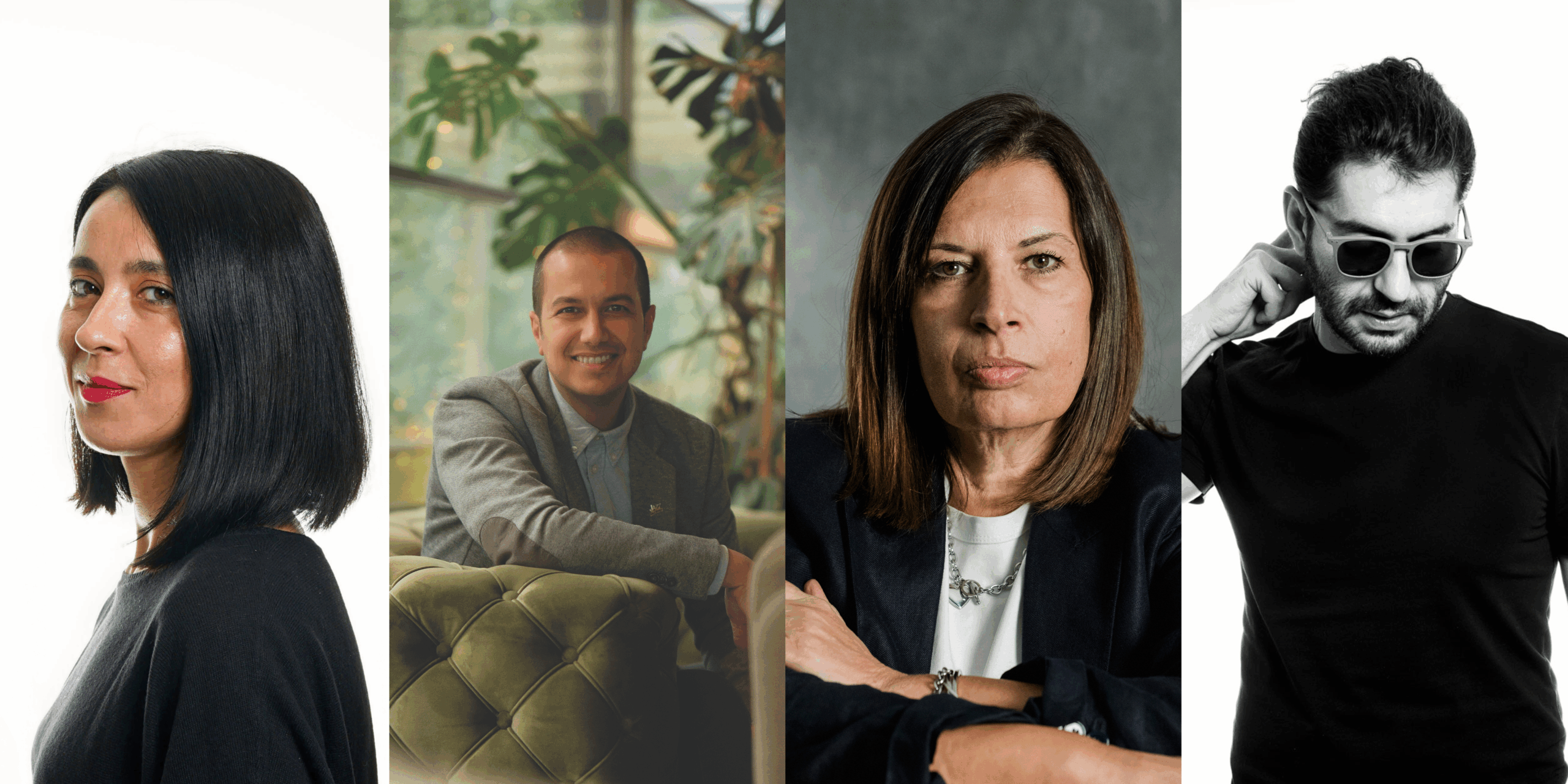
Bojan Kočovski – Managing Director, Bojan Dodevski – Creative Director, Irina Maja – Creative Strategy Director and Lara Casule Gonev – Client Service Director openly speak about the moments when saying “no” mattered more than being liked, when slowing down became a prerequisite for better work and when creative integrity proved to be a business decision rather than a romantic one.
Bojan Kočovski, Managing Director
1. If you had to summarise 2025 in one strategic decision you would make again, and one you would make completely differently today – what would those two “plot twists” be?
The strategic decision I would make again without hesitation is insisting on integration. And not only of services, but of people and responsibilities, in some cases even joint creation and involving the client in a larger part of the process. When strategy, creativity, digital, production and client service truly breathe together with the client, the agency stops being a vendor and becomes a partner. The “plot twist” I would play differently today is relying too much on existing client relationships and winning new business in industries already well known to us. We were successful, stable and somewhat self-satisfied. In retrospect, a more aggressive approach toward new industries, startups and non-traditional partnerships would have given us additional dynamism and freshness.
Lara Casule Gonev, Client Service Director
2. What is the most unexpected sentence you heard from a client this year, and how did it change your brief, campaign, or relationship?
In our business you can always expect the unexpected. The threshold of surprise constantly shifts and that is one of the factors that makes this profession so dynamic, challenging and inspiring. The process from the initial brief on paper and the idea in someone’s head, to execution and consumer reaction, is alive and modular, open to change. Along that path we often encounter deviations, compromises, re-evaluations, even steps backward, and all of that is part of moving toward the goal.
With every collaboration with clients, every brief or task, we learn something new, we build on it, and with each new experience we enrich our relationship. I can say that the real art in our work is making a good judgement about when one “yes” can move things forward, and when the courage of a single “no” can preserve the creative integrity of a project.
3. What pushed your agency the most to grow up this year, and what made you play again like a child?
Bojan Kočovski, Managing Director
What pushed us most to “grow up” was taking greater responsibility toward clients. Increasingly, we are not just talking about communication, but about product development, sales, reputation, internal changes and even business models. That creates closer relationships, but it also requires maturity, clear processes and the courage to say things the client may not want to hear.
On the other hand, creative constraints brought us back into a state of play. Smaller budgets, shorter deadlines and more complex briefs pushed us to experiment more, sometimes with a healthy dose of naivety. That very naivety is often fuel for creativity, and thanks to that approach we achieved some of our most awarded projects at festivals this year.
4. If the Adriatic industry were a publicly traded company, what rating would you give it entering 2026? And why should investors keep (or not keep) their shares?
Bojan Kočovski, Managing Director
The Adriatic industry has enormous human potential, creative DNA, an exotic local culture and global relevance, but at the same time it suffers from chronic problems: constant inflation, undervalued work, short-term thinking, profit-driven business decisions and slow adaptation to new business realities. So I would probably give it a cautious A- or BBB+.
5. Which idea in 2025 made you stand up from the table and say “Okay, this is why I still do this job”?
Bojan Dodevski, Creative Director
I wouldn’t single out one specific moment of enlightenment. In 2025 I was driven by something much more constant – the fact that in almost every brief, even the driest one, we managed to find an angle that genuinely entertained us. Many of those ideas were never realised, they stayed in presentations, but that process of searching, that energy in the room when we feel we have something good in our hands – that’s the magic. We realised a simple truth: when we enjoy creating, that enthusiasm is always felt in the final result.
6. What was your biggest creative risk this year, and did it pay off in the way you expected… or in a way you couldn’t predict?
Bojan Dodevski, Creative Director
We firmly stand behind our ideas and don’t try to give the client what they already have in mind, but what the brand truly needs. That often means saying “no” when it’s easier to say “yes.” When you take that position, you also take full responsibility for the project. There is always a risk something won’t turn out perfectly, but the opposite happened. The results were excellent, and through that process we built an even greater level of mutual trust with our clients.
7. Which creative weakness does the industry in the region keep hiding, and what would you do if someone appointed you to “expose” it in 2026?
Bojan Dodevski, Creative Director
Over time, the industry has lost some self-confidence and become overly cautious. Fear of mistakes often leads us toward safe, already seen solutions, which we then call strategy. In 2026 I would try to open more space for experimentation and courage. At the same time, I think the industry underuses the specificity and authenticity of our region. Unlike other European regions that built strong creative industries precisely on culture, tradition and authentic local characteristics, we have many elements that make us unique, but we still rarely turn those stories into strong creative work.
8. Which common assumption about consumers did you have to “break with a hammer” in 2025 because it was no longer true?
Irina Maja, Creative Strategy Director
The idea that consumers are passive recipients of messages, merely an “audience,” has long stopped being valid. The year 2025 made that very clear: people constantly respond to brands through their behaviour, choices, pauses and even the ways they combine products.
Consumers today actively participate in shaping brand meaning and its messages. Everything they do is communication. The biggest shift is understanding that the brand no longer just “speaks” to the audience, but is part of a dialogue happening even when it isn’t present. At that moment, strategy stops being a plan and becomes a living system – the ability to read behaviour in real time.
9. If you had to predict one psychological shift of audiences in 2026 that will most change communication, what is that shift, and why is it invisible until it already happens?
Irina Maja, Creative Strategy Director
People will increasingly ask less “Who am I?” through brands, and more “Does this brand respect my rhythm, my boundaries, my energy?” Integrity will not manifest through loud positions, but through the quiet withdrawal of attention. You won’t get backlash, just silence. And that silence can be the most expensive mistake in communication.
10. If someone offered you to start 2026 with a single “act of courage”, professional, creative or human, that would completely push you out of your comfort zone and move the industry forward, which act would you choose and why?
Irina Maja, Creative Strategy Director
I would stop asking “What will we say?” and introduce the question “How does this brand behave when no one is watching?” If everything is communication, then the message is not in the slogan, but in everything the brand does. That act would move the industry from the creative comfort zone into the zone of real impact, where strategy is not just a nice narrative, but consistent character.
Bojan Kočovski, Managing Director
I would choose to consciously refuse certain projects when I knew for sure they would not leave room for real creative or business impact. In our market we often accept everything because we are “programmed” not to miss any opportunity. But a true act of courage, in my opinion, would be to say: “We can do this, but we don’t want to.”
Bojan Dodevski, Creative Director
A true act of courage would be slowing down enough to get a proper brief and quality market research. Everything that follows becomes much easier after that.
Lara Casule Gonev, Client Service Director
I would love for us to be radically honest and clear. To be able to say “no” to projects and ideas that don’t fit the brand, lack a clear strategy or aren’t ready for a bold decision. That means stepping out of the comfort zone and taking professional risk, but it is the only way to restore courage and passion and move the creative and communications industry forward. I want an advertising world where quality, knowledge, dedication and integrity matter more than quantity and compromise.

