

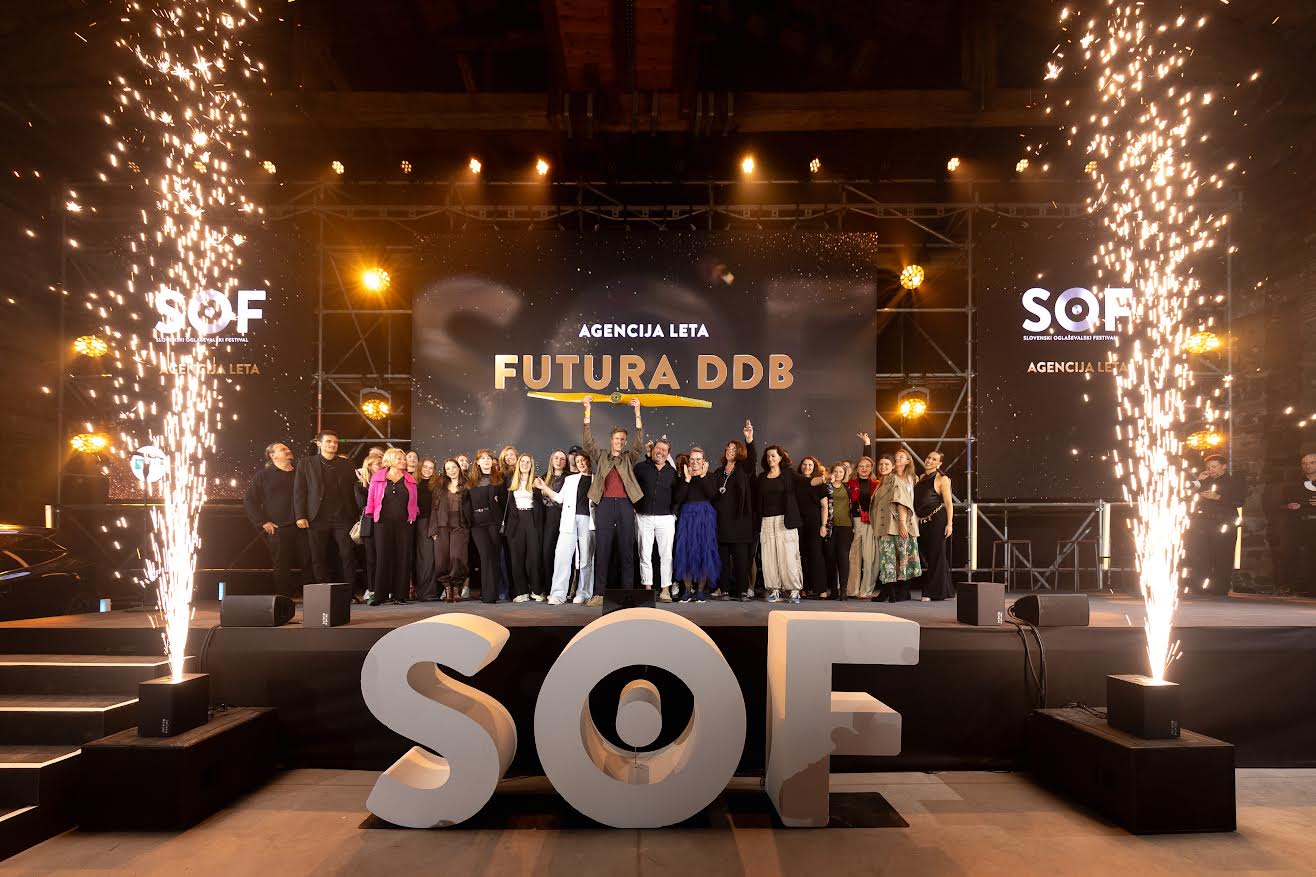
Following the announcement of the best agency at SOF 2026, the conversation with Gregor Firbas, CEO of Futura DDB, already carried the weight of a moment that was about more than just another festival season. For an agency that has won the Agency of the Year title for the fifteenth time, SOF is no longer merely a place of validation, but a test of continuity, confidence, and the ability to repeatedly find new reasons why the work should be better than expected.
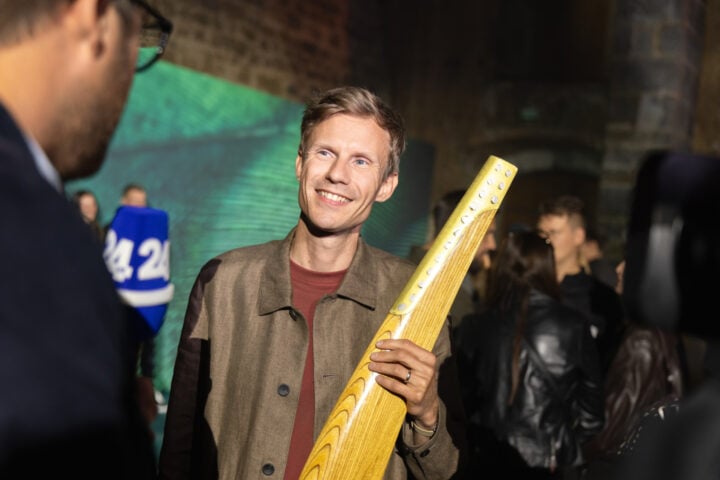
In the interview, Firbas talks about what it means to defend the position of an agency that has long been a benchmark for others, but also about the moments when that status can most easily become a burden. From regional expansion and digital transformation to the current pressure brought by AI, the conversation raises the question of how difficult it is today to remain creative in an industry where producing average work has become easier than ever before.
Through examples of campaigns for McDonald’s, Društvo Onkoman, and Perutnina Ptuj, the interview shows how Futura DDB understands local humour, regional differences, healthcare taboos, and the long-term building of brands. In a broader sense, this is a conversation about an agency that does not treat awards as a goal, but as a consequence of work that has a point of view, market impact, and enough courage not to settle for safe, forgettable communication.
This year marked the 35th anniversary edition of SOF, while Futura DDB was named Agency of the Year for the 15th time. That means you have won at almost every second edition of the festival. Which years or periods do you see as turning points for the agency – the moments when it was hardest to maintain that level?
Honestly, in our territory it is harder to maintain the title than to win it. The first time you win Agency of the Year, you are the underdog who pulled it off. From the second one onwards, you are the team the rest of the industry is measuring themselves against. You stop competing with other agencies and start competing with your own last win. With your own last work.
If I had to mark turning points, I’d name three. The first was when we stopped thinking of ourselves as a Slovenian agency and started thinking regionally. That fundamentally changed the kind of briefs we could win and the kind of talent we could attract. The second was around 2015, when digital craft stopped being a separate department and became part of every work we do.
The third is happening right now, and it is the most interesting one. AI has rewritten what clients expect: faster, cheaper, everything automated. In a narrow sense, some of that is right; AI can help with some of it. But here is the part the industry is not saying out loud: it has never in history been easier to be average. Anyone with a prompt can now produce something passable, but rarely something with meaning or real effect. That is the expectation–delivery gap of 2026, and it is where agencies will live or die. Defending the title is about being on the right side of it. The side where the work still surprises, still has a point of view, still feels made rather than generated.
The hardest moments aren’t internal. They come when the market shifts faster than the team is willing to adapt, keep doing brilliantly the thing the market had stopped rewarding. The 2026 version of that mistake is using AI to deliver work that is technically perfect and entirely forgettable. The title goes to the agencies who refuse that trade. Fifteen Agencies of the Year, in plain terms, means fifteen times we have made the harder call.
You have been CEO since 2021. During that period, Futura won the SOF title in 2021, 2023, 2024, and now again in 2026. What was different in those years under your leadership compared to before?
Three things, mostly.
First, we stopped treating awards as the strategy. We stopped reverse-engineering “festival ideas” and went back to asking what would actually move a client’s business, because the strongest creative argument is a piece of work that did something in the market. Funnily enough, that’s been the thing that has brought us the most awards.
Second, we made it expensive to be safe. The internal cost of defending a piece of average work in our reviews is now higher than the cost of pushing a riskier idea. The whole agency now leans toward the harder route by default.
Third, we changed who gets listened to in this agency. Clients still want seniors in the room, and they should. Senior presence is the assurance the system needs: someone accountable, someone who has done this before, someone who will not let things drift. We give them that. But the ideas that have moved our biggest accounts in the last five years almost always came from people a decade younger. They are closer to the audience, less worried about being wrong, faster to spot when something is becoming generic. The discipline since 2021 has been to make sure that the loudest voice in any internal room is not the most senior one, but the sharpest one. That single shift is in the DNA of every piece of work we have been recognised for.
Futura DDB works with clients across the entire region – McDonald’s Croatia, Studenac, Bjana, Podravka. How different is it to create a campaign that has to work simultaneously in Belgrade, Zagreb, and Ljubljana, compared to a campaign made only for the Slovenian market?
When a campaign is only for Slovenia, you can lean on cultural references and humour that only Slovenes will get. The same jokes don’t survive the trip to Zagreb or Belgrade. They either mean something different, or they don’t mean anything at all.
The discipline regional work forces on you is to find the human insight underneath the local detail. Two parents arguing about what to pack for the kids’ lunch isn’t a Slovenian story or a Croatian story, it’s a parents story. Once you find that level, you can localise the execution, the casting, the music, the rhythm of the dialogue. What you cannot do is take a Ljubljana idea and translate it. That is the most common mistake, and it always shows.
Each market wants something different from a brand. Belgrade wants a point of view, even on something small. Zagreb wants entertainment. Slovenia wants usefulness first, charm second. The same campaign in all three markets is really three different briefs. The good regional work isn’t translated. It is rewritten three times.
“SMS fotru” for Društvo Onkoman was one of your most striking campaigns this season. Instead of a traditional medical appeal, the idea focused on children writing emotional SMS messages to their fathers and encouraging them to get a prostate check-up. Where does that kind of inversion of perspective come from, and how difficult is it to sell a client on an idea that differs so much from the usual approach to healthcare campaigns?
The insight came from a very simple observation: the men in this region do not go to the doctor. They will fix a car, build a house, work a twelve-hour shift… but a twenty-minute prostate check is too much to ask. Not because they are lazy. Because going to the doctor means admitting you are not invincible, and in our culture, fathers are taught to be invincible from the day they become fathers.
Every other healthcare campaign aimed at that audience does the same thing: it tries to scare the men. Statistics. Survival rates. A doctor in a white coat. It doesn’t work. These are men who have already learned to ignore that voice.
But there is one voice they cannot ignore: their kids’. So we flipped the angle. Instead of speaking to the fathers, we wrote a message to the children and asked them to send a single SMS to their dad. The idea was almost embarrassing in how obvious it was, which, in my experience, is usually the sign that you are onto something real.
The second move was the channel itself. SMS is not a fashionable medium in 2026. Nobody is talking about it at marketing conferences. But everything that makes it old-school is exactly what makes it work here. An SMS is personal. It cannot be scrolled past. And it is the medium that fathers of that generation grew up with — they recognise it, they read it, they answer it. The most original part of the campaign was not speaking through the kids. It was choosing the least fashionable channel on the planet, because in 2026 that is the channel that actually cuts through.
Selling it to the client was actually the easier part. Onkoman is run by Matej and Jaka, two men who survived cancer in their twenties and have spent the years since telling other men what they wish someone had told them earlier. Matej is the president of the organisation. Jaka was a professional footballer at the moment of diagnosis and is now the father of three daughters. They also know what every NGO leader learns the hard way: on a small budget, only the strongest ideas perform. Anything average is invisible. So when two men with that combination of personal history and commercial pragmatism sit across the table and ask you to find a way to reach the men who refuse to listen, they are not going to push back on you for being too brave. They push back if you are not brave enough. The harder part was the production: we had to make sure the SMS messages did not feel scripted, so most of what is in the final film is real.
In three weeks, more than two thousand SMS messages were written through the platform. The video invitations were shared over ten thousand times. Fifty Slovenian public figures joined the campaign pro bono. We earned a hundred and twenty media placements without paying for one. And calls to Onkoman from men asking about prostate screenings rose by 1100%. The advertising budget for all of this was €2,000.
This year you dominated the finalist list with 28 shortlisted entries, many of them connected to McDonald’s – the series of TV spots for Alpe Panon and the Mekathon generator. How does working on a global brand like McDonald’s function when you need to find a local language and humour that works both with audiences and at festivals?
McDonald’s globally is unusually good at trusting local markets. And that, frankly, is the secret to why their local work breaks through. The brand guardrails are about who McDonald’s is, not what McDonald’s says. As long as the work is warm, optimistic and unmistakably the brand, the cultural register is ours to choose.
McDonald’s has been our partner in Slovenia for 33 years and in Croatia for 30. Slovenian humour does not sit comfortably in the typical fast-food vocabulary of “happy young people eating burgers in slow motion.” So we leaned the opposite way: looking for genuine customer insight and fan truths, and crafting campaigns that are identifiably McDonald’s and identifiably local at the same time. The brand survives the local accent. Better than that, it benefits from it.
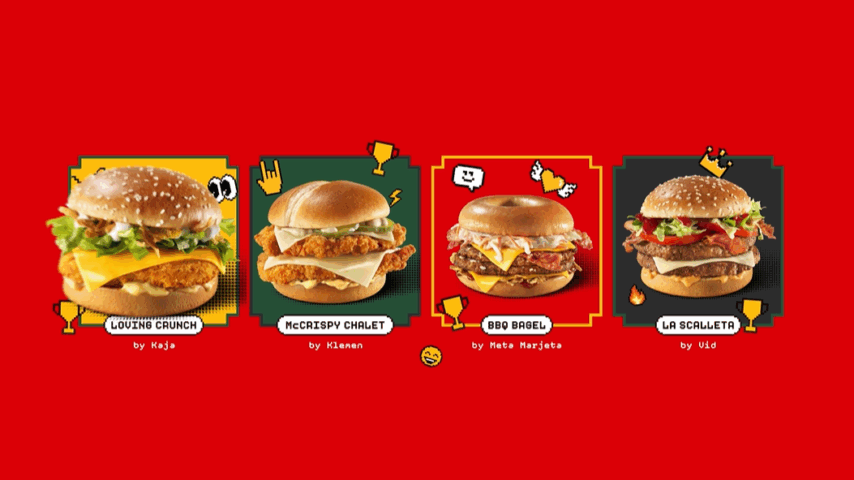
Mekathon is a good example. On paper it is a digital activation that lets people generate their own burgers. The real product is the participation: people learning the ingredients, combining them into their own creations, naming them, voting on each other’s. The shift we keep coming back to is from message to activation. But the part that makes Mekathon different from most consumer activation campaigns is what happened with the best entries. Several of them ended up on the actual McDonald’s menu. The audience didn’t just engage with the brand. They became part of it. That is a much harder argument for a global brand to say yes to than any TV spot we have ever made. When it lands, it changes the relationship between brand and consumer for years.
Having many entries on the shortlist is always wonderful, but is the side effect, never the goal.
“Poli Eau de camouflage” and “Krivo priznanje” for Perutnina Ptuj operate in a completely different register – playful, almost absurd. How much creative freedom do you have on a project like Poli, and why do you think that brand has managed to stay entertaining for decades without becoming “worn out”?
Poli is one of those rare brands where the client decided decades ago, that the brand is a personality and not a product. Once you accept that, the rules change. We are not selling sausages, we are casting a character. And a character is allowed to be playful, allowed to be ridiculous, allowed to live the “nori na poli” personality.
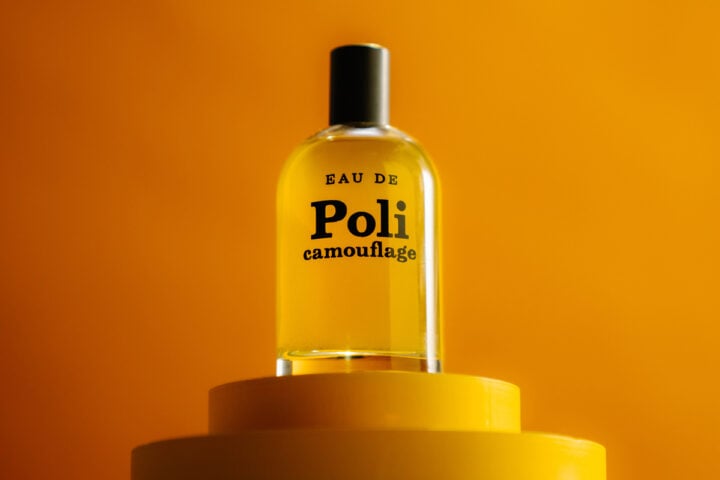
What has carried Poli through three decades is understanding the difference between a campaign and a brand foundation. Campaigns create impact. Brand foundations create continuity and long lasting emotional attachement. Our newest work for Poli, the “Krivo priznanje” and “Eau de camouflage” campaigns, is not a reinvention of the brand. It is a continuation of a brand that was built to evolve. Bold, playful, always Poli. The campaign slogans change. The executions change. The personality does not. That is what carries a brand through three decades without going stale.
The themes of this year’s SOF included AI, brand transformation, and changing audience relationships with communication. You said that in 2026 there would be less room for grey areas and that you would continue combining human creativity with the efficiency of AI. Now that the awards have been handed out – did this year’s winners confirm that thesis, or is the industry still mostly rewarding what is familiar and safe?
My honest read is that this year’s awards were a mixed signal, which I think is the most interesting outcome possible.
If you look at what won, most of it looks like classical, craft-driven work. A jury walks into a room and rewards what feels well made, well thought through, well acted. That part hasn’t changed, and I don’t think it should.
But if you look at how that work was actually made, AI was quietly in the room for a lot of it. In ideation, in production, in localisation, in post. The winners were not “AI campaigns.” They were campaigns made by teams who had folded AI into their craft without making a big deal about it. AI is a tool, not a destination.
That is exactly the shift I was talking about. It is not the loud, AI-native work that is changing the industry. It is the quiet integration, where AI stops being a topic and starts being a tool.
The low-to-middle layer of work is where AI shines: adequate, predictable, “good enough” output that was already understood to be tactical, not brand-building.
What’s left at the top is human judgment, taste, and ideas that surprise. And sure, AI is used there too, as any other tool in the process.
So no, this year’s winners didn’t dramatise the AI question. But quietly, in how they were made, they answered it.

