

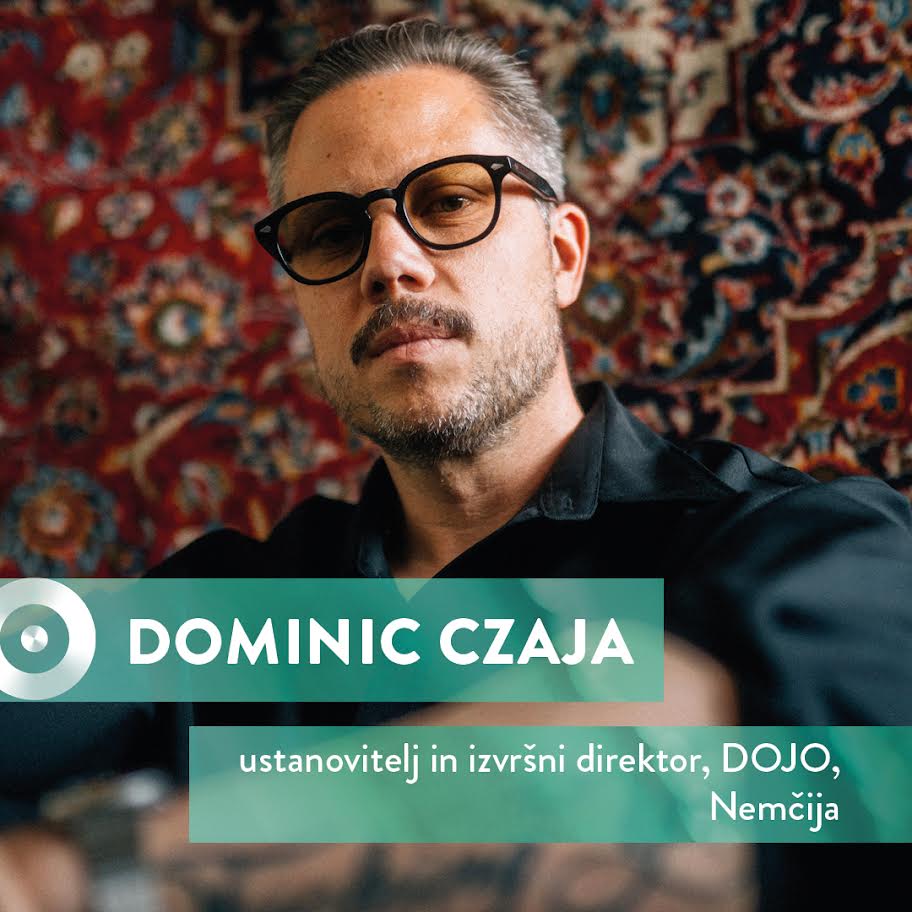
Dominic Czaja has been building DOJO for nearly two decades as a system that deliberately avoids standard agency models. Founded in 2006 without capital or experience, DOJO quickly built its reputation through work for clients such as Edeka, Spotify and HBO, as well as through campaigns that consistently provoke reactions and push the boundaries of what is considered acceptable in the industry.
What sets DOJO apart today is not only its creative output, but the structure of the agency itself. Alongside classic communication projects, Czaja simultaneously develops a film production unit, a fashion brand, a music label with artist management, and his own foundation DOJO Cares, positioning the agency as a platform that operates between the creative industry, culture, and social impact.
Such a model directly influences the way ideas are created. Ahead of his talk at the Slovenian Advertising Festival (SOF), Czaja speaks about creativity as a reflection of culture, about PR as a consequence rather than a strategy, about risk as an integral part of strong work, and about the decision that every project should also carry a tangible social contribution through a unique 3% funding model for initiatives that DOJO develops outside the commercial framework.
DOJO is not just an advertising agency. You have a film production unit, a fashion brand, a music label with artist management, and your own social responsibility initiative… How did these decisions evolve over time?
I believe the best business is not business but interest and passion – brought to the notary. I sometimes meet cool people who have visions for other markets or niches. I love to explore possibilities together with them to be as disruptive in their territory as DOJO is in advertising. DOJO means thinking things differently. There’s a lot of things in the world that should be thought of differently.
The 3% social contribution – who decides where the funds go: DOJO or the clients?
We do. Since 2021, we’ve been adding a symbolic social tax to all our services at DOJO to support the work of our nonprofit organization, DOJO Cares. In the beginning, our clients were very skeptical of the idea – especially their procurement departments. They didn’t really understand why they should pay more without getting any additional campaign assets in return. But the more we involved them in our social initiatives over the years, the more their willingness to engage grew. While DOJO Cares supports diff erent causes – like helping young people with migration backgrounds gain a footing in creative industries – most of the donations go to projects helping people experiencing homelessness. It’s a societal challenge our agency has been committed to for over 15 years. Since the dynamics of the problem can change from year to year, the beneficiaries vary as well. Historically, we’ve been so closely connected to the diff erent institutions that we always know where help is needed most.
Does an idea even exist without a media footprint? Is your office in a church also part of the strategy?
That’s a philosophical one! Ideas can absolutely exist without an echo – but to me, the most important thing is to ignite an emotional reaction. The biggest punishment would be if nobody cared about something we created. Having our office located in an actual church is very emotional to me as well. I’m not religious, but I wholeheartedly believe in places that bring people together who share the same values. The fact we ended up here wasn’t strategy; it was destiny.
Media reactions to your campaigns are often polarized. Do you wait for the media to discover you on their own, or do you treat PR as a key part of the communication strategy?
Getting lots of media exposure is simply the outcome of the work we do – not the tool we use itself. We think of ideas as newspaper headlines, always anticipating a certain reaction and playing around with it. To us, that’s a better instruction than any briefing – and the safest indicator a campaign will be successful. So I always tell my creative team to sharpen that specific skill. But now that you mention it: Maybe we should hire an actual PR professional to help us drive even more buzz. Do you know anybody?
What is your recipe for strong creative work? Where do you find your creative inspiration?
I find inspiration in all kinds of stupid things. Like really bad advertising. Or brainless TikTok challenges. The silly shit that’s going on in our world. DOJO’s output is always a creative reflex to the stuff that’s going on right now. Like when a doctor hits your knee with a hammer – you have to kick ass.
In the Slovenian market, advertisers are often afraid of boldness because they believe it could harm their reputation – that such ideas carry too much risk. What would you say to them?
This fear is not exclusive to Slovenian agencies. I believe general restraint is a blessing – creatives shouldn’t be provocative or rude for no reason. But to be honest, it’s really easy to step out of line and disregard the expected, the predictable – if you actually love creative experimentation. You just have to be a little smarter and more likable than the others. People will reward it. Everywhere in the world.
Have you ever experienced political pressure, closed doors, or other forms of negative backlash because of your campaigns – for example EasyJet?
Since our work is designed to provoke reactions, we’re always prepared to receive not only positive, but also negative ones. A brand executive that doesn’t like the message of our EasyJet campaign probably wouldn’t be a client we’d vibe with anyway. Stirring the pot without having it overflow is a damn fine line we walk every day – but so far, it’s going pretty well.

