

Hungarian agency Noguchi X was founded in 1996 by local communications professionals, at a time when the market was largely dominated by subsidiaries of international networks. In the years that followed, it grew into one of the country’s leading agencies and began receiving both domestic and international recognition, including the Agency of the Year, Emerging Markets title from IPRA. Following a generational transition in its leadership, Noguchi X was named Agency of the Year by the Hungarian Public Relations Association for four consecutive years and won three of the four most recent Agency of the Year titles at Kreatív magazine’s Prizma Awards.
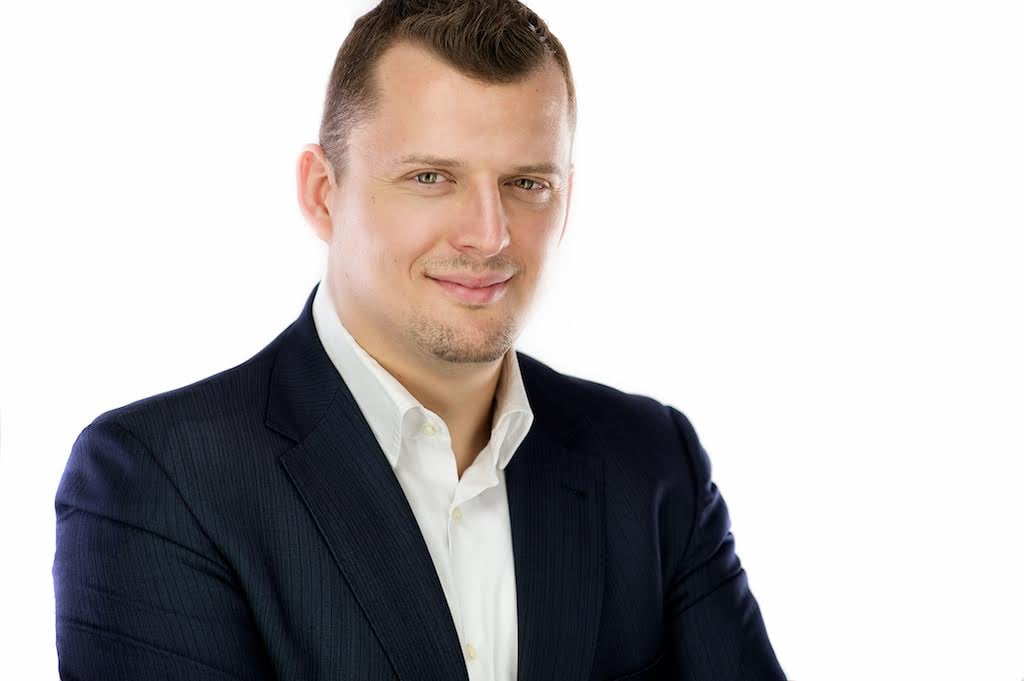
Dániel Szántó, Partner and Chief Operating Officer of the agency, has worked in the communications industry for more than two decades. He has spent his entire professional career at Noguchi, progressing from intern and junior consultant to co-Managing Director, a position he now shares with his brother, Balázs Szántó. He has worked and continues to work with clients including McDonald’s, Savencia, OMV, UPS and Mondelez. Alongside the FMCG sector, he has gained experience in telecommunications, IT, energy, crisis communications and issue management.
In this interview, Szántó discusses people as the foundation of a successful agency, the state of Hungary’s PR market following political change and the consequences that years of restricted market competition have left on the profession. He explains why Noguchi X uses artificial intelligence only within clearly defined parameters, how integrated collaboration between clients and agencies contributes to award-winning campaigns, and why personality and compatibility with the team matter more in recruitment than existing professional skills. Rather than predicting the future of PR, he offers five principles and one message for the next decade, ending with a call for communications professionals to respect independent media and resist trying to tame it.
For nearly 30 years, Noguchi has been setting standards in the communications industry. In your opinion, what is the key to building and sustaining a successful communications agency?
The people. We’ve always made sure that the team working at the agency isn’t just outstanding from a professional standpoint, but also forms a community with such strong human qualities that it’s a pleasure to be part of. People practically spend more time at work with their colleagues than at home with their families. You can’t do excellent work in a toxic environment. Training, the continuous development of professional skills, and a client-centric approach are, of course, all very important, but if people aren’t surrounded by an atmosphere and environment that inspires them, it will show in the results.
Could you give our readers an overview of today’s communications and PR market in Hungary? Would you describe it as an ethical market, and what are the biggest challenges currently facing the public relations profession?
This is an interesting question, as we are at the beginning of an extremely exciting and eventful period. Even by the narrowest definition, the new government took office after 16 years and we can confidently call this a systemic transformation. And that will influence the entire structure and operation of life, the whole of Hungary, every industry, and, hopefully, will reshape them in a positive way. In recent decades, agencies that sought to make a fair and ethical living in the market had no opportunity to gain a foothold with government clients, in public procurement, or with state-affiliated companies.
To give just one simple example, for decades we worked in the energy sector independently of any government, and within that sector, we gained vast – I would even say unique – communications experience in the field of nuclear energy. But under the previous government, these clients were instructed, and later required by law to only work with agencies affiliated with the governing party, disregarding experience, integrity, ethics, and all free market considerations. And this didn’t just happen to us – it happened to many other companies and industries, or even the media as well.
Companies like ours, which operate on ethical, economic, and non-political grounds, had to focus solely on providing high-quality professional services and consulting expertise to clients in the corporate sector – and many have not even survived. Meanwhile, shamelessly overpriced government contracts were awarded to politically affiliated entities – corporations that will now struggle to survive under free market conditions following the change in government. To put it in simple terms, the largest part of the Hungarian communications market has always operated ethically and professionally, though not very profitably, and we are confident that the change in government will now bring about a reset and real opportunity for quality work in the public sector.
Has your agency already embraced artificial intelligence in its daily work? Do you believe AI will fundamentally transform the public relations profession?
The old aphorism also holds true for communication: the more it changes, the more it stays the same. We’ve already seen how technology has taken over the media market, and the communications industry is following these changes as well. But no matter how dominant a role it has come to play, technology remains a tool of communication – and not the other way around.
With the advancement of technology, the barrier to content creation has been lowered in every era. The widespread adoption of generative artificial intelligence has effectively eliminated that barrier altogether. Anyone can now produce text, images, audio, and video about any topic in a matter of seconds – and at a minimum acceptable level of quality. But the phrase “minimum acceptable quality” is quite important here: AI-generated content is often good enough to compete for our attention, but upon closer inspection, it turns out that it doesn’t actually deserve it. And the audience certainly senses the difference between AI slop that feeds the algorithm and the material created with care, taste, and responsibility by actual people: journalists, experts, and content creators. The primary tools for building and maintaining a good reputation remain credibility, transparency, consistency, and well-founded, verifiable claims. AI tools can help accelerate certain research and foundational processes, but they cannot replace expertise, experience, and applicable professional knowledge. In line with this philosophy, and only within well-defined parameters, do we use AI tools in our daily work.
Your agency has been named Agency of the Year in Hungary for four consecutive years. Which campaigns contributed most to this achievement, and how were they received by the public?
We are strategic communciations consultants, not just PR professionals. Fortunately, we have many clients with whom we can work together in this spirit. I believe that strategies, campaigns, events, all work best when they emerge from an integrated approach – one born of shared thinking and collaboration between the client and various agencies, where each party strengthens the other’s areas of expertise rather than bypassing them. All of our successful and award-winning projects are like this. In recent years, we’ve managed to take a leading role in many such projects: just think of the wide variety of our McDonald’s campaigns, Profession.hu’s program to help disadvantaged job seekers, or programs for Dreher Breweries or Yettel.
When discussing Hungary, many international observers refer to the long period of political leadership under Prime Minister Viktor Orbán. To what extent has this political environment influenced transparency in communications? Would you say that political connections have been necessary to win business, or does the market continue to operate on the principles of fair competition?
As I have already addressed this issue earlier, while free and fair competition was not a burning issue in the market, government contracts and tenders issued by state-affiliated companies were very much restricted to a small group of companies, and their often-unnamed subcontractors. This concentration of resources clearly distorted the market and deprived honest companies of major contracts and revenue. I believe a market does not function well when politics, rather than professional criteria, determine who gets to work.
The new administration began conducting audits and reorganizations. But the PR industry was only a small part of this; the same cleanup process has begun in public procurement, public media, the advertising market, and even in the judiciary and the armed forces.
Everyone who was not a beneficiary or supporter of the previous regime is looking forward to new, cleaner conditions guiding their daily lives.
If you had not chosen a career in communications and agency management, what profession do you think you would have pursued?
I probably would have gone into writing, or perhaps law, since that interested me too – in fact, many of my friends went on to become lawyers. But I basically come from a literary family. My grandfather was a writer, journalist, and editor, and my father was in the same field before discovering PR in the early ’90s. I inherited the writing bug myself, and that’s something I can really put to good use in my day-to-day communication tasks. By the way, football has always been a favorite hobby of mine as well, but I was never talented enough to even consider making a living from it.
What qualities and professional skills do you look for today when hiring new people to join your agency?
Professional skills are less important to me. Writing skills and good communication skills are certainly useful, but these can all be learned and further honed through practice.
For me, personality and personal qualities are much more important. When recruiting, we always make sure that new hires will fit well into the team.
Accordingly, during the job interview process, every candidate meets with colleagues in several rounds and completes the tasks and tests they are given. I only meet with a candidate once they’ve cleared every hurdle with their future colleagues – only the final “compatibility check” is up to me.
How do you see the future of public relations over the next decade?
After the elections, my colleagues and I embarked on a major research project. We conducted a comprehensive review of the entire Hungarian media landscape and market, speaking with countless journalists, editors, and industry professionals to assess how the media and the market have changed in recent years (with regards to AI and otherwise), and what we can expect in the near future and over the medium term. At the end of our study, we formulated 5+1 pieces of advice for the future, which I believe will be useful for everyone working in communications over the next decade. So I’d rather not make any predictions, but I’d like to share these:
1. The old map is outdated; the new one is being drawn right now. Stay informed, follow current events – or work with a consultant who will do it for you!
2. For a long period speaking up was a risk; from now on, staying silent will be. Those who remain silent will be at a disadvantage, because others will define the parameters of the issues that matter to them.
3. You have to pay for reach, win attention, and earn trust. The three are related but not the same, so decide which one to prioritize and how to measure it!
4. Technology serves communication, not the other way around. Don’t build on whatever trend is currently popular; start from your business and communication goals!
5. Tactics change quickly, but principles do not. Channels, formats, and tools are constantly evolving, but human motivations have remained unchanged for millennia; therefore, build your communication strategy around your goals and your audience, and manage your tactics flexibly!
+1 Respect independent media – don’t try to tame it! They possess the credibility that audiences – and, increasingly, AI systems – value.

