

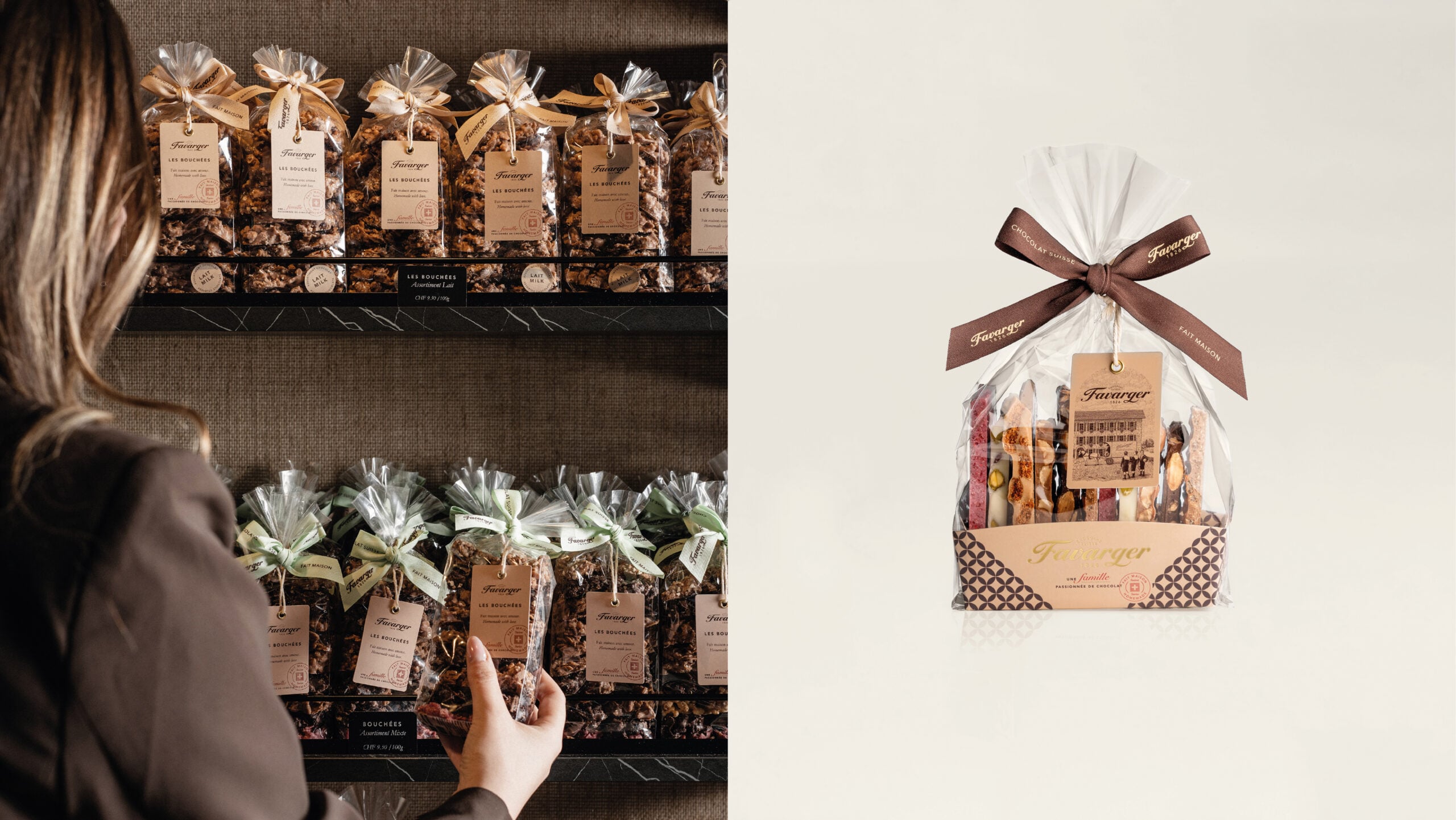
When Bruketa& first worked for Favarger in 2018, the collaboration was focused on one product line. They worked on a specific project, got to know the brand and its logic, and five years later sat down at the same table again, this time facing a much larger task. Favarger did not simply need new packaging, but a visual system capable of carrying almost two centuries of history without looking as though it was living off that history.
This is a particularly sensitive task for a brand that does not need to invent its own story. Fait Maison, Swiss origins, longstanding production processes, archival photographs and products that have been part of the portfolio for generations were already there. The task was to decide what should remain visible, what should be translated into a more contemporary language and how to create enough space for the identity to continue growing. The redesign also brought a Red Dot, another recognition for Bruketa&, which has won 33 to date, including four Best of the Best awards, the highest number in the region. Still, how well the system truly works only became clear afterwards, through limited-edition and holiday packaging, sales materials and new projects that each time had to look new while still unmistakably belonging to Favarger.
Over time, the way the two sides work together has also changed. Briefs have become shorter because less time is spent explaining what both sides already know and more on discussing where the brand can make its next move. The agency has more room to raise a question or propose a direction itself, while Favarger remains the guardian of what, in its almost 200-year-long story, should not be changed simply because it can be.
Perhaps that is why Hugo Bottin, Marketing & E-Commerce at Favarger, does not describe the partnership with Bruketa& through projects, campaigns or awards. He says the agency has become part of the Favarger family, because the team does not care only about finishing the job, but about understanding the brand, the details and what is important to preserve. For a brand that speaks so much about continuity, craftsmanship and the people who carry it from one generation to the next, that is no small thing.
Maša Ivanov, Director of Client Relations, Bruketa&
You worked on your first project for Favarger in 2018, while the ongoing collaboration began in mid-2023. What came together in the meantime for a one-off engagement to develop into a long-term partnership?
The 2018 project was an important first step because even then we got to know the brand, its tradition and its specific position in the market. After that, each of us went our separate ways, but the trust and awareness that we understood each other well remained. When the need for a more serious and systematic development of the visual identity emerged in mid-2023, we naturally started talking again.
The redesign was a kind of turning point. Through that process, it became clear that we shared not only an aesthetic sensibility, but also a way of thinking about the brand – how to respect Favarger’s heritage while making it relevant to a contemporary audience. The results of that project, but also the way we reached them together, created the foundation for a long-term collaboration. The ongoing partnership therefore did not happen overnight, but as a logical continuation of the trust built through concrete work.
Andrea Knapić, Senior Art Director, Bruketa&
Favarger is a Swiss brand with a history dating back to 1826. How do you use such a history in design without the result becoming nostalgic or overly reliant on tradition?
We did not shy away from nostalgia, because Favarger has a genuine foundation for it. Quite the opposite, tradition was one of our main sources of inspiration. We wanted people entering a Favarger boutique to feel the spirit of times gone by, but without the impression that the brand had remained trapped in them. And yes, when you hold a package of your favourite La Nougaline in your hand, you should feel that there is a real story and continuity behind it – the pralines are still produced today on a machine that is more than 100 years old. We did not want to hide details like these, but to turn them into part of the brand’s character.
Hugo Bottin, Marketing & E-Commerce, Favarger
For almost 200 years, Favarger has built its identity around the idea of “Fait Maison”, or the tradition of keeping a key part of the production process in-house. How challenging was it to entrust part of that story to an external agency while preserving the brand’s sense of authenticity?
The key is what we actually entrusted. “Fait Maison” has always been about the chocolate. Since 1826, we have kept the essential part of production in our own hands, and it has never left the house. What we asked an agency to help us with was not production, but the way we would tell that story.
The agency never created our story because it already exists: it began with a love story in Geneva 200 years ago and has been lived by our passionate chocolate family ever since. An outside perspective allows you to see what you stop noticing when you live a tradition every day and helps you tell it well.
We remained the guardians of the substance, while the agency brought the craft of expressing it.
Maša
After the redesign, you moved into continuous work, from limited-edition and holiday packaging to sales materials. What does the planning and rhythm of such a long-term collaboration look like, with the brand’s needs and new projects constantly building on one another?
A long-term collaboration has two parallel levels. One is planned: we follow the brand’s annual calendar, seasonal moments, launches and sales needs. The other is more dynamic because new opportunities, ideas and market demands cannot always be predicted several months in advance. That is why we have defined guidelines and priorities, while leaving enough room to react quickly.
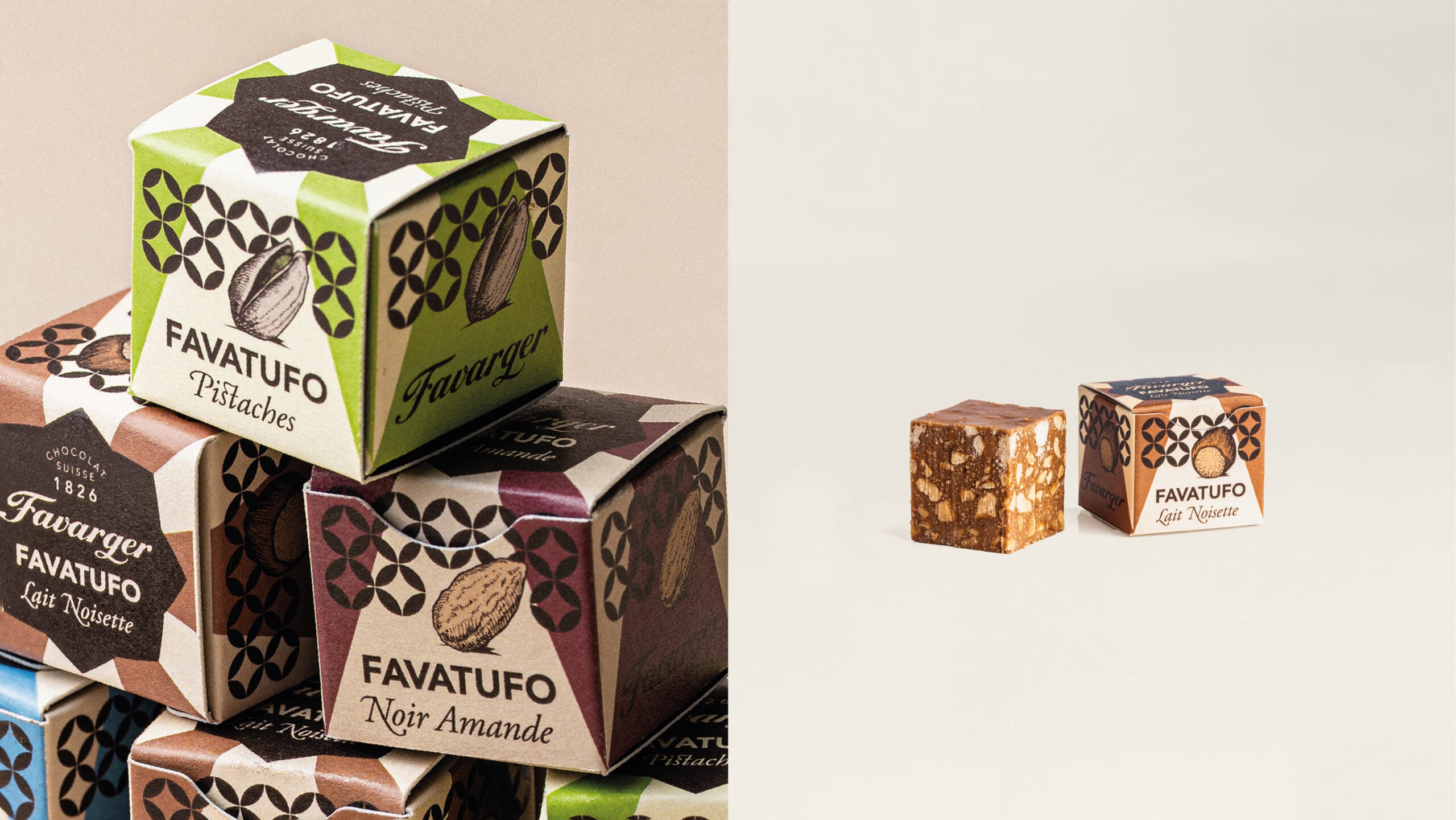
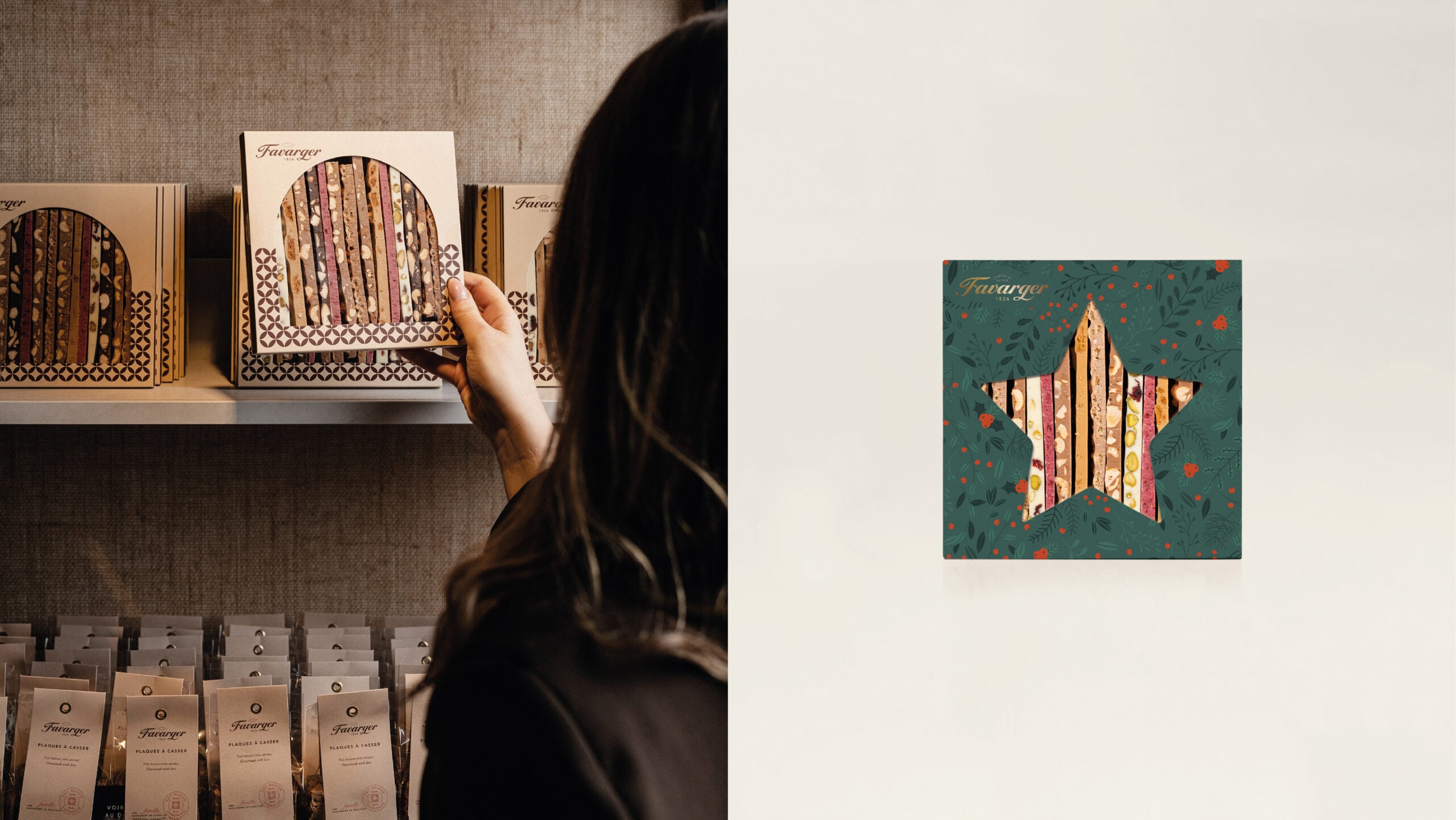
It is important that we do not look at each new project as an isolated task. A limited edition, holiday packaging or sales material should have its own character, but at the same time it must belong to the same brand world. Through the redesign, we established a strong visual system that today allows us to be both consistent and creatively flexible.
The rhythm of the collaboration is based on regular communication, an open exchange of ideas and jointly setting priorities; together, we “live the brand”. Since both sides know the process, we spend much less time explaining the basics again and more time on the quality of the solutions and on how each new project can further build the brand.
Andrea
What was the most challenging part of creating a system that needs to remain recognisable while also being flexible enough for further development?
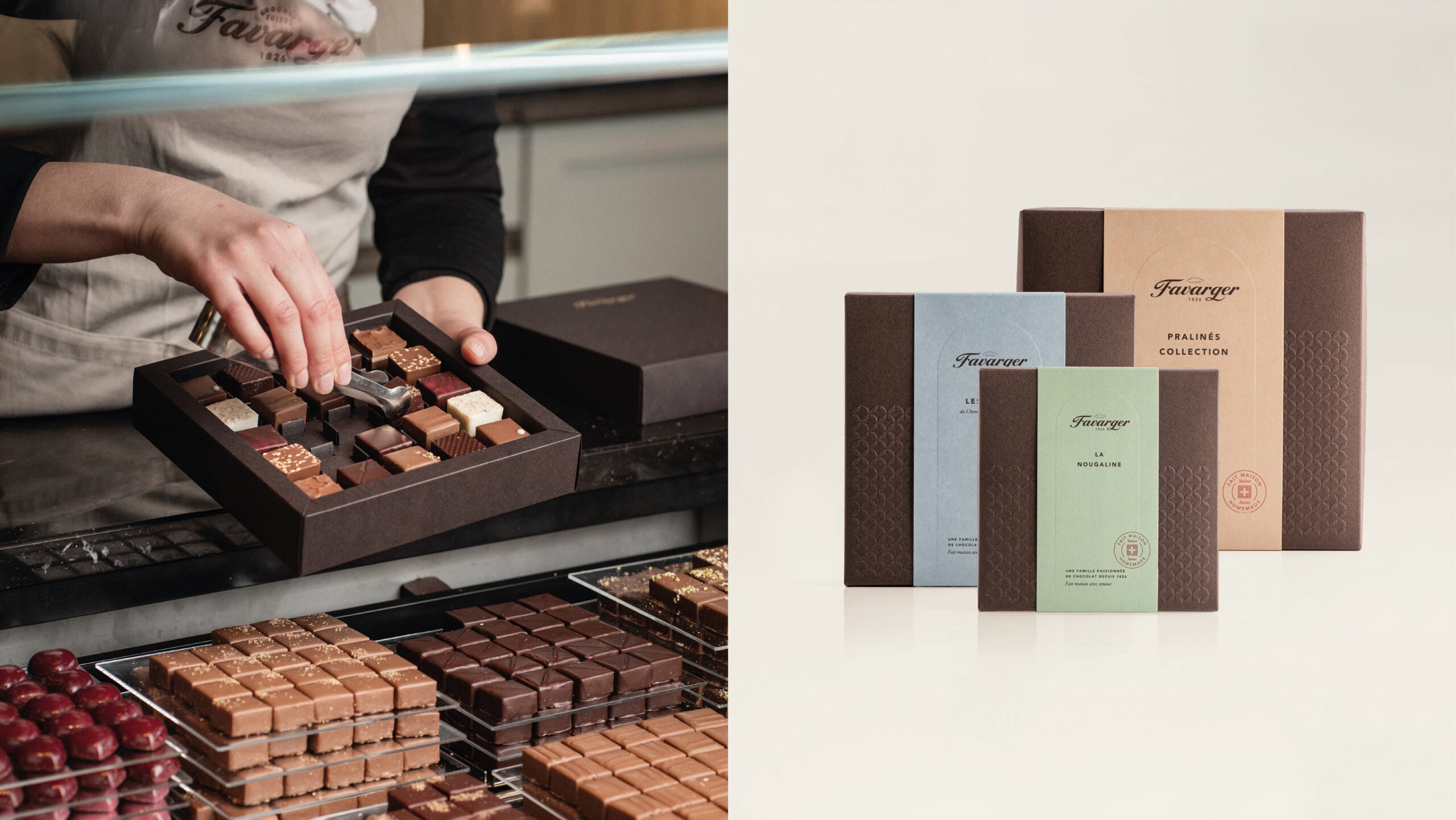
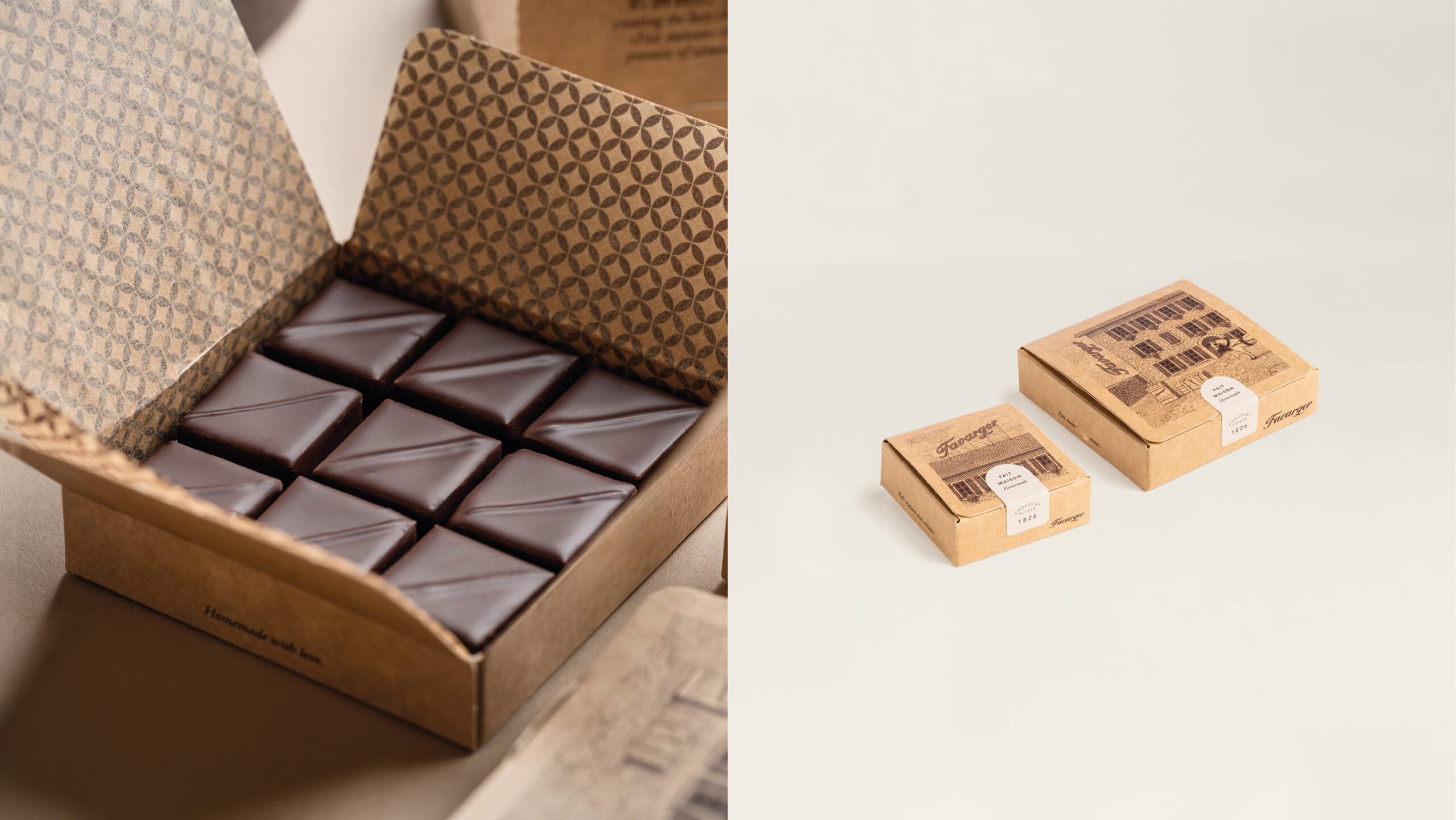
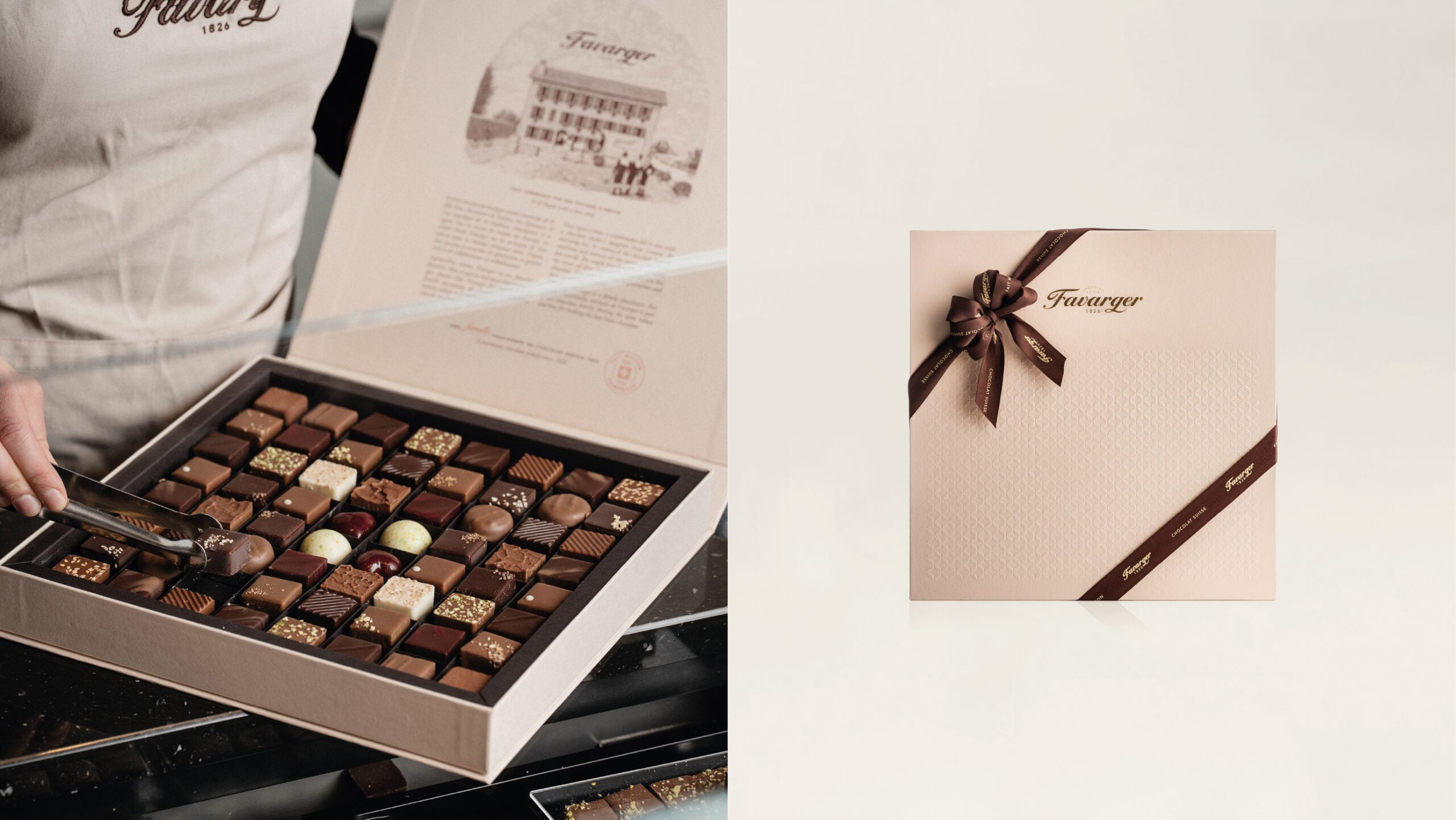
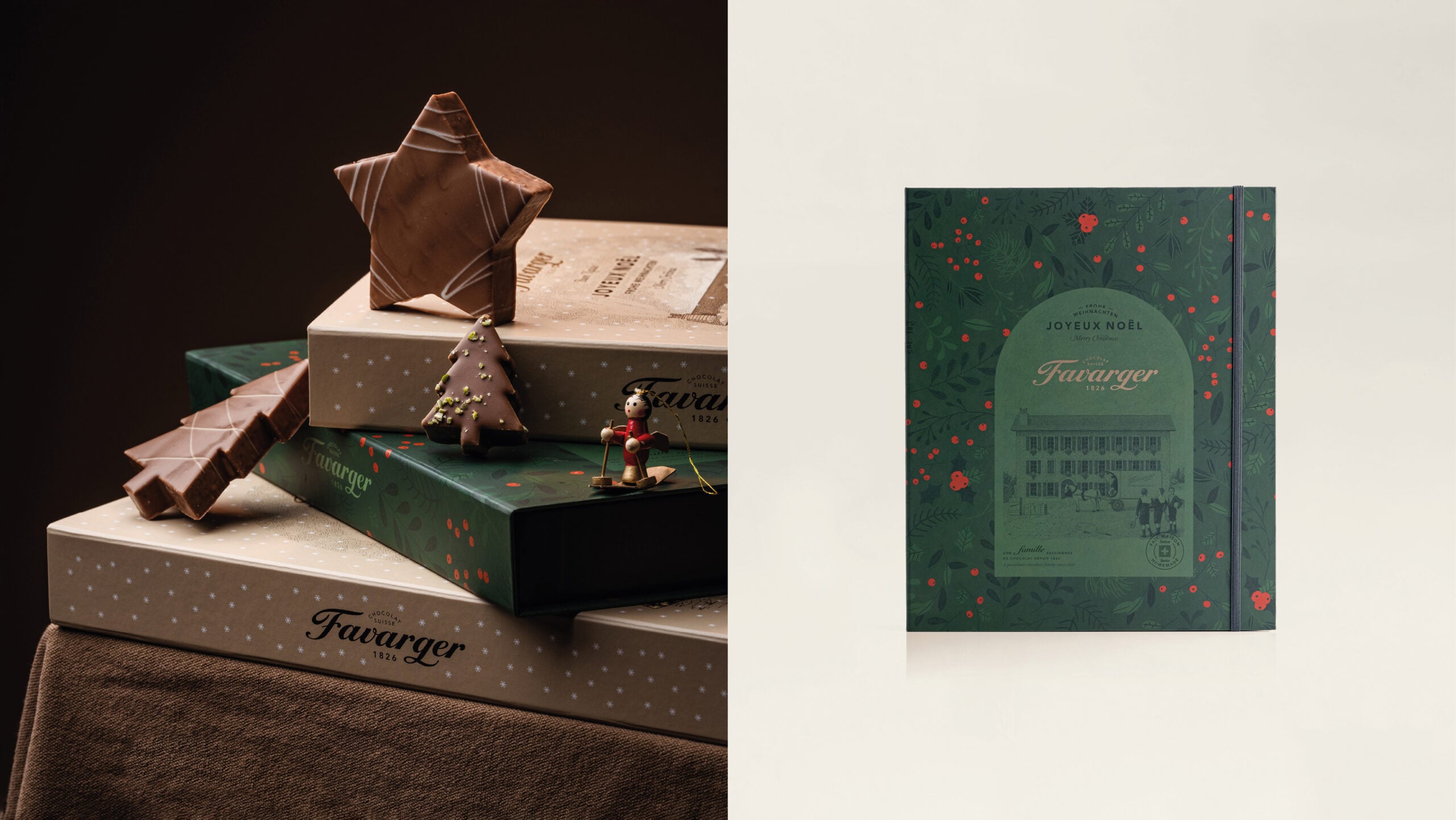
The most challenging part was finding several key elements that would be recognisable enough to hold the entire identity together, while at the same time being flexible enough for different products, formats and seasonal communications. We built that system around classic typographic design, archival photographs and illustrations, as well as an ornamental pattern inspired by the wall and floor tiles in Favarger’s boutique shops. They are connected by a warm, restrained colour palette, while elements such as the signature, seal and the message about a family devoted to chocolate since 1826 further carry the story of the brand’s origins and tradition. Once we had defined that foundation, everything else became the more creative and enjoyable part of the process – each product or seasonal edition can have its own character while still unmistakably belonging to Favarger at first glance.
Hugo
Switzerland itself carries a strong association with high-quality chocolate, but Favarger is not the only brand that can play that card. What did you want the new identity to say about Favarger that the “Swiss chocolate” label alone cannot?
Favarger began with a love story, when a watchmaker in Geneva fell in love with a chocolate maker’s daughter, and 200 years later that same passion still lives within the house, passed down through the years and from one collaborator to the next. We wanted the new identity to convey the values that truly define Favarger: passion for craftsmanship, Swiss origins, 200 years of heritage and accessibility.
- Craftsmanship, because since 1826 every creation has been “Fait Maison”, a promise of care, precision and authentic taste.
- Swiss origins, because Favarger is the oldest artisanal chocolate maker in Switzerland.
- As such, we are not only part of the heritage of Swiss chocolate, but over the course of 200 years we have actively contributed to creating and shaping it.
- But the value closest to our hearts is accessibility. Fine chocolate should be available to everyone, as a moment of pleasure that anyone can enjoy every day. That is what truly makes Favarger Favarger: 200 years of knowledge and craftsmanship, offered as an open invitation to everyone.
Maša
Does the way briefs are developed change over time? To what extent does your current knowledge of the brand allow you to identify an opportunity and propose a solution yourselves, before the client has defined a specific task?
Briefs certainly change over time. At the beginning, they are usually more detailed and formal because a lot of context needs to be conveyed – from business objectives and audiences to brand values and practical limitations. As the collaboration matures, the brief increasingly becomes a conversation. There is shared knowledge that no longer needs to be articulated from scratch every time.
Today, we can assess much more quickly what is in line with Favarger, where there is room to make a bolder move and which solution could work across different brand touchpoints. This allows us not always to wait for a fully defined task, but to identify an opportunity ourselves, raise a question or propose a direction.
Of course, knowing the brand well does not mean that we assume what the client wants. Quite the opposite, it allows us to ask more precise questions and come forward with more relevant proposals. The best result comes when the client’s deep knowledge of the business is combined with our outside perspective and creative initiative. That is when the relationship moves from the traditional client–supplier model to a truly collaborative way of working.
Andrea
The Red Dot jury rewards work that stands out for the quality of its design. When you look at Favarger in the context of other award-winning packaging, what do you think made the difference in this case?
If I compare Favarger with other projects for which Red Dot has awarded us since 2013 – from labels for Valtida Piccola, Turinela and Maslinik V olive oils, through innovative boxes for DNNA scented candles and the Vegeta&Spirulina spice blend, Highlife ice cream, to Untouched by Light sparkling wine – I would say the jury recognises something different each time, something that is special and authentic at that particular moment. With Favarger, I believe it was the way we reinterpreted almost 200 years of visual heritage into an identity that is warm, direct and unpretentious, yet highly recognisable.
Hugo
How do you communicate quality and premium positioning without relying on the clichés that chocolate brands have traditionally used to convey luxury?
For us, premium is a matter of emotion. Chocolate speaks to something deeply human: pleasure, memory, sharing and love. Favarger began with a love story, and that same emotion is what we offer in every creation today.
Our sense of premium quality comes directly from our values: the passion of a chocolate family that has been making chocolate together for 200 years, the care behind every “Fait Maison” creation and the simple joy of a shared moment. That is what makes a Favarger chocolate precious: the feeling it gives the people who taste it. For us, everyone at Favarger is part of our passionate chocolate family.
Hugo
The collaboration with Bruketa& has grown into a long-term partnership. How would you describe working together, and what would you identify as the greatest value their team brings to Favarger?
Bruketa& is not simply a great agency with exceptionally talented people. They have become part of the Favarger family. And families do not just do the work that needs to be done – they care. They care about the brand, about the details and about getting things right. That is what makes this partnership so special.

