

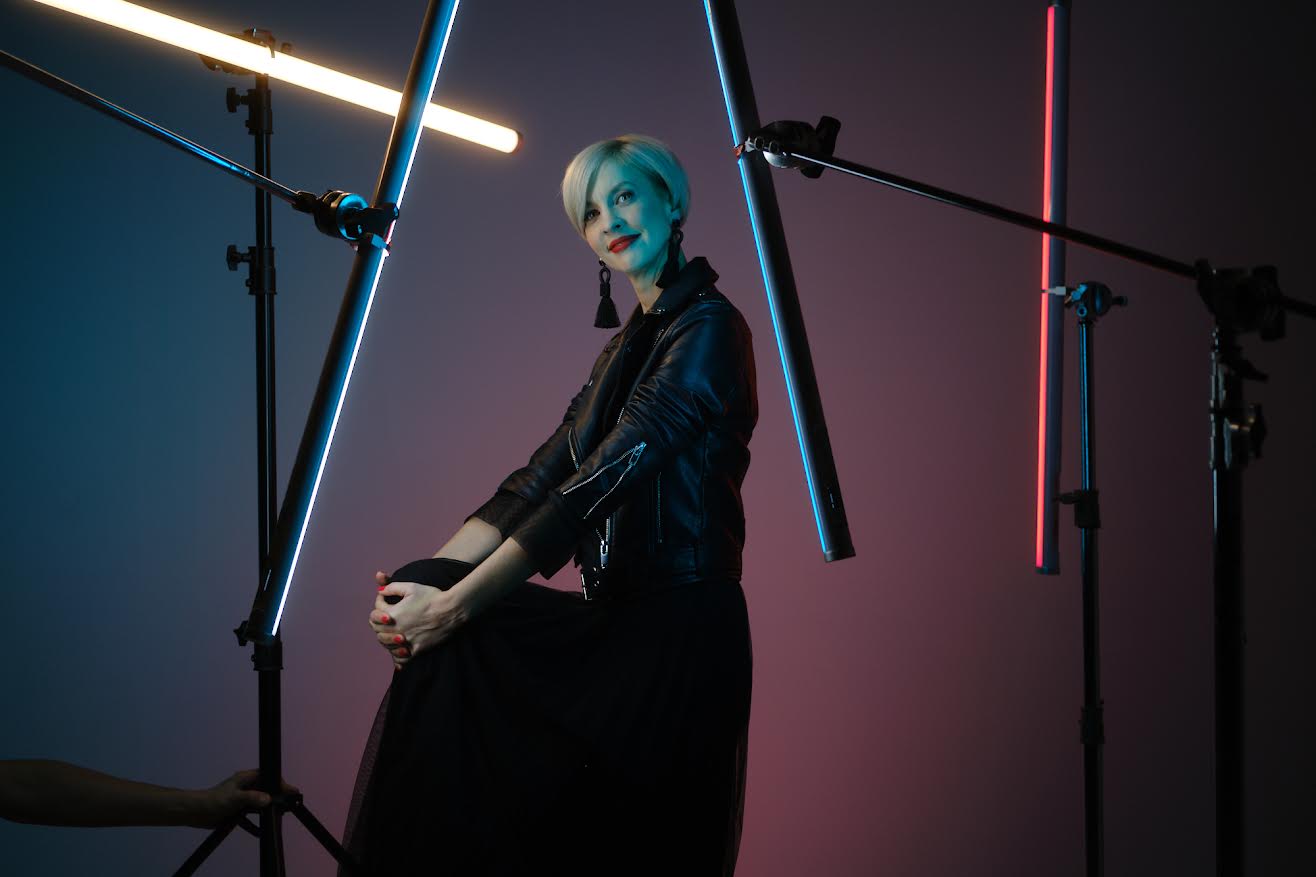
Slovenian audiences came to know Anja Rebek as the bold and charismatic presenter of the society and entertainment segment of the television programme Tistega lepega popoldneva. She began her career at Pro Plus before moving to RTV Slovenija, developing a feel for stories, people and the way a message reaches its audience. She later brought those experiences into marketing and strategic communications, while event management became her professional passion. In 2014, she founded FABulatorij, an independent agency specialising in event management, experiential marketing and strategic consulting, which she continues to lead today.
For more than a decade, FABulatorij has developed corporate events, brand experiences, entertainment formats and large-scale public productions. One standout project is Night of the Dragon, the 2024 farewell event celebrating Goran Dragić, in which the agency was one of the key partners, while Anja led the charity gala and international relations and served on the organising committee. The agency also delivered the #VseImam activation for Lidl Slovenia at Ljubljana Fashion Week, alongside an accompanying pop-up experience. In projects like these, Anja combines strategy, communication, creativity and production, starting with the people for whom the experience is intended.
In her conversation with Media Marketing, she explains why flawless event delivery alone does not guarantee that an event will fulfil its purpose, and why communicators need to participate in decision-making from the very beginning. She discusses direct human contact as a valuable aspect of events, the use of artificial intelligence alongside human judgement and responsibility, and the conditions required for independent journalism. The PRO PR Globe People Achievement Award also provides an opportunity to reflect on her own work, while FABulatorij’s inclusion this year in 27Names, the European network of independent agencies, opens up a discussion about collaboration and the opportunities available to Slovenia’s communications profession in the international market.
You began your extensive professional career as a television journalist and presenter, which is how the Slovenian public still remembers you today. After your career in the media, you embarked on an entrepreneurial path and founded your own agency, and today you are involved in organising some of the largest events in Slovenia. How do you view Slovenia’s public relations industry today? How would you assess its current position and development, and why?
From journalism, I brought curiosity, a feel for stories and an awareness that all good communication begins with understanding people. Understanding the audience we want to reach, how they think, their values and their expectations. Only when we know how to listen can we create a message that goes beyond simply conveying information, evokes a response, encourages reflection and leaves a mark. That remains my conceptual guiding principle today.
I am aware that we can devise outstanding stories and polished messages, but if we do not understand our audiences and do not know how to listen to their needs, it all remains merely a beautifully told story, without genuine contact or long-term effects. An empty phrase that may attract attention for a moment but does not bring about change.
This is precisely where I see the essence and mission of strategic communication: in the thoughtful use of communication tools, knowledge and competencies that address not only reason but also emotions, encourage dialogue, build understanding together and push boundaries. It may sound romantic, but I believe that good communication can change perspectives, relationships and, ultimately, the world. That is why its goal must always be more than a well-told story. It must be a story that carries the potential for change.
The media world was my invaluable starting point, a foundation and a valuable school for understanding stories, people and the power of messages. I then brought my experience, knowledge and feel for storytelling into the world of marketing and strategic communications, where I began exploring even more intensively how to turn ideas into experiences, messages into lived experiences, and communication into something that leaves a lasting mark.
In 2014, all of this came together as an ultimate goal and a personal mission. FABulatorij, our beloved boutique agency for events and BTL consulting, was born. A place where we combine curiosity, creativity, strategic thinking and boldness, turning ideas into stories that resonate with people, connect them and stay with them. Our laboratory of effective, one-of-a-kind and unforgettable stories, where communication goes beyond words and becomes an experience.
I see Slovenia’s communications profession as creative, adaptable and capable of designing and delivering quality projects both locally and on a broader, international level. Our small market often requires us to have a wide range of knowledge, skills and the ability to connect different fields, which can also be an important strategic advantage if we know how to use it meaningfully. It allows us a broader perspective, greater adaptability and a comprehensive understanding of projects and their effects.
I see further room for development and improvement primarily in a deeper understanding of the strategic role of communication in organisations and society, and in the systematic development of communicators’ competencies, particularly in the context of a constantly changing environment, new technologies and communication trends.
I would like communicators to be involved more frequently and more actively in development processes from the earliest stages of devising strategies, projects and stories, when the starting points are being shaped, key decisions are being made and the foundations for future action are being laid. Rather than only when decisions that have already been made need to be presented effectively to the public. Communication is not merely a tool for conveying decisions, but also an important strategic factor in shaping them. This is where I see one of the key opportunities for the further development and strengthening of our profession’s role.
In the events industry, too, we constantly advocate for clients to recognise the value of thought, knowledge, competencies, content design and the creative development of an event’s story. Without these, delivery can be flawless and yet still fail to fulfil its purpose or realise its full potential. In terms of its competencies, Fabulatorij is a strategic agency for managing experiential communication formats that result in memorable events.
Event management is an important part of public relations and strategic communications today. In your opinion, how important are events in establishing relationships between organisations, brands and their audiences? Which event that you helped organise would you single out, and why?
Events are becoming an increasingly important and effective element of an integrated communications mix. While artificial intelligence and digitalisation are fundamentally changing communication channels, formats and ways of addressing audiences, events retain something invaluable: direct human contact, authenticity and the opportunity to establish empathetic relationships. This is where I see their major opportunity for development.
At a time of increasing saturation with advertising messages and a gradual decline in responses to established communication formats, direct contact with target audiences is becoming one of the key factors in achieving genuine, substantive and long-term effects in marketing and communication. An event makes something possible that many other channels cannot offer to the same extent: allowing people not only to see and hear a brand or organisation, but to experience it. To respond to it, ask a question, feel its energy, interact with it and, most importantly, remain people rather than simply recipients of messages.
It is in this encounter, in the exchange of perspectives, emotions and experiences, that an energy emerges which cannot be entirely predicted or directed. We can, however, create thoughtful conditions in which such a connection can happen. And when it does, communication goes beyond conveying messages and becomes a genuine experience. Through that connection, we can build something more lasting: trust, belonging and relationships that remain meaningful long after the event has ended.
If I had to single out one project, I would choose the multifaceted programme marking the end of the exceptional Goran Dragić’s career. The project was conceived and led by Matej Avanzo with Spontanzo, and we helped create it alongside numerous partners and teams, with pride, respect and a great sense of responsibility.
It was a project that went beyond the scope of a sporting event. It brought together sport, the emotional and personal story of an elite athlete, charitable work, and an effective and authentic presentation of Slovenia to international audiences in an exceptional way. This multifaceted nature gave it particular weight and broader social significance.
For me, the project was also an excellent example of how thoughtfully designed communication and outstanding delivery can create something that goes beyond the event itself: an experience that connects people, inspires pride, resonates with them and leaves a lasting mark on the wider community.
I particularly valued the willingness of individuals within the profession to join forces, combine knowledge and experience, and cross the boundaries usually drawn between companies. To recognise a shared goal, trust one another and work together for the benefit of something that goes beyond the interests of individuals or organisations.
Projects like these remind us time and again how much we can achieve when we join forces, for ourselves, for others and for Slovenia. At the same time, they demonstrate how powerful an event can be when, at its heart, there is a person, their personal story and the values shared by everyone helping to create it. Then an event is no longer merely a project, but becomes a shared experience that connects, inspires and leaves a mark.
I must also admit that I am proud of most of our projects. When choosing them, we are guided by the belief that the stories we create together must have substance, purpose and significance. That is why we consciously avoid banal projects and prefer those that mean something to us, spark our curiosity and allow us to create something more than a well-delivered event.
That is why every project is special in its own way, each carries its own story and each leaves a certain mark on us. Above all, it inspires us, encourages us to think and drives us forward as a team. I believe that we can create truly good stories only when we believe in them ourselves and when creating them together sincerely inspires us.
We are witnessing an increasingly intensive use of artificial intelligence, including in the public relations industry and event management. How do you view the development and use of artificial intelligence? Do you believe certain boundaries should be set around its use, and why? To what extent do you use it in your work, and do you think it could replace people in particular segments of the communications industry in the future?
I approach artificial intelligence with a certain degree of scepticism, but also with curiosity and a willingness to explore its possibilities. I believe that there are no solutions that could remove people from the equation entirely, or rather, I personally do not want to participate in creating dystopian scenarios in which this would supposedly be possible. Technology is an important part of our everyday lives and can complement our knowledge, thinking and actions extremely effectively. But the idea that we could simply replace people seems overly simplistic to me, if not outright unserious.
Of course, many processes will be automated and optimised to the point where human involvement will no longer be necessary for certain tasks. That is an inevitable part of development. Still, I believe that the human role in the bigger picture is irreplaceable, particularly where empathy, intuition, creativity, judgement and the ability to establish authentic relationships are essential.
This is even more evident in the world of events. Artificial intelligence can help us test ideas more quickly, visualise concepts, explore possibilities and conduct analyses that would otherwise require a great deal of time and human resources. It can make preparation easier, accelerate processes and open up new creative perspectives. This is where I see its exceptional value and great potential for the development of our industry.
But while technology can help design an experience, it cannot, on its own, provide the unpredictable human energy, authenticity and emotional connection that make an event truly come alive. I therefore see artificial intelligence primarily as a tool that can strengthen human abilities, rather than as a replacement for people. For me, the key question is not what we can leave to technology, but how to use it to create even better, more thoughtful and more human experiences.
I see great potential for artificial intelligence primarily in research, the development of different concepts, the visualisation of ideas, and the processing and systematisation of data. It allows us to work faster and opens up new creative possibilities, but speed alone does not mean quality. If we uncritically accept the first suggestions offered by these tools, we risk making our stories increasingly similar and predictable. That makes our own creative perspective and ability to think beyond established frameworks even more valuable.
In our team, we use various artificial intelligence tools, primarily Gemini and ChatGPT, particularly for structuring information and working more efficiently with documents. I see them as useful support that allows us to devote more time to creativity, strategic thinking and understanding people.
I set clear boundaries when it comes to data confidentiality, respect for copyright, information verification and responsibility towards the public. Regardless of who or what created the material, we are ultimately the ones responsible for it.
I am convinced that the mediocrity of many results produced when we leave the creative process entirely to artificial intelligence clearly shows where there is a place for people: in intuition, an understanding of context, boldness and the ability to create something original. Artificial intelligence can help us reach a solution faster, but it is the person who gives it meaning, recognises its potential and develops it into something truly special, something one of a kind.
Events will live on and endure because, at their core, they are about relationships, a feel for people and the ability to judge and respond in unpredictable moments. When plans change during delivery, we need to understand the situation, make a quick and thoughtful decision, and take responsibility for it. This is where I see the irreplaceable human role, which I would not entrust to any tool.
Slovenia’s media landscape is constantly changing, while some private media outlets are concentrated in the hands of a smaller number of owners. How would you assess media freedom and independence in Slovenia? To what extent is media publication of PR content linked to financial compensation today, and how much room remains for free coverage of socially responsible topics and events?
As someone who comes from journalism, I find it important to distinguish between journalists’ work and the conditions in which they work when discussing this question. We have quality, dedicated journalists in Slovenia. Their independence, however, also requires appropriate conditions: editorial autonomy, transparent ownership, a sustainable funding model and the ability to do their jobs without pressure.
When it comes to publishing PR content, I believe a clear distinction between editorial coverage and paid collaboration is essential. Paid content has its place, but it must be identifiable as such. Editorial decisions must remain in the hands of the editorial team. As communicators, we cannot expect coverage simply because we consider our project important.
The media industry has changed significantly in recent years, with an increasingly concentrated and polarised environment leaving less and less room for ideologically unencumbered, independent and professional journalism. Public service media and access to credible information that is not subordinated solely to market interests are fundamental values of a democratic society and freedoms that we may have taken for granted for too long.
We live in a time when we must rethink many things we once considered self-evident and permanent. That is why critical thinking, media literacy and responsibility in creating and conveying information are becoming more important than ever before.
You are a recipient of the PRO PR Globe People Achievement Award. What does this recognition mean to you?
This recognition made me very happy because it comes from the professional community. It is good to know that people who understand how demanding our work is notice your journey and contribution. As agencies, we focus on supporting clients and rarely have an opportunity to reflect on our own work. Awards like these make that possible.
Although my name appears alongside the recognition, I see in it, above all, the many people with whom I am building my journey. Our work is based on collaboration, a great deal of thought, coordination and often challenging moments that remain hidden from public view.
I am particularly pleased that the field of events and experiential communication has also been recognised, because I sincerely believe in it and devote a large part of my energy to it. I therefore see this recognition as an affirmation of the journey so far, but primarily as encouragement to remain curious, courageous and demanding of the stories we create and the effects we want to achieve through them.
Another special recognition of our work is FABulatorij’s inclusion this year in 27Names, the European network of independent agencies. It opens up new opportunities for exchanging knowledge, connecting and collaborating across borders, while also confirming that Slovenian agencies have knowledge, experience and creative potential that are relevant and interesting internationally.
I would like to see even more confidence, openness and willingness to connect within our profession. To recognise the value of our own knowledge more often, dare to enter the broader market with greater confidence, and seek opportunities for growth and development through collaboration with other colleagues in the profession. I believe that through connections and the exchange of experiences, Slovenia’s communications profession can further strengthen its recognition and influence at home and abroad. There truly is strength in unity!

