

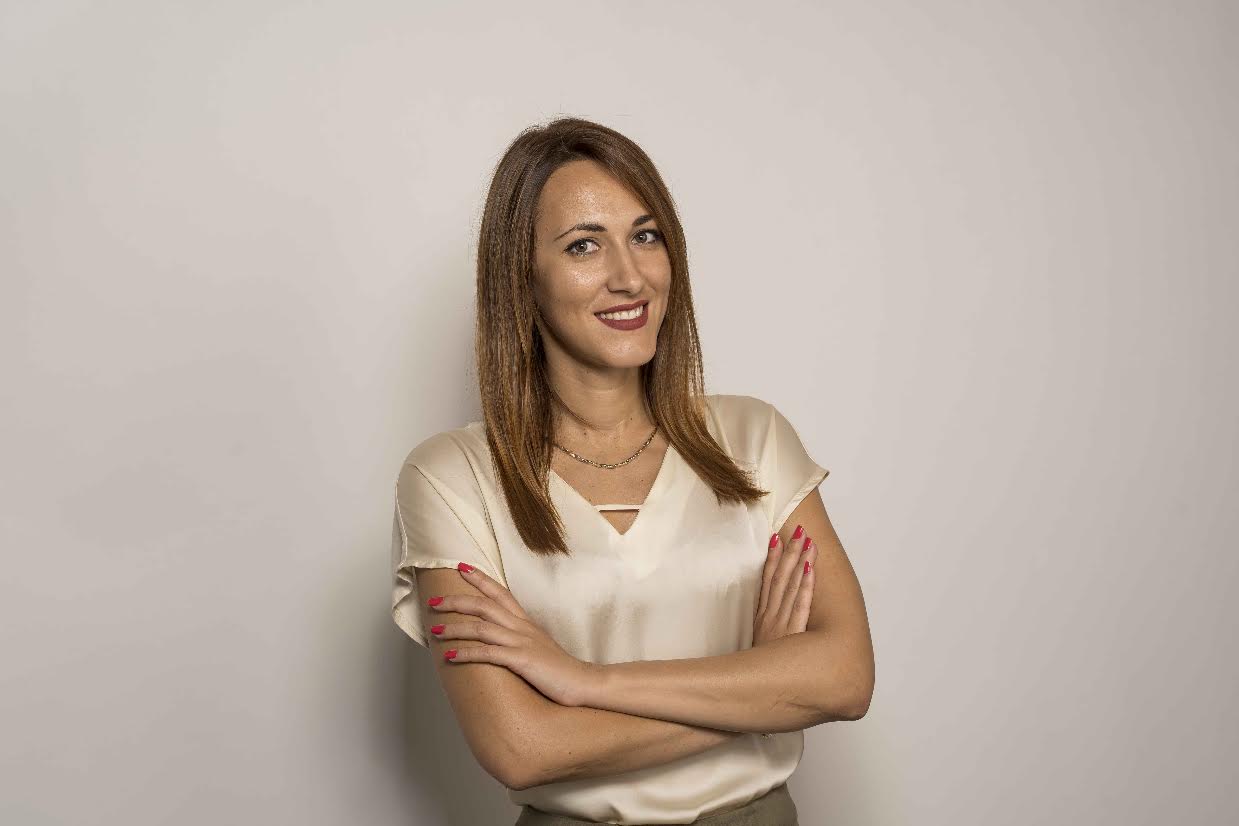
More than thirteen years of work across aviation, renewable energy, retail real estate, the film industry and the agency sector have given Anja Kisić a perspective on communications shaped by industries in which public perception can very quickly become a business issue as well. Today, as Communications and CSR Manager at CWP Europe, she works at the intersection of the energy transition, corporate responsibility, the expectations of different publics and the long-term relationships companies build with the communities in which they operate.
Her career includes corporate communications at Air Serbia, marketing and communications roles at NEPI Rockcastle and MCF MegaCom Film, as well as experience in PR and media agencies in Serbia. It is precisely this breadth of experience that has shaped her view of communications as a function that has long gone beyond simply producing messages. Their value, as she points out, increasingly lies in judgment, understanding context and the ability to take the perspectives of different publics into account while decisions are still being made.
On the occasion of receiving the PRO PR Globe People Achievement Awards recognition, we speak with Anja Kisić about what sustainable development means when it becomes part of everyday business rather than just a corporate formulation, why transparency also includes topics on which a company does not yet have a final answer, and where she sees the profession at a time when artificial intelligence is taking over an increasing share of operational work.
Does society as a whole, and the business community in particular, understand well enough what the goal of sustainable development is? What is the key day-to-day mission of your role, which, in addition to communicating services, also involves communicating the company’s values? In this context, how do you explain what sustainable development is?
I think there is a much greater understanding of the concept of sustainable development today than there was a few years ago, but there is still room for us to understand it better. Sustainability should not be viewed as a separate topic, campaign or part of an annual report, but as the way a company thinks and operates.
At CWP Europe, sustainability is connected to our core business, which is the development of renewable energy projects. We develop and implement wind farm, solar power plant and battery energy storage system projects, with the aim of contributing to the energy transition and creating a cleaner, safer and more sustainable energy system.
My day-to-day mission is not only to explain what we do, but also why we do it and what kind of value we want to create. Communication should therefore not be based solely on the company’s business objectives, but also on understanding the expectations of the people and communities affected by its operations. It is important that this perspective is also taken into account in the decision-making process.
I would explain sustainable development most simply as the ability to create value today while still leaving future generations the opportunity to create their own.
Public relations in Serbia today finds itself between the increasingly prominent role of political PR and business PR. Are companies finding the right path towards transparent communication, and how do you, as one of the female leaders in this industry, view that relationship?
I think it is important to make a clear distinction between political and corporate communication. Although they may use similar tools, they differ in terms of context, responsibility and their relationship with the public. Transparency should be the starting point for business communication. A company that wants to build trust must be prepared to talk about its successes, but also about challenges, ongoing processes and issues for which it does not yet have a final answer.
This is particularly important in sectors such as energy, where projects have a long-term impact on communities and involve a large number of different stakeholders. That is why it is important not only to communicate clearly, but also to understand the expectations and perspectives of local communities, partners, institutions, the media, employees and other relevant audiences.
Ultimately, trust is not built through the amount of communication, but through consistency between what a company says and the way it operates.
How would you assess the current state of public relations in Serbia? In your opinion, what does the profession lack most today?
Public relations in Serbia is a very dynamic field, and I think we have a large number of highly skilled professionals who manage to keep up with major changes in the way people consume information. However, the speed of those changes is also the greatest challenge.
At a time when information is produced and distributed faster than ever, our responsibility is even greater. Our job is not only to make a certain message visible, but to do so responsibly, taking into account its relevance to the public.
I think there is still room for communications to be positioned more strongly within organizations themselves. Their greatest value is not only in how a particular decision will be communicated, but also in helping, while the decision is still being made, to understand reputational risks, the expectations of different audiences and the broader context.
That is why I believe the value of our profession will increasingly lie less in content production itself and more in the quality of judgment, context and counsel.
We are witnessing global changes, and artificial intelligence is among the leading technological trends in the world. Since its application is still not fully regulated at the European Union level, are there laws and mechanisms that protect the work of individuals, particularly in the creative and music industries? Do you believe that the development of AI could threaten the work of public relations professionals?
The regulatory framework for artificial intelligence is developing at both the European and national levels, while issues of copyright, transparency, data protection and accountability remain among the most important aspects of its application. Particularly in the creative industries, the challenge will be to find the right balance between the opportunities technology brings and the protection of authors and their work.
I do not think AI will simply replace communications professionals. I would rather say that it will replace some of the tasks we currently perform. AI will probably automate some operational tasks and further accelerate production, but precisely because of that, the value of professional judgment will increase. Understanding the reputational context, relationships between stakeholders, risk assessment, data confidentiality, source verification and responsibility for decisions will remain with people.
That is why I do not think the key question is whether AI will replace communications professionals, but which professionals will know how to use it responsibly while at the same time preserving what makes communication human.
Corporate social responsibility, to which your company attaches great importance, is part of your strategic plans. Which specific areas are your activities focused on, and why did you choose those particular areas? Do the media and the public recognize such activities well enough?
At CWP, we view corporate social responsibility through several interconnected areas: support for young people and education, women’s empowerment, local community development, culture and the arts, sport, and environmental protection.
Our projects are developed in smaller local communities, and it is important to us to build relationships with those communities continuously, rather than only at the moment when a project needs to be communicated. Likewise, we try to ensure that our support does not remain limited to a financial donation, but that initiatives have a concrete and long-term impact.
These areas were not chosen because they are attractive from a communications perspective, but because they intersect with the needs of the communities in which we operate and the values that we, as a company, want to support over the long term.
As for the media, I think it is important to accept the fact that not every socially responsible activity has to be newsworthy. Of course, communication is important because good stories can inspire others, but the most important thing is that there is a real and measurable contribution behind the communication.
What does the PRO PR Globe People Achievement Awards recognition mean to you?
First and foremost, this recognition is a great honour for me, particularly because it comes from an international community of communications professionals and at a time when this industry is changing significantly. Such recognitions are certainly gratifying, but above all, I see them as confirmation that the way I work has value beyond the framework of a single company or project.
For me, this is also a reminder that professional influence in communications is not only a matter of position, but above all of responsibility towards the profession and the public. It is up to us to contribute through our work to greater trust in our profession and to its further development.

