

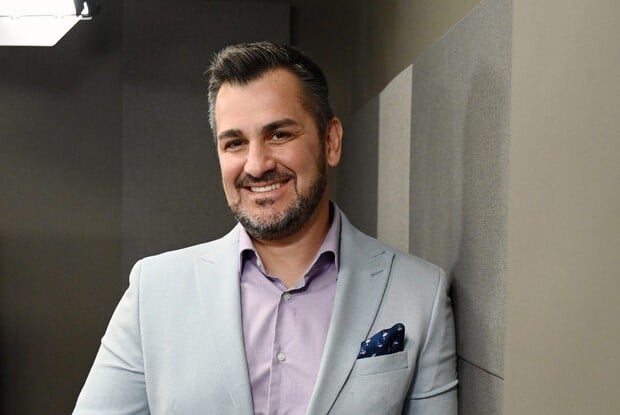
Dr. Alexander Dourchev is President of ICCO Europe and Founder and CEO of All Channels Communication Group, one of Bulgaria’s leading communications groups. During more than 25 years in public relations, advertising and integrated communications, he has combined agency leadership with academia as Professor of Public Relations and Integrated Communications at the American University in Bulgaria.
As European agencies face rapid technological change, pressure on traditional fee models and the automation of entry-level work, Dourchev sees ICCO’s role in helping the industry respond with knowledge, practical tools and a stronger voice before European institutions. Its priorities include upskilling agency teams, introducing AI and automation into operational processes, exploring new revenue models and strengthening cooperation with the advertising, marketing and technology sectors.
For Dourchev, AI will not remove the need for PR professionals, but it will expose where the industry’s lasting value truly lies. Strategic thinking, judgment, creativity, ethical decision-making and trusted counsel cannot be reduced to faster content production. In this interview, he also explains why reputation cannot be built “fast, dirty and cheap,” what clients must understand about the price of experienced advice, why curiosity and sustained focus are becoming essential professional skills, and how his work as an agency owner still allows him to practise architecture, only through organizations rather than buildings.
In a time of constant transformation in the communications industry, what is ICCO’s main mission today? How do you see its role globally and specifically in Europe?
I believe ICCO’s main mission today is to help the European communications industry navigate the profound changes driven by artificial intelligence and new technologies.
Our role is to support agencies and professionals through knowledge sharing, best practices, and closer dialogue with European institutions to ensure the industry’s voice is heard as new regulations are developed.
Finally, we believe our industry has a vital responsibility to help society and public institutions tackle misinformation. This means equipping communication professionals with the knowledge and tools to combat disinformation effectively, while also helping educate citizens about both the risks and the opportunities created by the rapidly changing information environment.
What are ICCO’s key goals and priorities for Europe this year, and what value does ICCO bring to communication agencies and professionals?
The biggest challenge facing our industry is that technology is evolving much faster than most businesses can adapt. One of ICCO Europe’s key priorities this year is to help agency leaders navigate this transformation with confidence.
We want to support agencies in upskilling their teams, identifying quick wins through AI and automation, and streamlining administrative and operational processes to improve efficiency. At the same time, we are helping agencies explore new revenue opportunities and business models that will enable them to remain competitive and profitable in a rapidly changing market.
Another important priority is strengthening ICCO Europe’s collaboration with European institutions while building closer partnerships with adjacent industries such as advertising, marketing, and technology. By sharing knowledge and learning from each other, we can help create stronger, more resilient communications businesses across Europe.
As the Founder and CEO of All Channels Communication Group, one of the leading communication agencies in Bulgaria, how would you describe the current state of public relations in Bulgaria? Do you believe artificial intelligence will replace PR professionals, or will it change the way we work? What is important for professionals to know when using AI?
This is a very important question because it touches on the biggest transformation our industry has experienced in decades.
The situation in Bulgaria is very similar to what we see across Europe. Agencies are facing increasingly complex conversations with clients, many of whom question traditional agency fees because AI can now generate content that once required significant human effort. At the same time, entry-level positions are becoming more challenging as agencies gradually automate many of the routine tasks traditionally performed by junior professionals.
That said, the PR industry increasingly recognizes that its real value has never been content production alone. In an era of misinformation and declining trust, strategic communications, reputation management, and trusted advice are more important than ever.
Do I believe AI will replace PR professionals? My answer is no. However, I do believe it will replace or automate many of the routine tasks performed by less experienced practitioners. The real disruption will not come from AI writing content, but from AI automating workflows and operational processes that have traditionally been part of junior PR roles.
What AI cannot easily replace is strategic thinking, sound judgment, creativity, ethical decision-making, and the ability to advise clients through complex situations. That is why agencies must invest in helping their people move faster from execution to consultancy. Those who develop strategic advisory skills will remain indispensable in the AI era.
What are the most important skills that a person working in public relations should have today? What advice would you give to young professionals who are entering this field?
The most important skill for anyone working in public relations today is curiosity. Curiosity, an open mind, and the ability to learn fast are becoming essential. Technology is evolving at a pace that will soon leave behind those who choose to remain conservative. That’s simply the reality.
Clients will continue to expect things to happen faster, but also better. AI gives us the opportunity to multiply our capabilities. I often say that we are becoming cyborgs – we are enhancing our own abilities through machines. This transformation will affect everyone sooner or later, and the people who embrace it instead of resisting it will have a huge advantage.
My advice to young professionals is simple: learn how to stay focused for longer. The challenges are everywhere, and entering our profession today won’t be easy. Those who succeed will be the ones who can stay resilient, overcome setbacks, and keep moving forward.
I know that’s especially difficult in the TikTok era, where entire generations have been conditioned to look for instant information, instant gratification, and to switch their attention the moment something becomes boring. Unfortunately, real life doesn’t work like that. To remain relevant, they will have to fight that instinct and develop the ability to focus deeply and keep learning over time.
As an agency owner, what are the biggest challenges communication agencies face today? From your experience, what do clients expect most from agencies – speed, quality content, creativity, strategic thinking, or something else?
Unfortunately, what I hear more and more from clients today is that they are looking for services that are “fast, dirty and cheap.” The problem is that communications – and especially public relations – simply don’t work that way.
You cannot build a company’s reputation with content that is produced quickly, lacks substance, and doesn’t genuinely resonate with people. Yes, industries like advertising will increasingly rely on AI-generated content because much of it has a very short lifespan in digital media. In those cases, it doesn’t always make sense to invest heavily.
But reputation is different. Reputation is built over time. It has to be solid, resilient, and trustworthy – and that is never cheap.
This challenge also affects the people we hire. If agencies try to deliver services that are cheap, dirty and fast, they inevitably have to rely on junior professionals with lower salary expectations. Ironically, those are exactly the kinds of tasks that AI can automate most easily. At the same time, using highly experienced and expensive consultants for this type of work creates a serious mismatch between costs and client expectations.
I believe this is one of the biggest challenges facing agencies across Europe today. But I also believe the market will rebalance. Clients will increasingly understand that work which truly shapes reputation and creates long-term value has to be delivered by experienced consultants – and that kind of expertise has its price.
If you were not working in public relations and communications, what profession would you have chosen?
If I hadn’t chosen to study Public Relations more than 25 years ago, which at the time was a very modern and exciting profession, I would probably have become an architect.
In many ways, though, I feel that I still am one. Today, my job is to design structures – not buildings, but organizations. I spend much of my time creating the right structures, shaping how they work, and making sure they are flexible enough to adapt to external pressures and the changing demands of the market.
So perhaps I never really gave up on architecture. I simply found a different way to practice it.

