

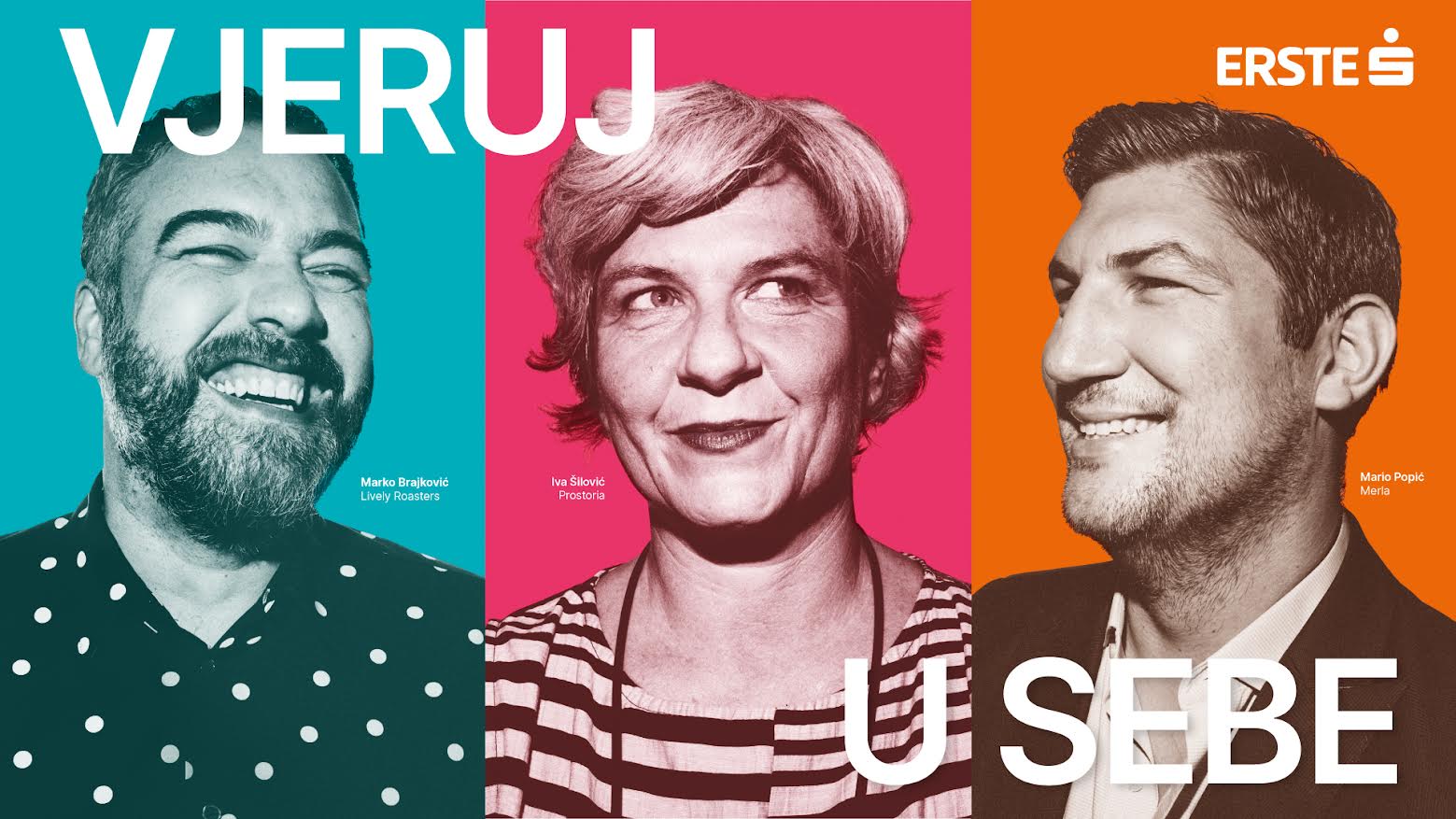
For some, coffee is just coffee. For others, it is a reason to think about every detail of its flavour. Similar attention can be devoted to fabric or a piece of furniture, but it is difficult to explain it to someone who has not spent years building their own business. Erste recognised this as an opportunity for a campaign aimed at small and medium-sized entrepreneurs. Banks regularly explain to them how they will make running their businesses easier. Crazy first showed that it understood why those businesses mattered so much to them.
BBDO Zagreb included the people behind the brands Lively Roasters, Prostoria and Merla in the commercial. Their dedication to their products was real; the scenes portraying it could afford to be a little crazier. This led to one of the more important production decisions: the entrepreneurs would be themselves on camera, while professional actors would perform the more demanding, humorous scenes. This allowed the commercial to exaggerate the behaviour without exaggerating its portrayal of the people.
On paper, the idea of a bank calling its clients crazy sounds like a sentence someone would quickly cross out in a meeting. Here, it was given the song Crazy by Patsy Cline, direction by Paco Cruz and enough trust to see it through. The campaign won gold at IdejaX in the Best TV Spot & Film category. For Behind the Winning Idea, the team at BBDO Zagreb talks about how they arrived at that word, why they chose these three brands and how they filmed with real entrepreneurs without asking them to become actors.
What did Erste want to achieve through the Crazy campaign in its relationship with business clients that conventional communication about banking products and services could not?
An important aspect of every Erste brief is its focus on the emotional benefit for the end user, in this case a small or medium-sized entrepreneur. Although they have specific business products with functional benefits, the intention is primarily to create identification through something the entrepreneur finds recognisable and personal. When an entrepreneur recognises themselves in the story of “craziness”, or absolute dedication to their own business, information about a specific banking product will reach them more easily.
Banks most often speak to business clients in the language of growth, financing and rational decisions. What did the word Crazy open up in Erste’s communication with entrepreneurs that the category’s more rational language could not?
Every entrepreneur will gladly hear how to make running their business simpler and more efficient. The problem is that they hear dry messages all too often in advertising, so they become justifiably sceptical of similar promises. But when communication starts with the premise that entrepreneurs are crazy (about their business, of course), it will capture their attention much sooner and also allow for a deeper level of identification.
The campaign features Lively Roasters, Prostoria and Merla, each through a very specific relationship with their work. Why did these three brands best represent the entrepreneurs you were addressing?
These are successful entrepreneurial stories that serve both as inspiration to others and as good examples of how Erste supports businesses in practice. However, it was also important here to choose businesses where a passion for their own product had cinematic potential and could be portrayed compellingly in a “crazy” context. An obsession with coffee, the texture of fabric and furniture design provided a lovely playground for creative interpretation.
Humour plays an important role in the campaign, but it does not turn dedication to business into an object of ridicule. Where did you find the balance between exaggeration, recognition and respect for the people whose stories you portray?
Since the communication is based on real entrepreneurs who also appear in the commercial, a good part of the idea development process focused on addressing the challenge of the lead actors not actually being actors. That is why we decided to leave the scenes of “craziness”, which are particularly demanding to perform, to professional actors. Their role was to embody the entrepreneurs’ passion for their work and spice it up with a dose of humour and heightened performance. This allowed the real entrepreneurs to play themselves without having to step outside their comfort zones.
Crazy won gold at IdejaX in the Best TV Spot & Film category. Which part of the film’s idea and execution do you think was decisive in the campaign winning in that category?
All of them, to some extent. The initial idea and script moved away from conventional communication frameworks, and the choice of the song Crazy by Patsy Cline certainly contributed to that. Director Paco Cruz brought out the best in the acting performances and built an offbeat atmosphere that blended perfectly with the soundtrack. Credit also goes to Damjan Radovanović for the excellent cinematography and to Val produkcija, which made it possible to fulfil all the crazy requests during the production process.

