

With twenty euros, they had to plan as many lunches as possible for several days, with ten minutes available to make their decisions. Maja Jalšovec, known for her five-euro recipes, and Klara Petrović, a long-standing food content creator for Kaufland, were given this task in one of the episodes of the Štedi jako! campaign. The weekly offers were in front of them, but a good result depended on how they combined them.
Shoppers make these calculations even without a camera. They check what they need, how much they can spend and which ingredients they will use to prepare meals over the coming days. Cvoke developed the campaign around this resourcefulness, giving it a budget, a time limit and a host who follows how the participants handle the task.
The starting point was a further reduction in the regular prices of 1,000 Kaufland products. In a category where promotions, discounts and savings messages appear every day, the price alone struggles to stay in focus for long
September adds to this crowded landscape, so a way had to be found to keep the news of the price reductions from getting lost among dozens of similar messages.
Štedi jako! was therefore conceived from the outset as a campaign spanning television, digital, influencers, the catalogue, radio and outdoor advertising. On digital channels, the weekly offers took on a different life: products and prices became part of content with its own dramatic structure, pace and reason for audiences to keep watching after they had seen the promotion itself.
The Catalogue Assigned the Tasks
The offers determined what would be discussed each week, while creative development began with the choice of a challenge and the people suited to it. This led to four episodes with different rules.
During XXL week, Lucija and Mirko Rožman were given 30 euros and five minutes to buy as many products as possible. Their shopping duel revolved around filling the family fridge: how much could be bought and who would make better use of the available money.
Maja and Klara had a different job during the week of 50% discounts. Twenty euros had to cover as many lunches as possible for several days. Their experience with recipes gave the challenge a practical dimension, as the value of the shopping could be assessed through the meals it would produce.
The non-food offers also called for some sales skills. Adrian Popović and Ivan Šarić chose a useful product and then had to “sell” it to host Ivan Molnar. This task relied more on humour and their performances, so presenting the product became part of their attempt to convince Molnar of their choice.
Lada Kušec Deči and Niko Čuturić were given a flavour recognition challenge. A blind taste test compared Kaufland’s private-label products with well-known brands, with victory determined by identifying the products.
The differences between the episodes were important to the development of the series. Each catalogue theme required its own mechanics, which also changed what the audience followed: the number of products in the trolley, the lunch plan, the persuasiveness of the performance or the accuracy of the answers. Products and prices remained visible through the participants’ decisions.
Molnar Takes Over the Screen
Ivan Molnar was a natural choice to connect the campaign. As a regular Kaufland content creator, he was already familiar to audiences on social media, and here he also took on the lead role in the television commercial and hosted the digital series.
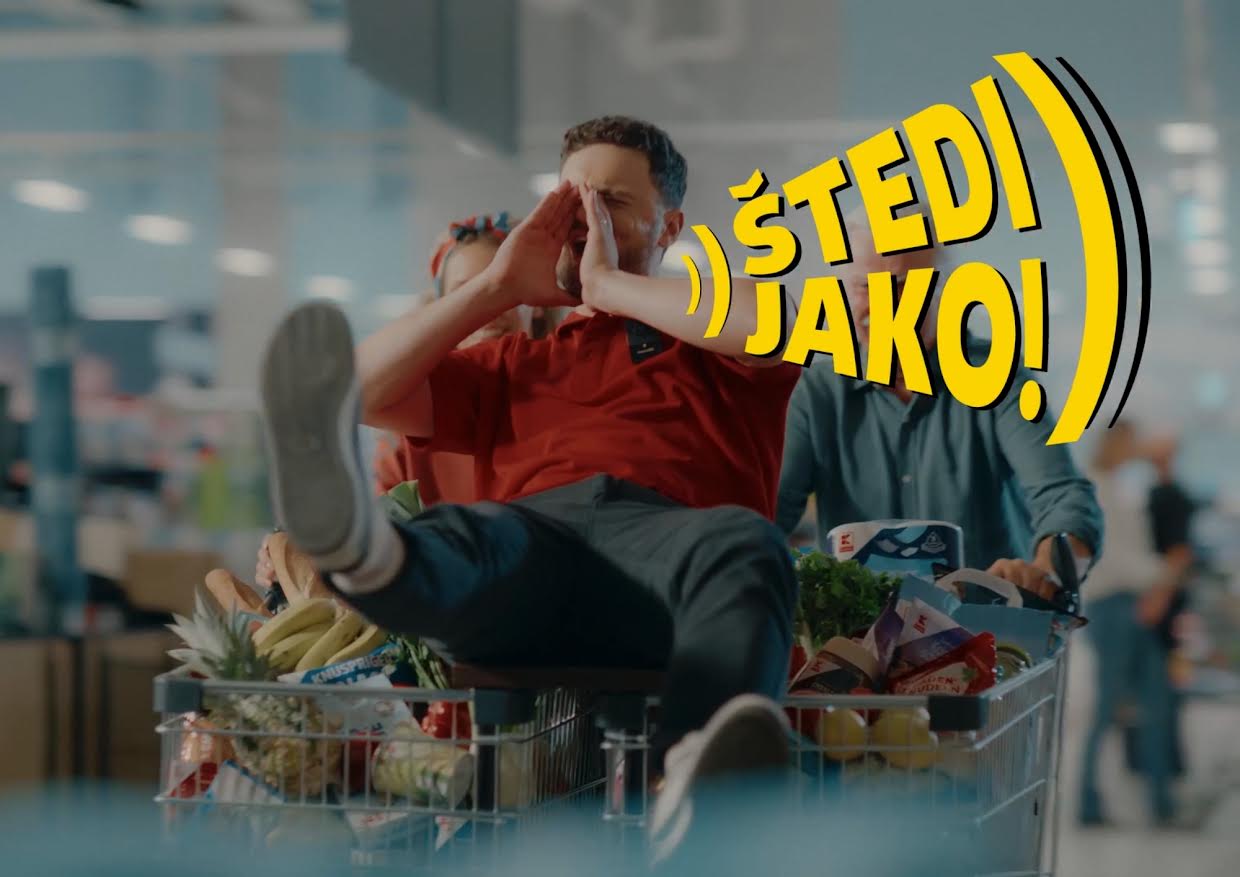
The television commercial begins as a TikTok livestream. We watch Molnar through a mobile phone screen before entering the store with him. He announces that the regular prices of 1,000 products have been reduced again, shoppers head towards the shelves, and the commercial ends with full trolleys and the message: “You always leave Kaufland a winner.”
The microphone remains present throughout the scenes as a deliberate link to the digital content. The same host and competitive idea make the campaign recognisable, while each format has room for a different execution. Alongside the brand commercial, a promotional television commercial was also filmed to feature specific products and prices. The idea could thus develop its own pace and character, while the offers were clearly presented.
Director Hani Domazet developed the dynamism through interesting camera angles, quick transitions and somewhat more stylised acting. At the same time, the store had to retain its recognisable appearance, which also required attention to detail: the appearance of the shelves, the products in the trolleys, the bags and the camera position.
The digital series had more than 17 seconds available and could follow the task, reactions and participants’ attempts for longer. The vertical format, editing cuts, sound effects and faster pace brought it closer to a competitive show. Development for digital therefore involved a separate development of the content, rather than simply reformatting the television commercial.
Freedom in Front of the Camera, Precision Behind It
Budget and time were the participants’ constraints. For the agency and client, there was another: products, prices and dates had to be accurate.
Kaufland and Cvoke developed the campaign together, aligning sales priorities, weekly offers and creative execution. An entertaining performance had to respect the specific information in the retail communication, while the choice of products had to reflect what needed to be highlighted that week.
This collaboration allowed the idea to develop across television, digital, influencers and other formats. The weekly offers provided new material, while the tasks gave them different ways to be presented.
More Than 800,000 Views Without Paid Support
Over four weeks, the digital campaign generated almost four million views and 11,000 interactions on Facebook, Instagram, TikTok and YouTube. More than 800,000 views were organic, as was 63% of total engagement.
These results are particularly relevant for content whose task was to display products and prices. The audience followed the competition, while the offers remained an integral part of what they were watching.
On Meta’s platforms, the cost of a three-second view was four times lower than the brand average. YouTube exceeded the planned number of views by 121%, with a cost per view half the average.
The results provided also include sales figures for September 2025. Compared with the same month of the previous year, total sales increased by 5%, sales of promotional items by 90%, the number of receipts containing promotional items by 157%, and unit sales of those items by 174%.
Štedi jako! won MIXX Awards Croatia in the Best Video Content category. Its competitive rules grew out of the sales task itself: how much money you have, how much time you have left and what you can choose from the offers. This is why the catalogue could sustain four different episodes. One required filling the fridge well, another planning lunches in advance, and each gave the shopping an outcome the audience could follow.
The Team Behind the Campaign
Agency: Cvoke
Nebojša Grbačić, Creative Director
Katarina Exle, Client Service Director and Head of Digital
Client: Kaufland
Gabriel Janković, Digital Marketing Specialist
Josipa Kolak, Head of Visual Communications
Production: Moglo
Direction: Hani Domazet

