

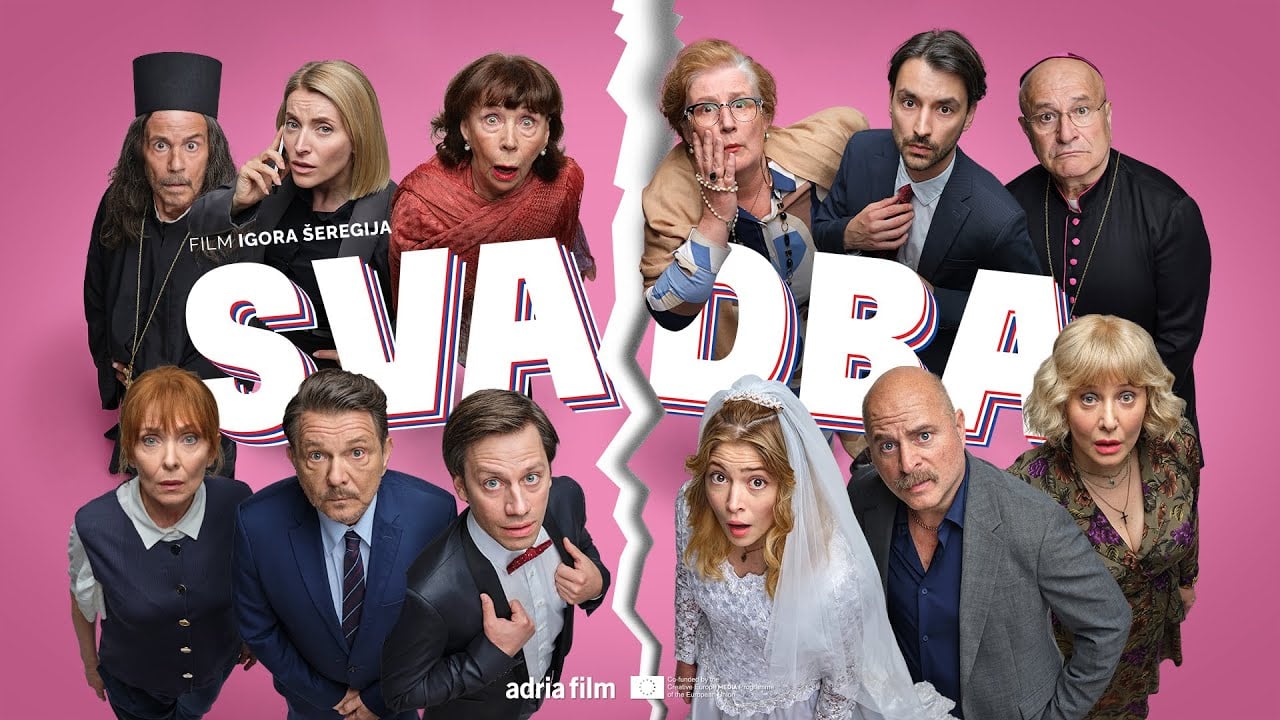
For a film, what happens after the cinema lights go down is usually what matters most. For Svadba, an important part of the story began earlier, among people who followed the actors on social media, responded to posts, sang songs from the film and repeated its lines. Many were already taking part in that conversation without having seen the film yet.
The promotional task was very specific: build interest before the theatrical release and turn it into ticket purchases. For a domestic film, that is no small hurdle. The Croatian cinema market does not have a strong tradition of distributing domestic titles, so even well-known actors were no guarantee that audiences would come to cinemas.
Svadba was also a Croatian-Serbian co-production whose humour plays with regional stereotypes. Post-war sensitivities required care in communication, but regional collaboration also gave the film one of its greatest strengths: a cast that connects audiences across different markets. Those people, their relationships and the tone of the film became the foundation of the social media campaign developed by Cvoke and production company Eclectica, with a visual identity by studio Šesnić&Turković.
The film already had something that cannot be manufactured for a post
The direction of the creative strategy took shape roughly a month before the campaign launched, after the agency team watched the first version of the film. Informal audience testing was also conducted during filming, and the reactions were extremely positive. Before the first post, the team therefore had an opportunity to see how people responded to the material, rather than assume what they might like.
The first social media content was published on the same day as the trailer. The trailer, poster, clips and premiere announcements remained important, but they could not sustain the conversation with audiences throughout the campaign on their own. Alongside them, content was therefore developed to show the atmosphere surrounding the film and the relationships among cast members.
That closeness was not created for promotional purposes. It developed during filming, premieres and the time the actors spent together. The campaign recognised it and brought it to audiences through short video formats, posts and joint appearances. The actors became the most important faces of the promotion, particularly in the later phase, around regional and European premieres.
Humour required as much care as the choice of content. Before publication, materials were aligned to ensure that the jokes worked across different markets and that playing with regional stereotypes did not turn into causing offence. Audience reactions were almost exclusively positive, with a few isolated exceptions.
Pace became part of the strategy
As interest grew faster than expected, the campaign had to keep up with audiences from day to day. Preparing a series of posts in advance and publishing them according to a schedule was not enough. The team needed to see what people were responding to, reply while the conversation was still ongoing and offer the next piece of content at the right time.
Daily community management played a major role here. Replies to comments maintained the film’s humorous tone and invited people to keep the conversation going. Audiences gradually stopped being just a group receiving premiere announcements: they followed the campaign’s development, joined in with the jokes and shared their own experience of Svadba. That relationship further strengthened the sense that something was happening around the film that they wanted to be part of.
Instagram and Facebook were treated as equally important. The same content was published simultaneously on both channels, where audiences responded equally well, and this approach also simplified production. TikTok, on the other hand, operated as a single channel for the entire region. Across all platforms, content that built closeness with audiences performed best, rather than content that simply reminded them of the release date.
The posting pace intensified particularly at two points: when ticket sales opened and after the first Croatian premiere. Content related to the film was then published alongside footage conveying the atmosphere of the premiere events. From music videos for the soundtrack to red-carpet moments, short videos and collaborative posts with actors and distributors spread organically. Paid advertising had a more clearly defined sales task: directing interested audiences towards ticket purchases.
From the set to the feed, the same story
To make that pace possible, content and decisions had to be coordinated among several partners. Cvoke handled the creative strategy for social media, copywriting, profile and community management, editing and adapting content to different formats, and project coordination. The film’s producer and the project manager at production company Eclectica were the key contacts for content, approvals and connections with the other participants.
Šesnić&Turković created the visual identity, poster and cinema materials, and worked on the film’s positioning. The identity was used from the outset and maintained throughout the campaign, with refinements made jointly with the client when needed. The promotion also involved a PR agency, distributors Blitz and CineStar for the Croatian market, and the cast, particularly during premiere events.
Coordination among these teams was especially important when quick responses were needed. Premiere content, actors’ posts, conversations in the comments and ticket ads had to follow the same film and the same moment of audience interest.
Clicks that filled the cinema
By 12 February, when the results were analysed for the MIXX entry, Instagram content had generated 8.3 million views, of which 93.9 per cent were organic, and 269.7 thousand interactions. Facebook recorded 17 million views, of which 75 per cent were organic, and 176.2 thousand interactions. The regional TikTok channel generated 7.2 million organic views and 335 thousand interactions.
Posts and ads generated 161.9 thousand clicks on ticket purchase links across regional markets. Of those, 91 thousand clicks came from the Croatian market. These figures show the scale of interest and the route audiences took towards ticket sales, while the final cinema result came from the combined work of social media, PR, distributors and activities with the cast.
In Croatia, 557,013 people watched the film in cinemas, making Svadba, according to the data used for the MIXX entry, the most-watched Croatian film in cinemas that year. During 28 days of advance sales, from 23 December to 19 January, more than 70,000 tickets for gala premieres with the actors were sold, which was presented as a record in Croatian cinema history.
The figures explain the scale of the success, but the content audiences began creating themselves says more about how the campaign worked. People filmed themselves singing songs from the film or reciting its lines. Simply knowing that the film was coming to cinemas could not have prompted them to make such posts. They had a reason to join a conversation that was already underway.
The social media promotion of the film Svadba won at MIXX Awards Croatia in the Best Social Campaign category. Behind the recognition is a series of decisions that allowed the film to be present among audiences even before its first screening: recognising material that could live beyond the trailer, giving actors space to show a relationship that already existed, handling humour carefully and responding every day to people who wanted to be part of the story. By the time the cinema doors opened, that conversation already had its audience.

