

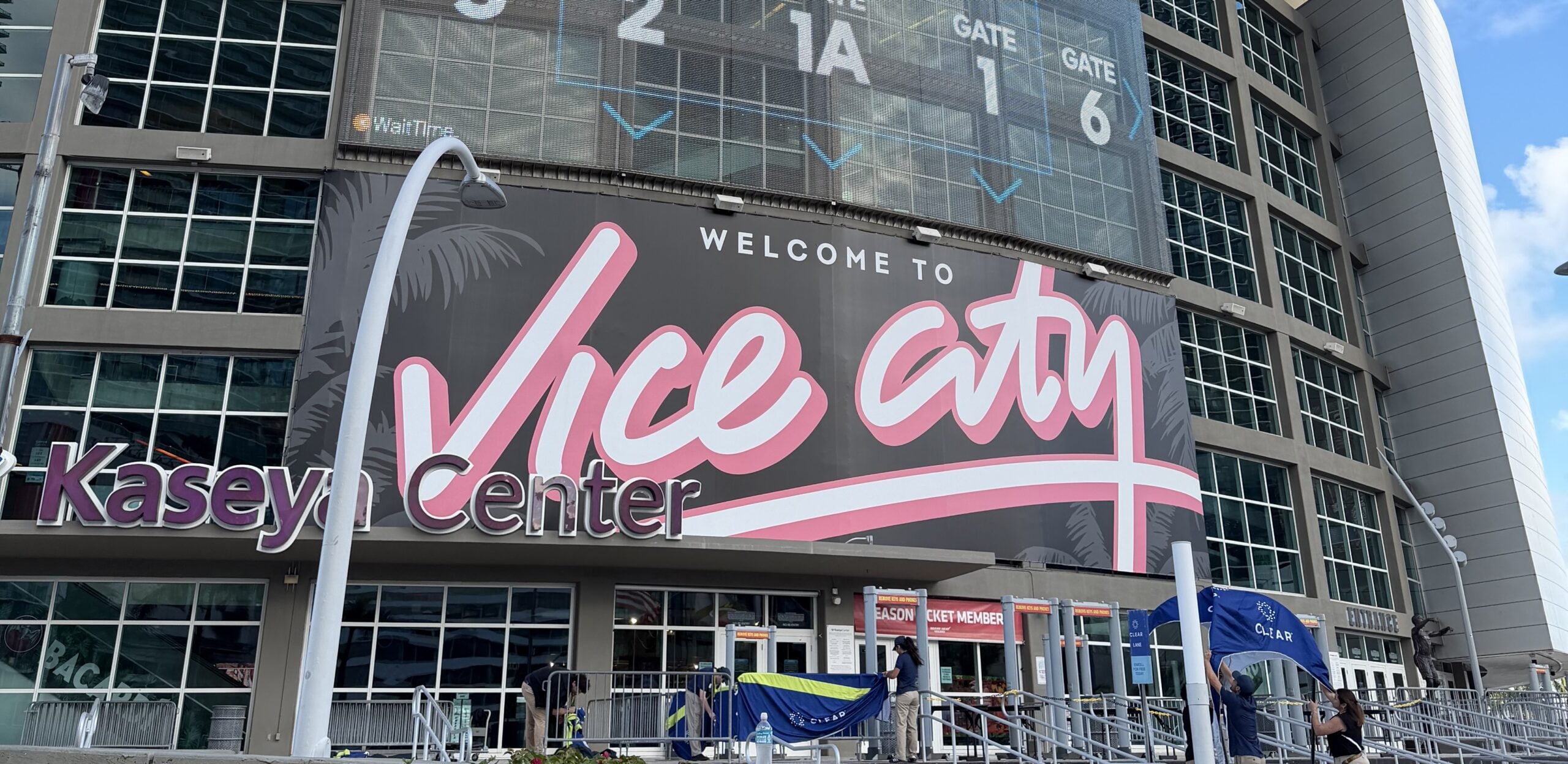
In Miami, it is sometimes difficult to tell where reality ends and its caricature begins. A city where luxury, crime, art, tourism, and an almost surreal need to show off collide on the same streets every day has always been ideal material for fiction. Hollywood turned it into a movie set, the music industry into a symbol of hedonism, and Rockstar Games into Vice City, a digital world in which everything Miami is known for has been given an even more exaggerated version. However, something has been happening in recent weeks that even the writers of Grand Theft Auto would have struggled to invent. The real Miami has started advertising its fictional version.
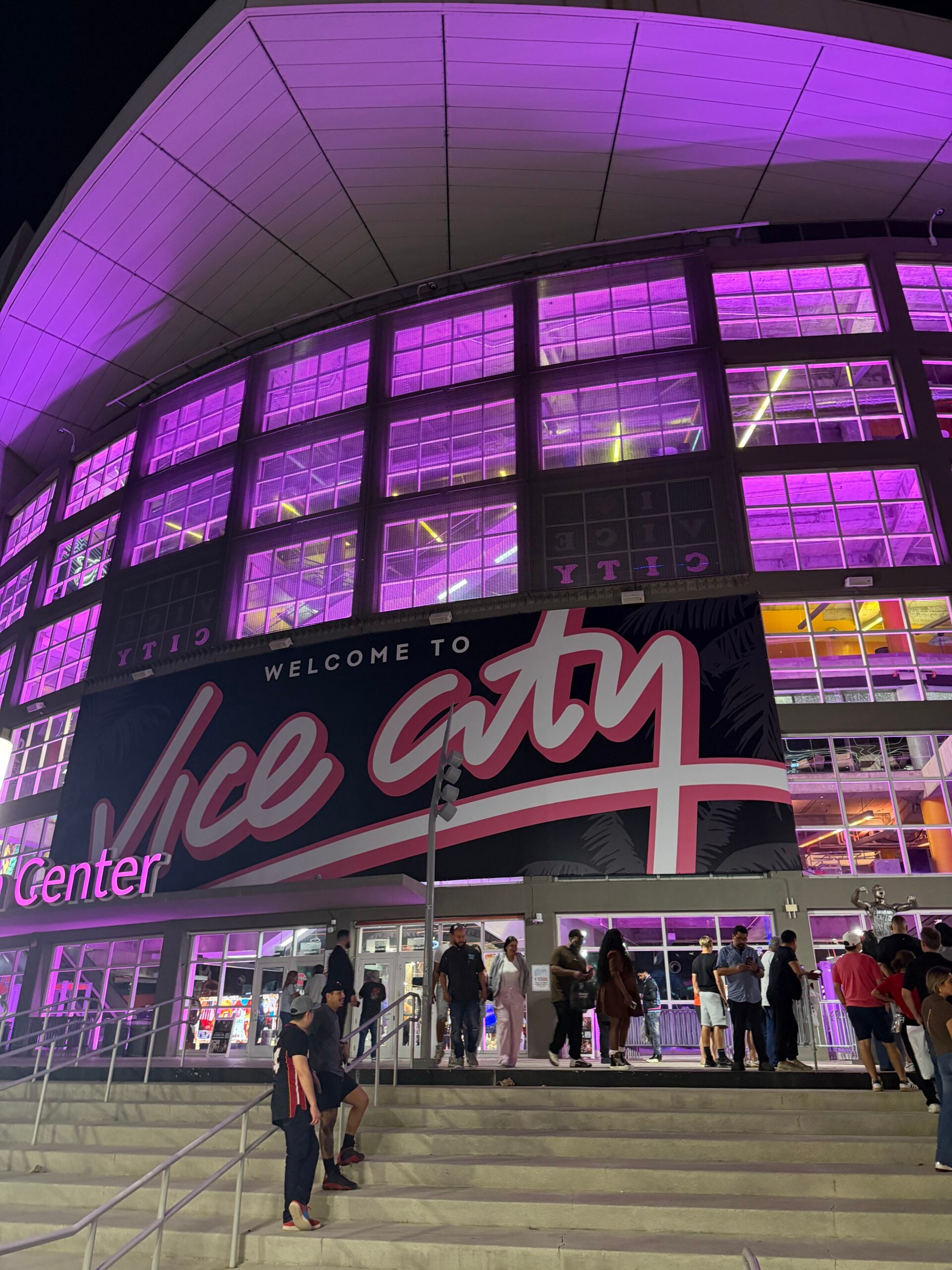
On the Kaseya Center, home of the Miami Heat, there is a huge sign reading “Welcome to Vice City.” I photographed it both during the day and at night, when the entire arena glows in recognizable shades of purple. Cars featuring the visual identity of GTA VI are appearing on city streets, while places that inspired the digital world for years are now adopting its appearance. On Thursday, November 19, after thirteen years of waiting, Grand Theft Auto VI is finally being released. Millions of players around the world will enter the new Vice City for the first time, but here in Miami, that city has already existed beyond the screen for some time.
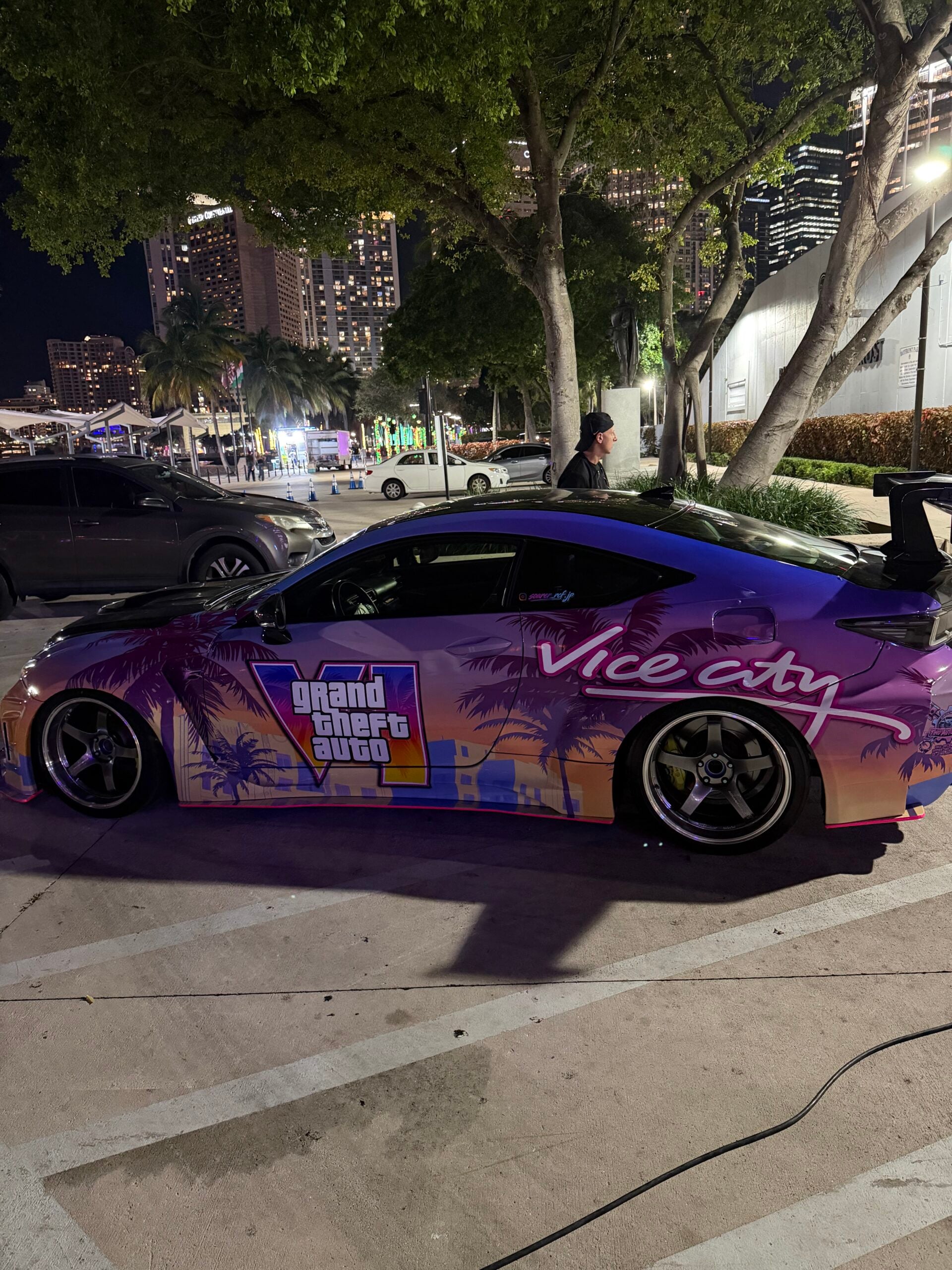
Perhaps the most interesting example comes from the nightlife scene. E11EVEN, one of Miami’s most famous nightclubs, has become NINE1NINE from November 6 to December 6, a nightclub from GTA VI inspired by the real E11EVEN itself. The club’s visual identity and signage have been changed, special performances have been organized, and visitors can also see real-life versions of cars from the game. For years, the club was part of the inspiration for Rockstar’s fictional world, only to voluntarily become a copy of it ahead of the game’s release. It is difficult to imagine a better example of a moment when popular culture begins to influence the reality from which it originated.
A similar transformation awaits the Miami Heat, which will take on the identity of Vice City for its November 18 game against the Milwaukee Bucks, complete with a specially designed court, jerseys, and the entire game experience. A few days later, a GTA VI music festival will take place at Mana Wynwood, featuring Travis Scott, Cardi B, Metro Boomin, and other performers. Local authorities have also announced marketing agreements connected to Rockstar worth $3.9 million, including advertising at the airport, port, and other parts of the city. Interestingly, nearly $1 million from the signage installed on the Kaseya Center will be directed toward the development of a public park. The fictional city is thus beginning to generate very real money for the city that inspired it.
All of this is a fascinating example of how much the relationship between brands, audiences, and culture has changed. Rockstar introduced the first version of Vice City back in 2002, and more than two decades later, that identity has become so recognizable that real institutions, sports teams, and companies want to associate themselves with it. For years, marketing campaigns have tried to find ways to fit into the worlds of their audiences. Rockstar has built a world that audiences themselves want to enter, and now the city that inspired it is joining them.
Of course, the scale of this phenomenon cannot be separated from the enormous popularity of the franchise itself. Since its release in 2013, GTA V has reached more than 230 million copies shipped, while its players, content creators, and online communities have kept the game relevant for more than a decade. While the communications industry fights every day for a few additional seconds of attention, Rockstar has an audience that has been waiting years for its next move. Every trailer becomes an event, every detail a subject of discussion, and delays to the game’s release, rather than completely extinguishing interest, only increase anticipation. Few brands can afford such a relationship with their audience.
Yet perhaps the most interesting part of this story for the creative industry in our region has little to do with the size of the budget. Sarajevo, Zagreb, and Belgrade do not have Rockstar’s resources, but they have their own cultural identities, urban stories, and communities that gather around them. The Sarajevo Film Festival, for example, has been demonstrating for years how a single cultural event can change the rhythm of an entire city and create an experience that audiences associate with a place much more strongly than with an individual advertisement. In our region, we often have creativity, authenticity, and excellent ideas, but we are too quick to confine them to a single campaign or event. Rockstar’s example raises the question of how much our agencies and brands could achieve if we developed local stories over the long term, allowing them to grow together with their audiences.
Of course, this does not mean that every campaign should become a spectacle, nor that Rockstar’s success can simply be replicated. Vice City is the result of decades of creative work, a consistent identity, and a relationship with an audience that has, in the meantime, become an active participant in its culture. That long-term approach may be the most important message for an industry that so often measures success within the few weeks a campaign runs. The most powerful stories continue to live on even after we stop paying for their distribution.
As I follow the final days before the release of GTA VI from Miami, what fascinates me most is how the boundary between the digital and the real city has almost disappeared. People photograph signs, nightclubs change their names, an NBA team adopts an identity from the game, and the city earns money from its own fictional version. All of this before anyone has even played the new installment.
Miami gave Rockstar the inspiration for Vice City. Twenty-four years later, Rockstar has managed to convince Miami to become Vice City.

