

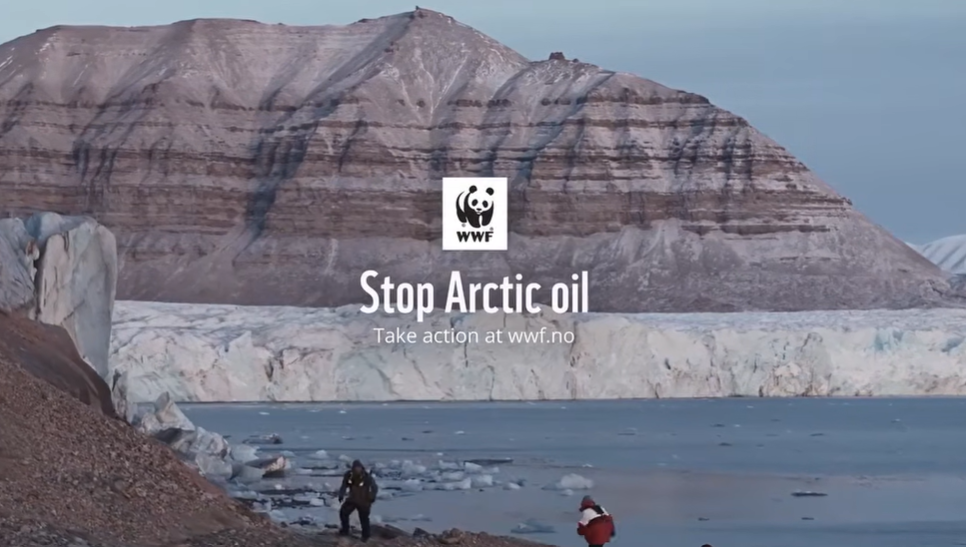
A tour of the Arctic usually offers visitors the opportunity to stop, observe wildlife and explore the natural environment of the region. In the new campaign by WWF Norway, there is barely any time for that. A tour guide rushes visitors from one natural attraction to another, trying to show them polar bears, reindeer and whales as quickly as possible. He is not in a hurry because there are too many tourists, but because he fears that the nature he is showing them may soon no longer exist. While there is still something to show, he tries to make as much money as possible from his business.
The campaign was conceived by Oslo-based agency Smeh, based on the fact that the Arctic is warming faster than almost any other region on the planet. Climate change is already threatening one of the world’s most vulnerable ecosystems, while the Norwegian government simultaneously wants to continue exploring for new oil and gas deposits in the Arctic. It was precisely this tension between the need to protect nature and plans to exploit fossil fuels that became the starting point for the creative concept.
Unlike conventional climate change campaigns, which often rely on dramatic imagery and a serious tone, Rushes to Stop Arctic Oil presents the issue through an absurd tourist situation. The guide behaves as though his only task is to finish the tour as quickly as possible, while the tourists barely manage to see what they came for. His urgency stems from the fear that nature will disappear, but also that political decisions on new oil exploration could further accelerate its destruction.
“Searching for new oil in a place that is already warming faster than almost anywhere on the planet is absurd. So, we felt it was right to tell the story in an absurd way too. The guide is fiction, but every fact behind his hurry is real,” said the creative team at Smeh.
The campaign was launched during negotiations over Norway’s state budget, in which several environmental organizations and political parties are calling for a halt to oil exploration in the Arctic. Adding weight to the debate is the fact that the European Union, Norway’s largest customer for oil and gas, has expressed the position that Arctic fossil fuel reserves should remain untapped. The campaign also appears just ahead of the international climate conference COP31.
The series of films was directed by Sara Haag, with production handled by Fantefilm. Filming took place on Svalbard, an Arctic archipelago whose real landscapes become part of a portrayal that is comedic in form but serious in substance.

