

The fifth edition of the Future Tense powered by Lürssen conference, organized by the Communication Lab, once again united technology, art, and communication through visual summaries of the talks.
After introducing the concept of visual summaries at last year’s conference – comparing hand-drawn visuals with those generated by AI – this year’s edition took things a step further.
Rather than opposing human and machine, the focus this year was on their integration.
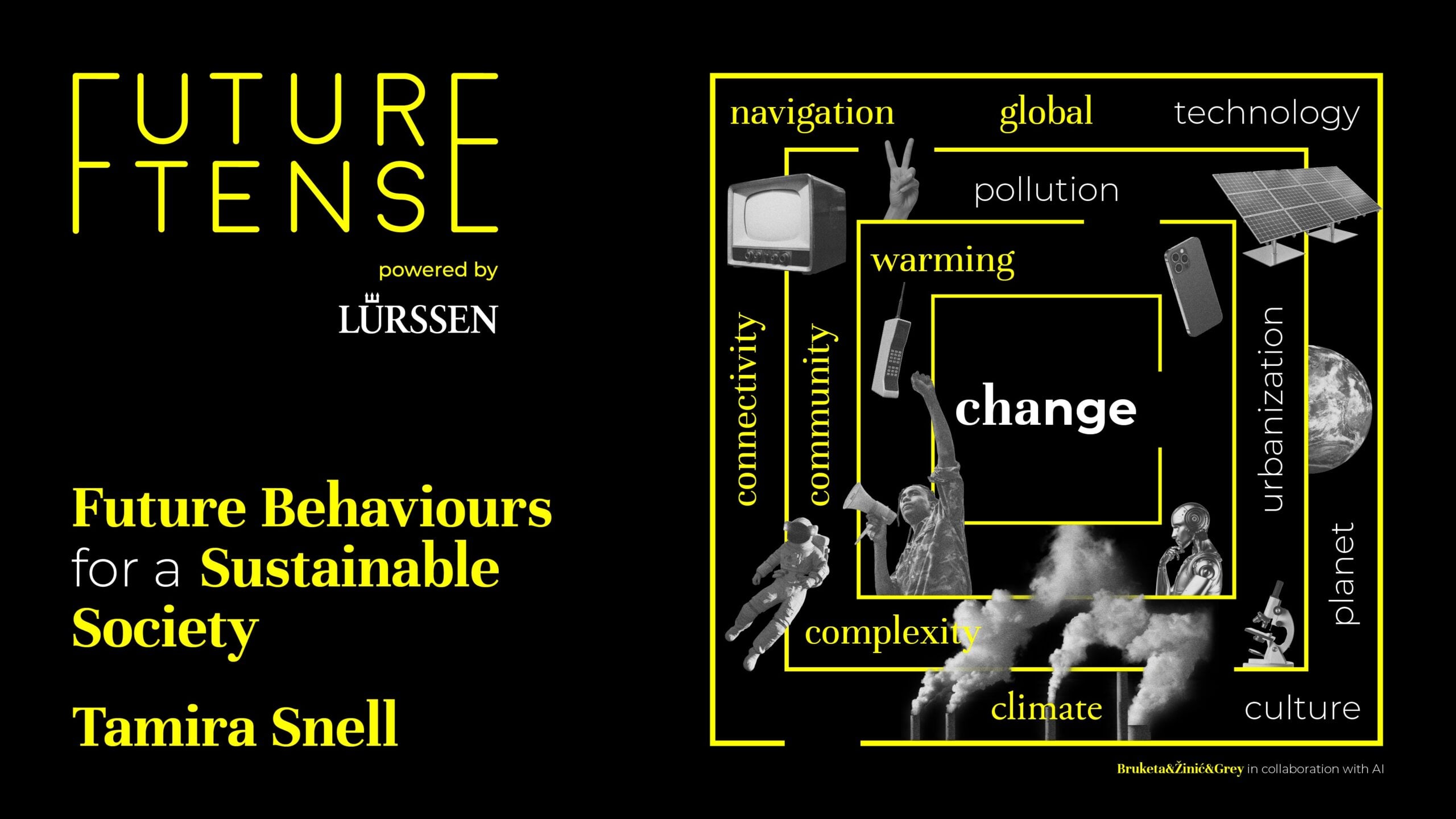
Five designers from the creative agency Bruketa&Žinić&Grey teamed up with artificial intelligence to interpret the speakers’ messages and distill them into strong, visually compelling forms.
The result was a collaboration in which human intuition and AI’s technological capabilities complemented one another, creating something that neither side could achieve alone.
The visual summary of Peter Hinssen’s lecture captured the key traits of future leaders: the ability to drive radical innovation, redesign business models, and develop a “future-ready” mindset.

Andrea Knapić, Bruketa&Žinić&Grey
Dr. Sami Kazi spoke about smart cities, emphasizing that their development depends not only on technology but also on community integration and sustainable systems.

Ivana Momčilović, Bruketa&Žinić&Grey
Tamira Snell highlighted that without a deep change in mindset and systemic transformation, there can be no genuine behavioral change.

Lucija Čičin-Šain, Bruketa&Žinić&Grey
Renowned professor Dr. Howard Yu emphasized the importance of strategic thinking and adaptability for industries in a time of continuous and rapid change.

Konrad Kropf, Bruketa&Žinić&Grey
Meanwhile, Carl Honoré reminded us of the importance of slowing down as a key prerequisite for maintaining focus, boosting productivity, and making better business decisions.

Helena Hlišć, Bruketa&Žinić&Grey
All these messages were translated by the designers – working in collaboration with AI – into unique visuals, affirming that artificial intelligence can enable artists to explore new forms of expression and push the boundaries of their own creativity. The key lies in using AI as a partner that inspires innovation, rather than as a replacement for human imagination and intuition.

