

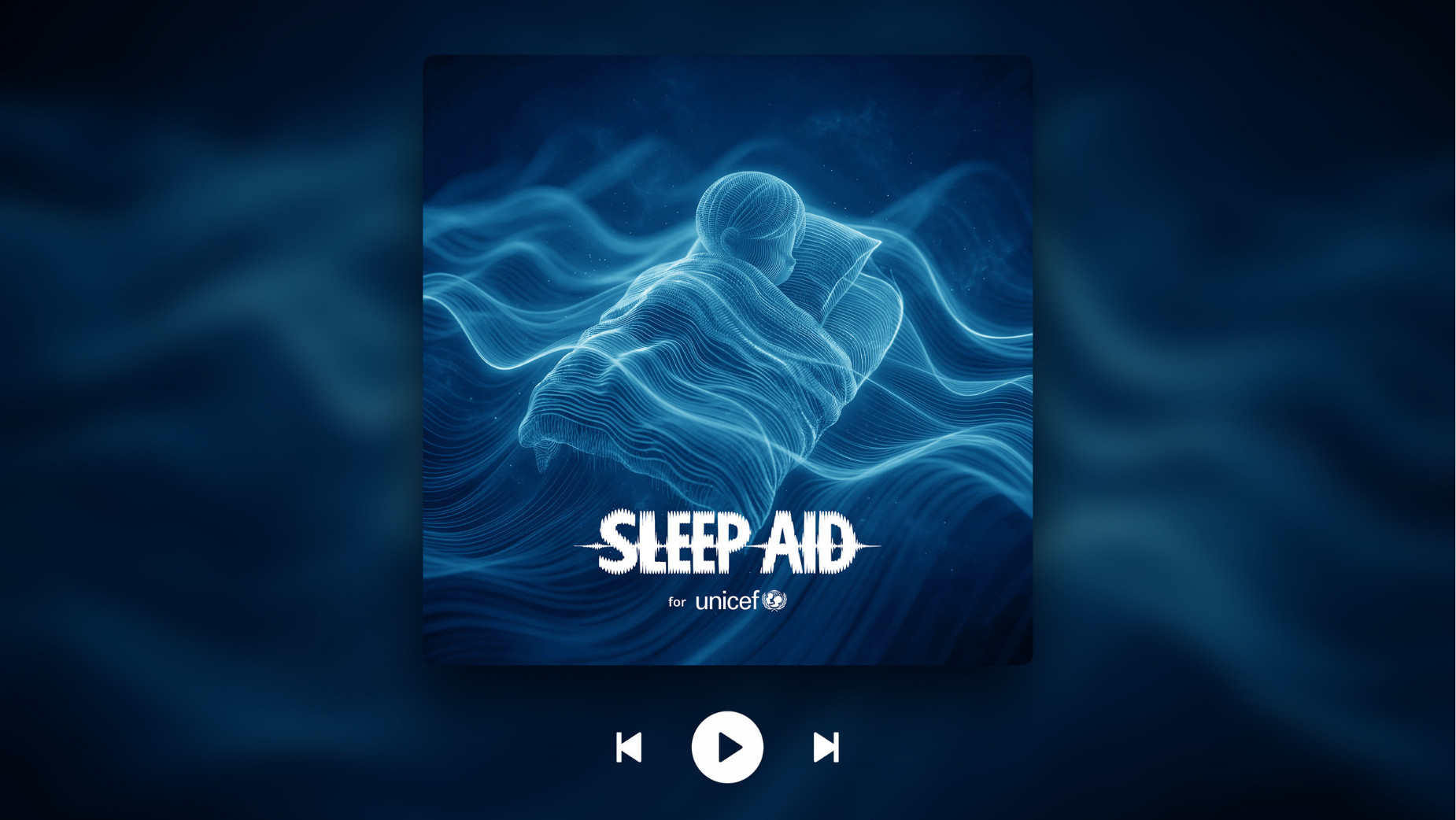
A new initiative from UNICEF Finland and creative studio SEK demonstrates how one of the most passive everyday habits can become a source of funding for humanitarian programmes. Instead of a traditional call for donations, the Sleep Aid for UNICEF campaign offers people something many of them are missing – better sleep.
The project centres around an album designed to help listeners fall asleep more easily, while streaming revenues are automatically directed to support UNICEF programmes for children around the world. The idea is simple: play the music before going to bed, fall asleep and donate at the same time.
The campaign addresses two issues affecting large numbers of people simultaneously. On one hand, more adults are struggling with insomnia and sleep disorders. On the other, humanitarian organisations are facing declining donations at a time when the needs of children affected by poverty, war and humanitarian crises continue to grow. According to UNICEF estimates, funding for humanitarian, development and child protection programmes could be at least 20 percent lower in 2026 than it was in 2024.
“Donation fatigue is real, but so is sleep deprivation. We weren’t going to solve the first by trying to guilt people or ask them for more attention and clicks. We had to find a behaviour people were already doing, and make it count. Sleep was that behaviour”, said Samuel Räikkönen, Creative Director at SEK.
Unlike traditional relaxation playlists, Sleep Aid for UNICEF was developed as a unique musical experience designed to mirror the natural process of falling asleep. The album was created by Finnish musicians, with every composition built around a tempo of 55 beats per minute. Research suggests that slower instrumental music can help reduce the time needed to fall asleep, improve sleep quality and increase overall sleep duration. Every stream on platforms such as Spotify and Apple Music generates royalties that are donated to UNICEF Finland. The longer people listen, the more funding is generated.
The communication strategy follows the logic of the idea itself. Rather than relying on visual formats, most media activity is concentrated in audio environments, from streaming services to radio stations. Lifestyle influencers have been enlisted to introduce the album as part of their evening routines, while a number of hotels across Finland have integrated Sleep Aid for UNICEF into the guest experience. Through in-room cards and hotel TV screens, visitors are encouraged to play the album before going to sleep.
“We are constantly working towards finding new ways to engage meaningfully with our audiences. This idea tapped into an existing challenge that many of us face every night: we sleep poorly, and how could we sleep well when we know the challenges many children face in the middle of humanitarian crisis, war zones and poverty,” said Laura Helaniemi, Marketing and Communications Director at UNICEF Finland.
The campaign demonstrates that innovation in fundraising does not necessarily depend on new technologies or complex platforms. Rather than asking people to make an additional effort, Sleep Aid for UNICEF uses something they already do every night and turns it into support for children who need it most.

