

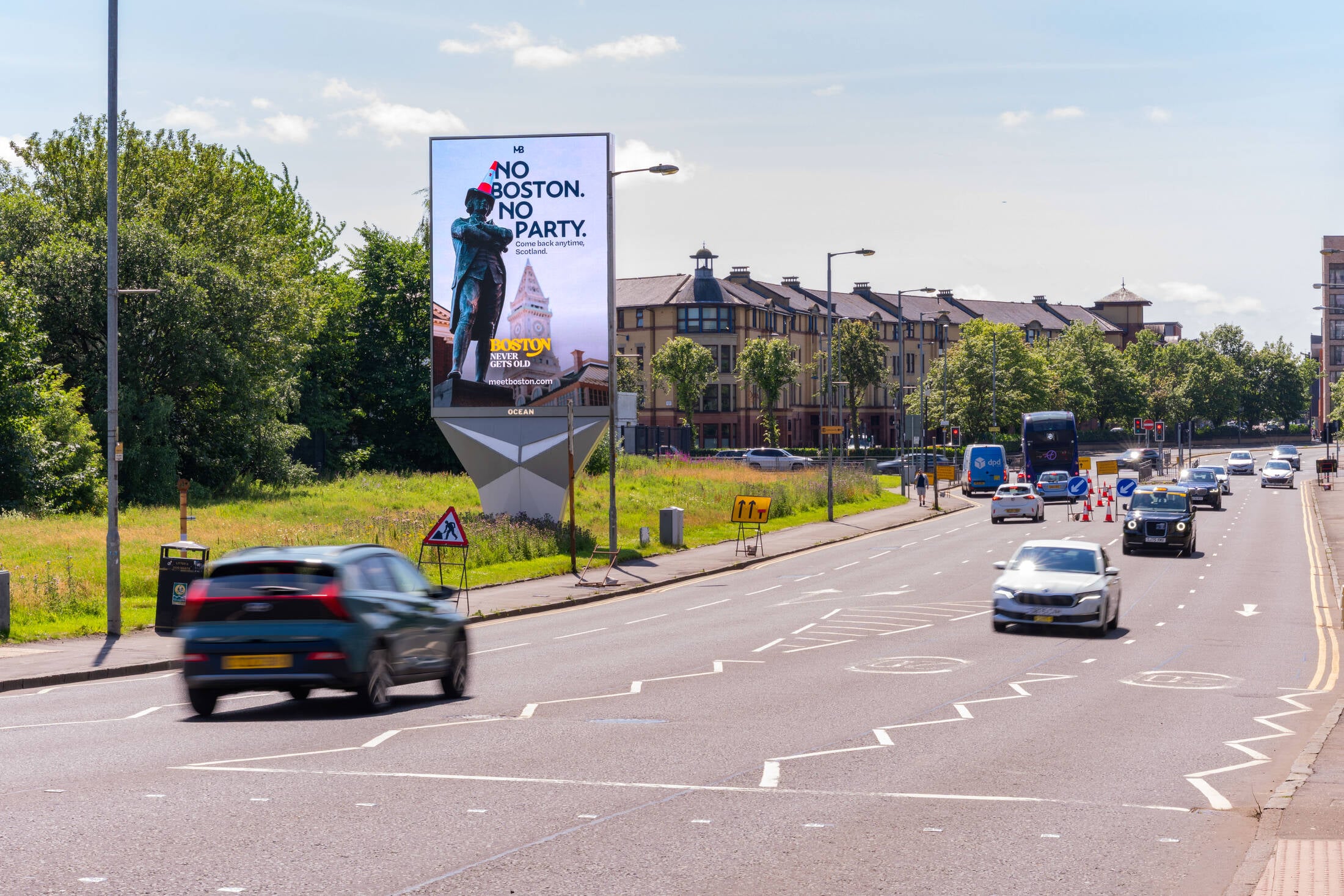
When Scottish fans returned from the United States, they were not greeted by classic tourism images of Boston. Screens in Glasgow and Edinburgh told them that the beer was back in stock and that they were always welcome to return.
Meet Boston placed the messages after more than 50,000 Scottish fans arrived in the city for the matches against Haiti and Morocco during the FIFA World Cup 2026. Their stay was marked by packed bars, emergency beer restocking and traffic cones placed on the heads of Boston statues.
The agency Allen & Gerritsen reacted before the moment became just another finished festival story. In partnership with global OOH specialist Billups, it secured placements on Ocean Outdoor screens in Scotland’s two largest cities, precisely as the Tartan Army was returning home after the national team’s elimination.
The Scotland, Come Back campaign ran from July 6 to 12. The messages Don’t worry, we restocked the beer, No Boston. No Party and Come back anytime, Scotland did not explain what Boston offers tourists. They reminded a specific audience of what they had already experienced there.
The visuals also continued the traffic cone joke, a recognizable part of Scottish fan culture that the visitors transferred to Boston’s historic monuments. The motif thus became a shared symbol of the two cities, clear enough without further explanation and specific enough that it could not have been adopted by just any other tourism brand.
The encounter did not remain limited to posts from the fans’ trip. Boston and Glasgow signed a declaration of intent to establish a formal international partnership focused on tourism, education, innovation and sustainability. A comprehensive memorandum is expected to be signed during Tartan Week in April 2027.
For Meet Boston, the timing of the message was important. The city did not reach out to Scottish fans months later, when their attention would already have shifted elsewhere, but on the streets to which they had returned in their everyday lives. OOH served as a response to an existing relationship, rather than an attempt by advertising to invent it afterwards.

