

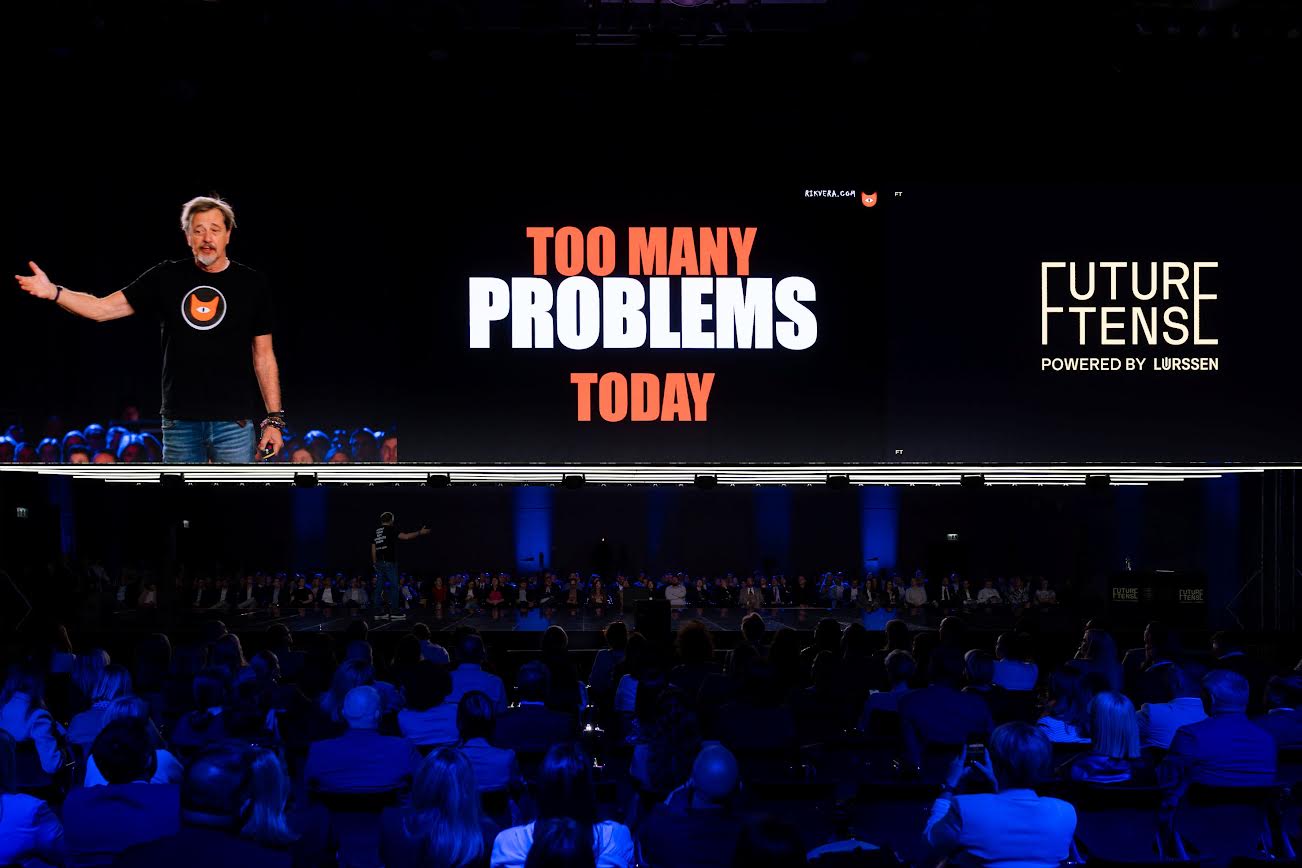
Geopolitics is no longer a context that occasionally affects business, but the framework within which it operates. This shift was one of the central messages of the sixth edition of Future Tense powered by Lürssen, where a move from short-term crisis management to long-term management of instability is becoming more clearly articulated.
Simon J. Evenett opened the discussion through the concept of a “new, bold world”, pointing out that security challenges are no longer episodic nor tied to individual events. Instead, they are becoming a permanent component of strategic decision-making. In such an environment, managers are facing a shift in perspective: instability is no longer just a risk to be minimized, but also a space in which new opportunities emerge.
The energy sector offers one of the clearest examples of this shift. Andreas Rörig, President of the Management Board of E.on Hrvatska, described the European energy transition as a process that has evolved into a structural transformation. According to him, the focus is moving away from innovation itself toward the speed of its implementation.
At the same time, the technological segment of the conference opened the question of a new phase of the digital economy. Instead of users actively searching and making choices, there is growing discussion about a model in which this role is taken over by AI agents. This transition toward so-called agentic commerce is redefining how brands reach consumers. As explained by Frantisek Jungr from Visa, the integration of artificial intelligence into purchasing processes is already changing the logic of interaction between users and the market. Through solutions such as Visa Intelligent Commerce, AI agents can autonomously search, compare and complete purchases on behalf of users, with an emphasis on security and transparency.
In addition to business and technological topics, the conference also addressed the issue of long-term human capacity. Susanna Søberg, a Danish scientist specializing in longevity, spoke about the relationship between stress, recovery and controlled exposure to extreme conditions such as cold and heat. Her focus was on how these factors affect metabolic health and resilience, which is increasingly becoming relevant in the context of performance in a business environment.
The conference Future Tense powered by Lürssen once again brought together a combination of business, academic and technological perspectives, aiming to provide a framework for understanding changes that are no longer linear or isolated. Through collaboration with institutions such as Copenhagen Institute for Futures Studies (CIFS), IEDC – Bled School of Management, Association for the Promotion of Smart Industries and European Forum, and with the support of partners including Lürssen, BOSQAR INVEST, Erste&Steiermärkische Bank, Environmental Protection and Energy Efficiency Fund, Kaufland, Končar, Nestlé, Philip Morris International and Visa, the conference continues to build a space where business decisions are increasingly made at the intersection of security, technology and long-term planning.

