

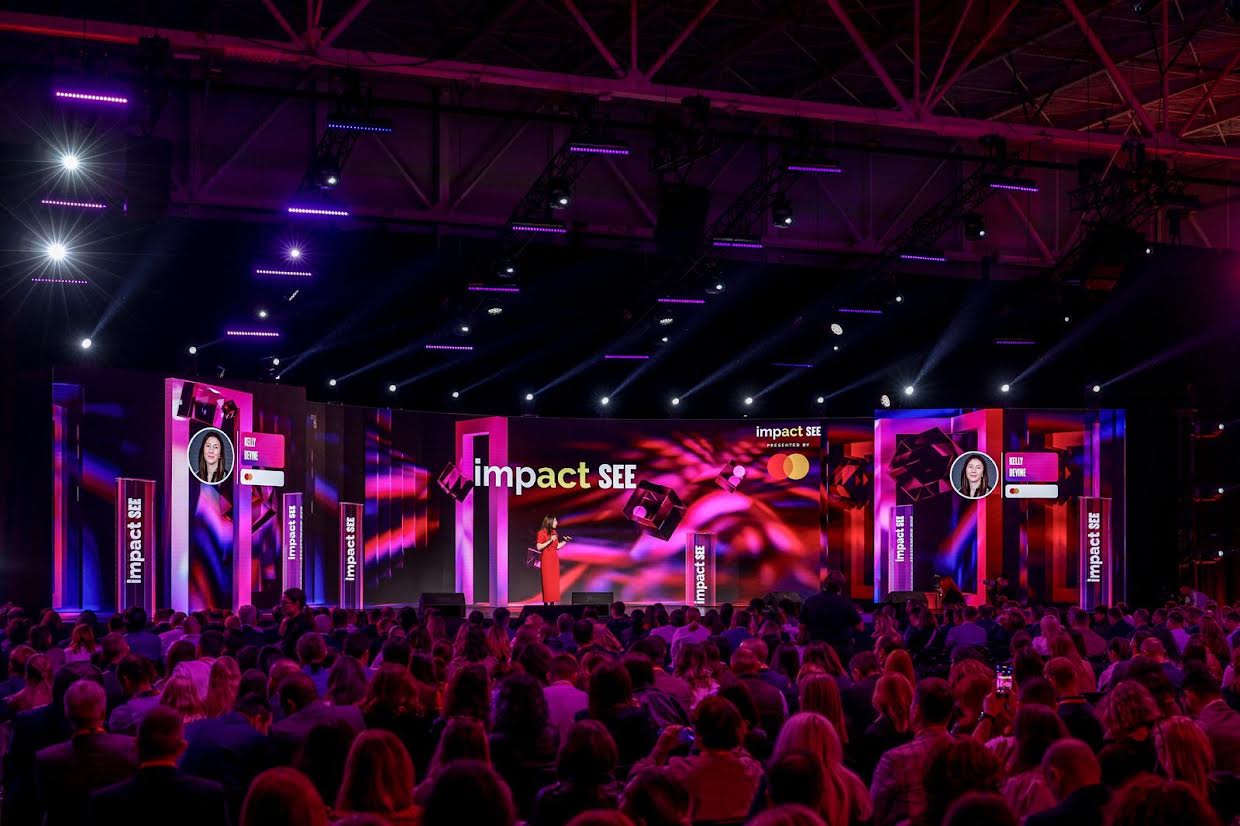
From central banking and consumer habits to cultural heritage, entrepreneurship and financing European growth, the programme of Impact SEE’26 presented by Mastercard brought together topics that, at first glance, belong to different parts of the economy. On 29 and 30 September in Bucharest, nearly 3,000 participants and around 200 speakers discussed them across three main stages and eight thematic areas.
For the first time, the third edition of the conference added investments and startups, as well as culture, to the programme, while participants included representatives of companies such as Mastercard, Banca Transilvania, McLaren Racing, Trendyol and UiPath, alongside people from government, science, sport and culture.
The BiH perspective, from financial stability to culture
Among the speakers from Bosnia and Herzegovina was Emir Kurtić, Vice Governor of the Central Bank of Bosnia and Herzegovina, who took part in a discussion on central banking, economic convergence and stability. He was joined by Anca Dragu, Governor of the National Bank of Moldova, and Endrit Yzeiraj, Deputy Minister of Finance of Albania.
Emina Pazalja, Deputy Editor-in-Chief of Bloomberg Adria Television, moderated a panel on the new consumer equation, featuring Aleksandar Manev from Croatia osiguranje, Ben Herut from Chargeflow and Cristian Pelivan from ARMO.
The role of culture in the development of cities and societies was discussed in a panel moderated by Maja Čengić Miralem, editor and producer at BHT1. The discussion focused on cultural heritage as a driver of transformation, with representatives of the BONTE Foundation, the Polish History Museum and the City of Poznań.
From business creativity to the cost of our attention
Among the international speakers was Ryan Reynolds, who discussed entrepreneurship with Andreea Esca from PRO TV. His business experience with companies such as Maximum Effort, Aviation Gin and Mint Mobile served as a starting point for a conversation about creativity, humour and a willingness to make mistakes.
Another aspect of the relationship between technology and people was opened by Dr. Anna Lembke, a Stanford psychiatrist and author of Dopamine Nation. With business leaders, she discussed the dopamine economy, the way digital services shape user behaviour and the responsibility of companies that compete for their attention every day.
Europe’s potential exists, but it needs to be turned into growth
One of the conference’s central economic themes was Europe’s ability to turn its own talent, technology and capital into competitiveness. Ilian Mihov, economist and former Dean of INSEAD, discussed this with Bartosz Ciołkowski, General Manager of Mastercard for Southeast Europe, and Erdem İnan, CEO of Trendyol Group.
These issues continued through discussions on artificial intelligence, financing growing companies, banking, cyber resilience and industrial sovereignty. Kelly Devine, President of Mastercard Europe, brought the focus back to the practical value of innovation, namely the question of what problem technology actually solves.
The regional perspective was further represented by Jelisaveta Lazarević from Bloomberg Adria, Tanja Kuzman from the Digital Serbia Initiative, Nataša Pavlović from Sport Vision Group, Milica Stefanović from NALED, Marko Carević from Ananas E-Commerce and Ivana Bulatović from the Ministry of Tourism of Montenegro.
From financial stability and company development to user attention and cultural heritage, the programme in Bucharest connected different parts of the same story: how to turn existing resources into sustainable business and economic growth.

