

Data on mutual media reporting among the countries of the former Yugoslavia, collected by Press Clipping Maribor during the first three months of 2026, offer an exclusive insight into how socio-political and cultural processes in the region are reflected in public discourse. Systematic monitoring of media publicity reveals more than the volume of information flows. It also sheds light on the mechanisms through which media systems help shape political culture, geostrategic trends, self-identification and the dynamics of popular culture. The media do not operate solely as transmitters of news, but as actors whose selection of topics can have a noticeable influence on social cohesion and the stability of interstate relations.
The analysis of media production is not intended to revive historically conditioned negative sentiments. It provides a data-supported overview of actual media production, offering current and future generations a new quality of awareness and new opportunities for cooperation, particularly in the cultural and economic fields.
The conclusions and findings are based on high-quality monitoring and the national and political neutrality of Press Clipping Maribor, Press Clipping Zagreb, Press Clipping North Macedonia, Press Clipping Banja Luka and Ninamedia Kliping Novi Sad. Data from the three-month media monitoring enable a quantitative analysis of identity-related communication flows and the degree of informational isolation of individual countries. Understanding these patterns is important because the media establish the frameworks within which everyday social processes in neighbouring countries unfold.
From Yugonostalgia To Yugovision: The Region Through The Prism Of Opportunity, Not The Past
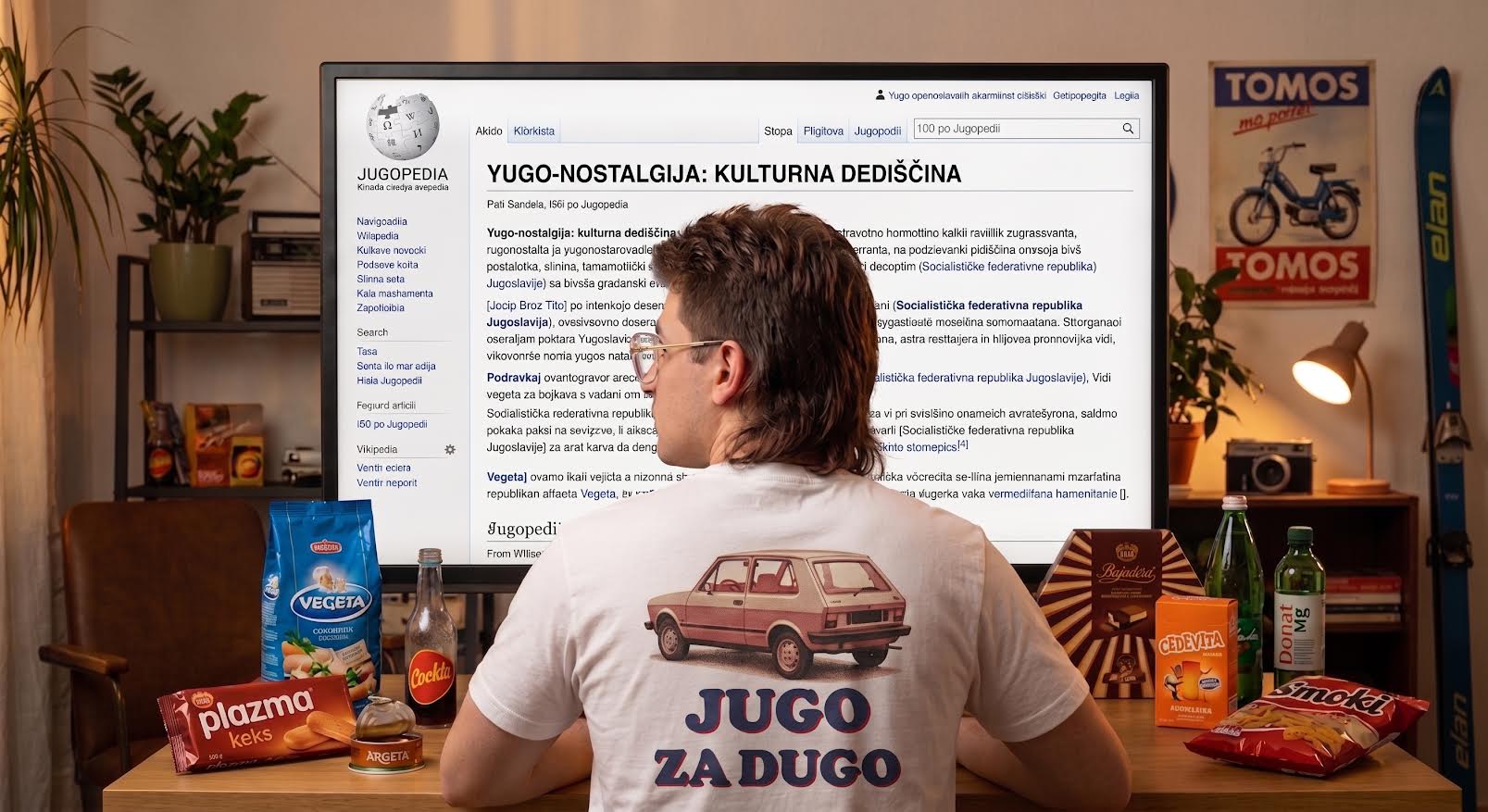
Although the former common state disintegrated 35 years ago, this, dryly speaking, geographical area still represents a kind of broader homeland to us, with exceptional cultural and geographical diversity. Yugonostalgia is not merely a phantasm of older generations (Generation X and baby boomers). It acts as a spring that continues to nourish the imagination of generations that never lived in it. Identity is not a fixed inheritance, but something each generation shapes and (re)interprets anew. If we understand Yugonostalgia as a bridge rather than a monument, it can become an opportunity for dialogue among nations that once shared the same history. Ultimately, it also represents significant economic potential: EUR 305 billion in combined annual income generated by almost 18 million people.
Today, this geographical and social space no longer functions as a political entity, but as a distinctive Promised Land of memory, an area to which the contemporary consumer returns time and again. Much like the biblical people on their long journey through the desert of transition seek a path back to their native land of abundance, security and simple pleasures, the contemporary consumer seeks refuge from the uncertainty of the present in retro symbols. Seeking comfort in the past is therefore not merely nostalgia among older generations, but a conscious return to the source, where every familiar product acts as a reassuring promise of home.
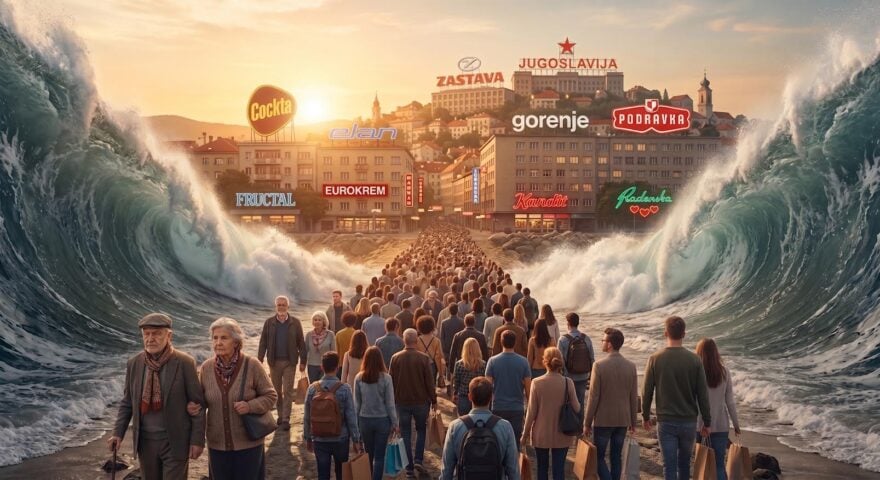
Established regional brands in the beverages, household products and personal care sectors have built their current market positions on decades of industrial heritage and a successful transition from the former common market into a modern competitive environment. Brands such as Vegeta, Cockta, Cedevita, Plazma, Smoki, Argeta, Radenska, Kraš, Bajadera, Domaćica, Barcaffè, Donat Mg, Jaffa, Gorenje, Elan, Iskra, Paloma, Borovo, Startas, Sumamed, Andol, Plivadon, Lekadol, Linex, Septolete, Pikovit, Pantenol, Alpina, Lisca, Zlatarna Celje, Varteks, Subrina, Melem, Afrodita, Tosama, Vir, Faks Helizim, Ornel, Mercator, Petrol, INA, Lesnina and Meblo Jogi have maintained exceptionally high brand equity through historical turning points, which still enables them to remain firmly embedded in consumers’ everyday routines. Their long-term competitiveness is therefore based on the synergy of historically acquired customer loyalty, operational continuity and the constant adaptation of their offerings to contemporary technological and functional standards.
Consumerism as a form of comfort is nothing new, nor is the longing for a sense of belonging to something larger than a small national community. In a region divided by war, sharing the same drink or enjoying the same song can serve as a quiet form of reconciliation.
Laughter is often the most honest way of confronting a painful past, which is why Yugonostalgia is not merely entertainment, but also a form of collective psychotherapy. When comedians from different former republics come together to make fun of shared stereotypes, they create a space in which difficult topics can be discussed without hostility. Regional humour often connects young people more effectively than official cultural exchanges. Parody can thus become a safe space in which nations with a shared history find a common language, both literally and figuratively.
Understanding and respecting our shared region must be a high priority for every individual and for all of us collectively. Recognising communication patterns is a step towards building stable and constructive relationships at every level. By gaining insight into mutual reporting, younger generations can more easily help create a space founded on successful economic cooperation and political maturity despite a difficult history.
Yugovision is an idea. But what do the media say about the region’s connectedness today? The results of our analysis reveal a story that is far more complex than one might expect. We will reveal it in the next article on Media Marketing.
Yugo-chic reveals a paradox: generations that never lived in Yugoslavia are appropriating its symbols because they are searching for authenticity in a world of homogenised global brands.

