

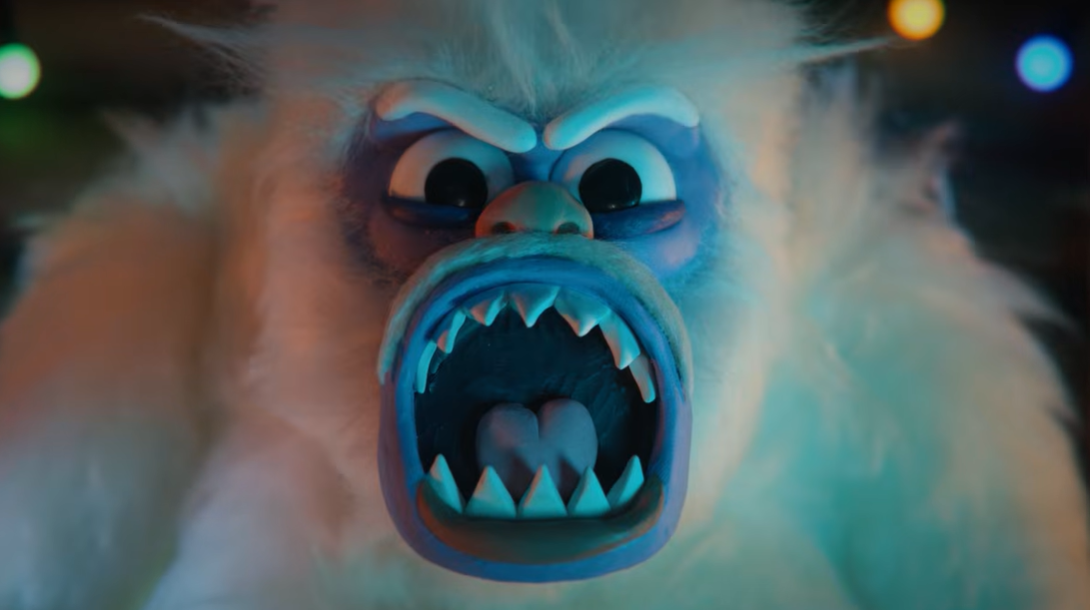
Each second of Levi’s new commercial required four hours of filming. In its holiday campaign Let’s Get Fuzzy, the brand has returned to traditional stop-motion clay animation, drawing on a technique that defined one of its most recognizable commercials from the 1990s. The result is an advertisement in which the characters, sets and clothing were all handcrafted, without the use of artificial intelligence in the filming process.
At the center of the story is Fuzzyeti, also known as Gus, a large, furry creature who comes across a remote cabin on a snowy night, where a group of friends is celebrating the holidays. His attempt to enter causes panic, but the situation changes when one of the guests throws a red sweater at him. The garment fits him perfectly, turning the former intruder into a welcome guest. Through humor and visual elements of horror, the commercial connects the holiday theme of belonging with the sweater collection that Levi’s wants to highlight this season alongside its signature denim products.
The campaign was produced by Blinkink, with Stevie Gee and Essy May behind the commercial. The choice of animation technique also marks a return to the brand’s advertising history. The 1995 commercial Clayman, created by BBH, was the first full-length commercial made entirely using Claymation, or clay animation, as well as Levi’s first global campaign.
This year’s return to handcrafted animation comes at a time when generative artificial intelligence is increasingly changing the way advertising content is produced. According to a 2026 study by Gartner, half of consumers prefer brands that do not use generative AI in advertising and other forms of public-facing communication. Levi’s thus joins brands such as Prada and e.l.f. Cosmetics, which have also turned to traditional creative techniques for this year’s holiday campaigns.
Levi’s Global Chief Marketing Officer, Kenny Mitchell, described the campaign as an opportunity to experiment with visual worlds built around materials and textures, emphasizing craftsmanship and human creativity. At the same time, the campaign supports the brand’s efforts to expand its positioning beyond denim and increase the importance of other clothing categories.

